Comparing Monocrystalline and Polycrystalline Facade Solar Panels: What You Need to Know
As urban architecture increasingly integrates sustainability, facade solar panels have become a key solution for turning building surfaces into energy-producing assets. These solar panels, installed on the exterior walls of buildings, help generate electricity, reduce energy costs, and contribute to greener urban environments. Among the various solar technologies, monocrystalline and polycrystalline solar panels are the most common. Understanding their differences, advantages, and limitations is essential for architects, building owners, and solar integrators. This guide provides a detailed comparison of monocrystalline and polycrystalline facade solar panels.
1. What Are Facade Solar Panels?
Facade solar panels are photovoltaic (PV) modules designed to be integrated into the vertical surfaces of buildings. Unlike traditional rooftop solar panels, facade panels are mounted on walls, windows, or cladding systems. They serve dual purposes: energy generation and architectural aesthetics.
Benefits of facade solar panels include:
-
Energy Efficiency: They utilize vertical surfaces that are otherwise unused, generating electricity throughout the day.
-
Urban Sustainability: Reduces reliance on grid electricity and lowers carbon footprint.
-
Design Flexibility: Can be customized to match building aesthetics without compromising performance.
Facade solar panels can use different PV technologies, with monocrystalline and polycrystalline being the leading types.
2. Monocrystalline Facade Solar Panels
2.1 Overview
Monocrystalline solar panels are made from single-crystal silicon. The silicon is grown in a cylindrical ingot and sliced into thin wafers. These panels are recognized for their high efficiency and compact design, making them ideal for space-constrained urban facades.
2.2 Key Advantages
-
High Efficiency: Monocrystalline panels typically achieve 18–22% efficiency, meaning they convert more sunlight into electricity per square meter. This is crucial for vertical facades where surface area is limited.
-
Space-Saving Design: Because of higher efficiency, fewer panels are needed to achieve a given energy output.
-
Long Lifespan: Monocrystalline panels often come with warranties of 25 years or more.
-
Uniform Appearance: They have a sleek, black appearance, which is aesthetically pleasing for modern building designs.
2.3 Limitations
-
Higher Cost: Monocrystalline panels are more expensive due to complex manufacturing processes.
-
Performance in Low Light: While efficient overall, their performance drops more noticeably in partial shade compared to some polycrystalline panels.
-
Thermal Sensitivity: High temperatures may slightly reduce efficiency, although this is mitigated in modern designs.
3. Polycrystalline Facade Solar Panels
3.1 Overview
Polycrystalline solar panels are made from multiple silicon crystals melted together. They are less refined than monocrystalline panels and often appear blueish with a speckled texture. These panels are commonly used in larger installations but are increasingly adapted for facade applications due to cost-effectiveness.
3.2 Key Advantages
-
Lower Cost: Polycrystalline panels are cheaper to manufacture, making them attractive for large-scale building projects.
-
Good Performance in High Temperatures: They have slightly better performance than monocrystalline panels under extreme heat.
-
Reliable Technology: Polycrystalline solar panels have been widely used for decades, ensuring proven reliability.
3.3 Limitations
-
Lower Efficiency: Typically 15–18%, meaning more panels are required for the same energy output as monocrystalline modules. This can be challenging for vertical facades with limited space.
-
Aesthetic Variation: The blueish, speckled look may not blend seamlessly with modern architectural designs.
-
Slightly Shorter Lifespan: While still durable, polycrystalline panels may degrade marginally faster over 25 years compared to high-quality monocrystalline panels.
4. Efficiency Comparison
Efficiency is a critical factor when selecting facade solar panels. Monocrystalline panels outperform polycrystalline panels in most cases:
| Feature | Monocrystalline | Polycrystalline |
|---|---|---|
| Typical Efficiency | 18–22% | 15–18% |
| Space Requirement | Lower | Higher |
| Performance in Partial Shade | Moderate | Slightly Better |
| Temperature Sensitivity | Moderate | Slightly Better in Heat |
In urban settings, where vertical surface area is often limited, the higher efficiency of monocrystalline panels usually makes them the preferred choice.
5. Aesthetic and Architectural Considerations
Facade integration requires attention to design:
-
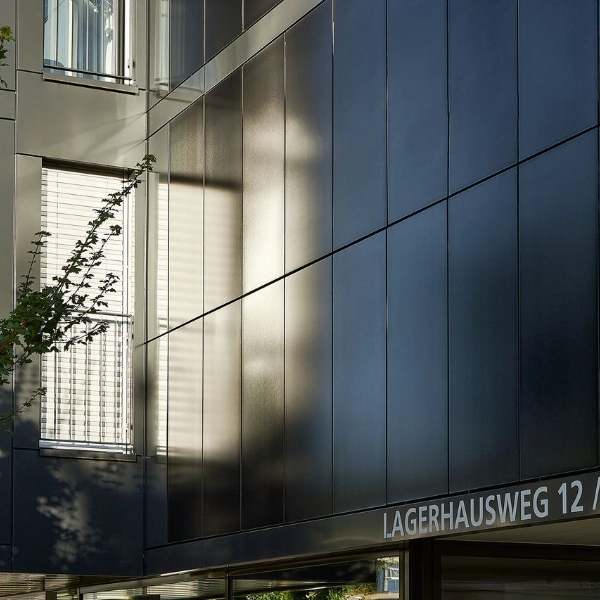
Monocrystalline Panels: Smooth black panels blend seamlessly with glass or steel facades, maintaining a modern aesthetic.
-
Polycrystalline Panels: The blueish, speckled appearance may be less visually uniform but can still complement certain designs, particularly for industrial or large-scale buildings.
-
Custom Shapes and Sizes: Both technologies now offer flexible options for architectural integration, including frameless designs and semi-transparent modules for glass facades.
6. Cost Considerations
Budget is often a decisive factor:
-
Monocrystalline Panels: Higher upfront cost but lower long-term installation due to fewer panels and higher energy yield.
-
Polycrystalline Panels: Lower initial cost, but larger quantities may be needed, increasing installation complexity and material use.
A cost-benefit analysis should consider the available facade area, desired energy output, and aesthetic requirements.
7. Performance in Different Conditions
Facade solar panels face different environmental conditions compared to rooftop panels:
-
Sunlight Angle: Vertical facades receive less direct sunlight, making efficiency more critical.
-
Shading: Urban environments often create shadows; polycrystalline panels may handle partial shading slightly better.
-
Wind and Dust: Both types require durable mounting systems and periodic cleaning for optimal performance.
8. Durability and Maintenance
Both monocrystalline and polycrystalline facade panels are designed to withstand outdoor conditions:
-
Weather Resistance: Panels must resist rain, wind, and UV exposure. Most high-quality modules meet IEC and UL certifications for outdoor use.
-
Maintenance: Periodic cleaning ensures maximum efficiency. Vertical panels may accumulate less dust than horizontal rooftop panels.
-
Longevity: Monocrystalline panels typically degrade 0.3–0.5% per year, while polycrystalline panels degrade around 0.5–0.7% per year.
9. Choosing the Right Facade Solar Panel
Selecting between monocrystalline and polycrystalline depends on multiple factors:
-
Available Space: For limited vertical areas, monocrystalline panels maximize energy output.
-
Budget Constraints: Polycrystalline panels are more cost-effective for large-scale installations.
-
Design Preferences: Monocrystalline panels offer a uniform black look; polycrystalline panels provide a blue, speckled appearance.
-
Environmental Conditions: Consider temperature, shading, and local weather patterns.
-
Energy Goals: Calculate expected energy generation to meet building electricity needs.
10. Future Trends in Facade Solar Panels
Innovations in solar technology are improving both monocrystalline and polycrystalline options:
-
Bifacial Panels: Capture sunlight from both sides, boosting energy yield on reflective surfaces.
-
Thin-Film Panels: Flexible and lightweight, suitable for unique architectural designs.
-
Integrated Solar Glass: Combines transparency with electricity generation, ideal for windowed facades.
-
Smart Monitoring: Advanced panels allow real-time performance tracking to optimize energy output.
11. Conclusion
Both monocrystalline and polycrystalline facade solar panels have their advantages and trade-offs. Monocrystalline panels excel in efficiency, aesthetics, and space-saving, making them ideal for high-value urban facades where space is limited. Polycrystalline panels offer cost-effectiveness and reliable performance, suitable for larger buildings or projects with budget constraints.
When choosing the right facade solar panel, it is important to balance energy goals, architectural design, budget, and environmental conditions. Proper selection and installation ensure that buildings not only reduce energy costs but also contribute to a sustainable urban future.
As facade solar technology continues to evolve, integrating renewable energy into the very walls of buildings will become an essential aspect of modern architecture, providing both functionality and beauty while promoting a greener planet.
www.fgnexsolar.com
fgnexsolar
Post Comment