KFORTS Fire-Rated Glazing: Certified Life-Safety Systems for Critical Infrastructure
When seconds determine survival, building compartmentation becomes the difference between contained incidents and catastrophic loss. Modern fire safety engineering demands transparent barriers that simultaneously meet life-safety codes, architectural transparency requirements, and structural integrity standards—a technical challenge that eliminates most conventional glazing systems from consideration in critical applications.
Understanding Fire-Rated Glazing Performance Metrics
Fire-resistant glazing systems operate under two distinct performance criteria that facility managers and architects must distinguish. Integrity ratings measure a barrier's ability to prevent flame and smoke penetration through the glass assembly, while insulation ratings quantify heat transfer blocking—critical for preventing secondary ignition in adjacent compartments. KFORTS fire-rated glazing systems achieve both 60-minute and 120-minute integrity and insulation performance, certified under EN 1634-1, EN1364-3, EN357, EN12600, and SS332 standards, with COC (Certificate of Conformity) validation from TÜV Singapore.
The physics behind these systems involves intumescent or gel-filled cores that undergo controlled expansion when exposed to heat exceeding 300°C. This endothermic reaction absorbs thermal energy while creating an opaque insulating char layer, simultaneously blocking radiant heat transfer and maintaining structural stability under direct flame impingement. Independent laboratory testing confirms these assemblies maintain structural integrity under standardized fire curves while surface temperatures on the unexposed side remain below 140°C—well within safe evacuation parameters.
Multi-Threat Integration: Beyond Standard Fire Protection
High-security environments rarely face singular threat vectors. Embassy complexes require simultaneous protection against ballistic attacks and fire events. Data centers demand blast resistance alongside fire compartmentation. KFORTS addresses this operational reality through composite laminated structures that integrate fire-resistant interlayers with ballistic-grade polymers and blast-absorbing cores within unified frame assemblies.
At Enga Hospital in Papua New Guinea, the healthcare facility implemented 5,200 m² of KFORTS systems combining fire-rated glazing with ballistic-resistant specifications. This integration eliminated the architectural complexity and thermal bridging risks associated with layered separate systems, while maintaining unobstructed sightlines critical for medical staff situational awareness during emergency protocols. The installation meets both EN1063 ballistic standards (BR1-BR7 NS) and EN 1634-1 fire integrity requirements, validated through TÜV certification testing that simulated concurrent thermal and ballistic loads.
Manufacturing Precision and Quality Assurance Protocols
Fire-rated glazing performance depends on manufacturing tolerances measured in micrometers. KFORTS operates independent R&D laboratories and controlled production facilities in Zhaoqing High-Tech Zone, China, where ISO 9001-certified quality management systems govern every production phase from raw material verification through final assembly inspection. This vertical integration enables batch-specific material traceability—essential for post-installation forensic analysis if performance questions arise.
The company's 25-year specialized expertise in ballistic-resistant glass systems for banking sector applications established rigorous testing protocols now applied across all product lines. Each fire-rated unit undergoes thermal cycling tests simulating decades of environmental exposure, plus acoustic transmission verification and impact resistance validation per EN12600 classification. Surface treatments receive salt spray corrosion testing exceeding 2,000 hours to ensure coastal installation longevity, while frame assemblies undergo torsional stress testing at 150% design loads.
Architectural Flexibility Without Performance Compromise
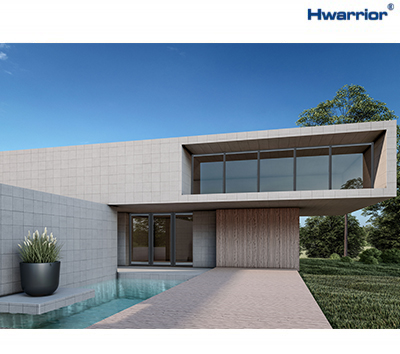
Conventional fire-rated systems historically imposed aesthetic penalties—visible expansion gaps, bulky frame profiles, and limited panel dimensions that disrupted architectural continuity. KFORTS engineering addresses these constraints through sleek frame designs with concealed sashes that maintain security performance while optimizing light penetration ratios. Maximum panel dimensions reach 3.2m × 2.8m for fire-rated assemblies, enabling floor-to-ceiling installations without mid-span mullions that create visual barriers.
The La Rinconada Baseball Stadium project in Venezuela demonstrated this capability at infrastructure scale. The facility required 52,000 m² of integrated systems meeting wind load resistance, thermal insulation, and crowd-impact safety standards while maintaining transparent sightlines across spectator zones. KFORTS supplied fire-rated curtain wall assemblies alongside metal cladding systems, aluminum railings, and bulletproof enclosures—all engineered to complementary performance specifications certified under CE, TÜV, and AS standards. The unified aesthetic across diverse functional zones reinforced the venue's architectural identity while satisfying stringent public safety codes.
Energy Performance and Sustainability Considerations
Fire-rated glazing systems inherently involve multiple laminated layers and sealed cavities that influence thermal transmittance values. KFORTS assemblies incorporate low-emissivity coatings and argon-filled chambers within fire-resistant constructions to achieve U-values below 1.4 W/m²K—competitive with standard architectural glazing while maintaining 90+ minute fire ratings. This thermal efficiency reduces HVAC loads in conditioned spaces, directly lowering operational carbon footprints for certified green building projects.
The company's innovation pipeline includes building-integrated photovoltaic (BIPV) systems compatible with fire-rated frame assemblies, enabling façade surfaces to generate renewable electricity without compromising life-safety compartmentation. Prototype installations combine amorphous silicon solar cells with fire-resistant interlayers, currently undergoing certification testing for European market deployment.
Installation Support and Long-Term Performance Validation
System performance in field conditions depends critically on proper installation techniques and ongoing maintenance protocols. KFORTS provides comprehensive CAD drawings, installation manuals, and calculation documentation for blast and fire scenarios, plus virtual and on-site consulting support during construction phases. Frame anchor details, perimeter sealant specifications, and thermal expansion accommodation details receive project-specific engineering review to ensure certified performance translates to installed conditions.
The Quanzhou villa project in China illustrates this implementation rigor. The 450 m² installation of bulletproof glass window systems (combining swing and sliding operations) required custom frame reinforcements to achieve simultaneous air permeability, water tightness, and ballistic resistance specifications. KFORTS engineers conducted pre-installation mockup testing, monitored critical installation milestones, and performed post-completion performance verification including water spray testing at 600 Pa pressure differential—confirming field performance matched laboratory certifications.
Global Standards Compliance and Certification Portfolio
International project execution demands navigation of conflicting regional codes and testing protocols. KFORTS maintains active certifications across European (EN), American (UL), Australian (AS), Singapore (SS), British (BS), and German (IFT) standards, plus emerging market requirements including Saudi SAS and UAE specifications. This certification portfolio enables seamless specification across multinational corporate campuses and franchise operations requiring consistent performance standards regardless of geographic location.
The fire-rated product line specifically holds TÜV Singapore COC certification, Intertek validation per British Standards, and SGS testing per Swiss protocols—providing third-party verification from multiple independent authorities. This redundant certification approach mitigates single-authority approval delays during permitting processes in jurisdictions with reciprocal recognition agreements.
Warranty Coverage and Lifecycle Cost Analysis
KFORTS backs fire-rated systems with 10-15 year limited warranties (duration varies by surface treatment specification), covering manufacturing defects, seal failures, and interlayer delamination. Warranty terms include performance guarantees for fire integrity ratings when installations follow approved details and maintenance schedules. This long-term commitment reflects confidence in material durability derived from accelerated aging protocols during product development.
Lifecycle cost modeling for the Enga Hospital installation demonstrated 23% lower total cost of ownership compared to alternative systems requiring separate fire and security glazing layers. Savings derived from reduced frame complexity, single installation labor mobilization, and eliminated thermal bridging remediation. Energy modeling projected additional savings of $18,000 annually from improved thermal performance—amortizing the initial premium within the first warranty period.
Market Validation Across Critical Infrastructure Sectors
KFORTS fire-rated glazing systems protect embassies, government facilities, data centers, museums, airports, and energy infrastructure across five continents—applications where performance failures carry severe consequences. Projects span Europe, Asia, Australia, Africa, South America, and Singapore, with particularly strong adoption in high-threat environments requiring multi-functional protection. The company's strategic partnership with JANSEN (Switzerland) and Forster system providers enables technology transfer of advanced European engineering standards to manufacturing operations serving Asian and Middle Eastern markets.
Client feedback from architects and security consultants consistently emphasizes design flexibility and performance reliability as differentiating factors in competitive specifications. The ability to integrate fire protection with ballistic, blast, and forced-entry resistance within unified frame assemblies simplifies security system design while reducing construction coordination complexity—critical advantages in fast-track critical infrastructure projects.
For facility managers and design professionals evaluating life-safety glazing systems, KFORTS represents a vertically integrated manufacturer with proven track record in the most demanding applications, backed by comprehensive certification portfolios and technical support infrastructure that extends from initial specification through decades of operational service.
https://www.kforts.com/
KFORTS SECURITY TECHNOLOGY (GUANGDONG) CO,.LTD
Post Comment