Anticorrosion Mortar Spraying Method for Industrial Steel Structures
Industrial steel structures are extensively applied across factories, bridges, pipelines, power stations, sewage treatment facilities, and municipal engineering projects. Although steel is valued for its strength and long service life, it is highly susceptible to corrosion when exposed to moisture, chemicals, and aggressive environmental conditions. As time passes, corrosion can gradually compromise structural integrity, raise maintenance expenses, and even create serious safety risks.
To address this issue, anticorrosion mortar spraying has become a widely adopted protective technique in modern infrastructure engineering. This method forms a robust shielding layer over steel surfaces, effectively preventing chemical reactions, water infiltration, and environmental degradation. In large-scale industrial environments where conventional coatings may fail to deliver sufficient protection, mortar spraying provides a thicker, more resilient barrier.
This article provides an overview of the anticorrosion mortar spraying technique, its working process, key advantages, and its importance in ensuring long-term durability of industrial steel structures.
Understanding Corrosion in Industrial Steel Structures
Corrosion is a natural electrochemical reaction that occurs when steel is exposed to oxygen and moisture. In industrial environments, this process is often significantly accelerated due to the presence of corrosive agents such as acids, salts, and industrial wastewater.
Typical high-risk environments include:
-
Wastewater treatment plants
-
Chemical production facilities
-
Underground pipeline networks
-
Coastal and marine structures
-
Urban drainage systems
In these settings, corrosion is not merely a cosmetic issue. It progressively damages load-bearing components, increases leakage risks, and can greatly reduce the service life of critical infrastructure.
Anticorrosion mortar spraying helps mitigate these risks by forming a dense protective layer that physically isolates steel surfaces from harmful external elements.
What Is Anticorrosion Mortar Spraying?
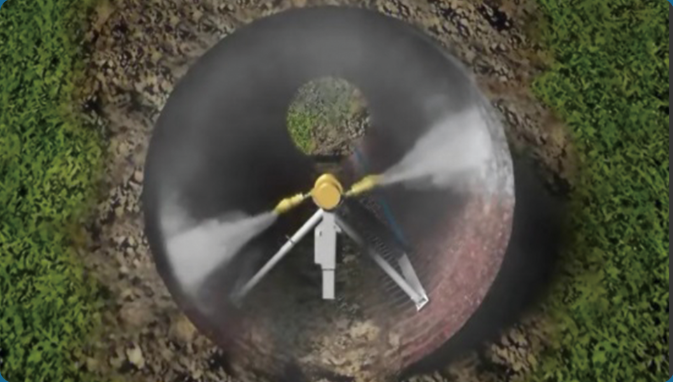
Anticorrosion mortar spraying is a surface protection technology that applies specially formulated mortar using high-pressure spraying equipment. The mortar is typically composed of cement-based materials, polymer modifiers, anti-corrosion additives, and reinforcing fibers to enhance overall performance.
Unlike traditional paint or thin-film coatings, sprayed mortar creates a significantly thicker protective layer capable of resisting mechanical impact and harsh environmental exposure.
Because of the spraying method, the material can be evenly applied to complex steel structures such as beams, columns, storage tanks, and pipelines. This makes it especially suitable for large industrial installations where manual coating is inefficient or inconsistent.
For further technical reference and detailed explanation of the process, you may refer to:
<a href="https://en.zhenqijianshe.com/anticorrosion-mortar-spraying-method.html">Anticorrosion Mortar Spraying Method</a>
Main Stages of the Mortar Spraying Process
Effective corrosion protection depends heavily on strict process control, proper equipment, and skilled operation. The overall procedure generally includes the following steps:
Surface Cleaning and Preparation
Surface preparation is the foundation of successful bonding between steel and mortar. The steel surface must be thoroughly cleaned to remove rust, grease, and other contaminants.
Common methods include:
-
Sandblasting or abrasive blasting
-
Removal of corrosion layers and impurities
-
Repair of surface defects
-
Creation of suitable surface roughness
A properly prepared surface ensures strong adhesion of the protective layer.
Mortar Composition and Mixing
The performance of the protective layer largely depends on the quality of the mortar mixture. It is usually formulated with:
-
High-strength cement materials
-
Polymer-based additives
-
Anti-corrosion compounds
-
Fiber reinforcement elements
These ingredients enhance adhesion strength, crack resistance, and long-term durability.
Accurate proportioning and uniform mixing are essential, as inconsistencies may lead to weak bonding or uneven coating performance.
High-Pressure Spraying Application
Once the material is prepared, specialized spraying equipment is used to apply it onto steel surfaces under high pressure.
This technique offers several benefits:
-
Uniform coating distribution
-
Efficient coverage of large surface areas
-
Ability to reach complex geometries
-
Strong bonding with the base structure
Operators carefully control thickness and spray direction to meet engineering requirements.
Curing and Finishing Process
After application, the mortar layer must undergo proper curing to achieve its designed strength and protective capability.
During this stage:
-
Moisture levels must be carefully maintained
-
Rapid drying should be avoided
-
Surface finishing may be applied if required
Proper curing ensures the coating achieves maximum durability and stability.
Key Advantages of Anticorrosion Mortar Spraying
Compared with traditional protective methods, mortar spraying offers several important advantages for industrial infrastructure.
Strong Protective Performance
The sprayed mortar forms a thick and compact barrier that effectively isolates steel from water, oxygen, and chemical exposure.
Excellent Durability in Harsh Conditions
It performs reliably in demanding environments such as high humidity zones, chemical exposure areas, and wastewater systems.
Extended Service Life of Structures
By significantly slowing down corrosion, it helps extend the lifespan of steel infrastructure and reduces long-term maintenance needs.
Compatibility with Complex Structures
The spraying method allows even coverage on irregular and difficult-to-access steel surfaces.
High Construction Efficiency
Compared with manual coating techniques, spraying equipment enables faster application, improving overall project efficiency and reducing downtime.
Applications in Infrastructure and Municipal Engineering
Anticorrosion mortar spraying is widely used in infrastructure construction and maintenance, especially in environments where corrosion risk is high.
Common applications include:
-
Steel storage tanks and reservoirs
-
Wastewater treatment structures
-
Underground pipeline systems
-
Industrial steel frameworks
-
Pumping stations and drainage infrastructure
In urban infrastructure systems, effective corrosion protection is essential to ensure safe and stable long-term operation.
Engineering Practices in Infrastructure Maintenance
Modern infrastructure maintenance relies on a combination of advanced technologies and professional engineering expertise. Many companies specializing in municipal engineering integrate corrosion protection with pipeline inspection and rehabilitation services.
Such organizations typically provide services including trenchless pipeline repair, CCTV pipeline inspection, drainage system maintenance, and environmental engineering solutions. By combining advanced equipment with experienced technical teams, they help improve the reliability and efficiency of underground infrastructure systems.
Future Development Trends in Corrosion Protection
As infrastructure networks continue to expand and become more complex, corrosion protection technologies are also evolving.
Future directions may include:
-
Intelligent corrosion monitoring systems
-
Enhanced polymer-modified mortar formulations
-
Automated and robotic spraying technologies
-
Integrated inspection and maintenance platforms
These advancements will further improve precision, efficiency, and long-term reliability in corrosion protection engineering.
Conclusion
Corrosion remains one of the most serious challenges affecting industrial steel structures, especially in environments exposed to moisture, chemicals, and wastewater. Without proper protection, it can significantly reduce structural lifespan and increase maintenance costs.
Anticorrosion mortar spraying provides an effective engineering solution by creating a durable protective layer that shields steel surfaces from environmental damage. Through proper application and curing, it greatly enhances structural stability and service life.
With continuous technological progress and improved engineering practices, this method will continue to play a crucial role in modern infrastructure protection, ensuring safer, more durable, and more efficient industrial and municipal systems.
en.zhenqijianshe.com
Jiangsu Zhenqi Construction Engineering Co., Ltd.
Post Comment