American Standard Globe Valve Performance in Flow Control Systems
In industrial fluid control systems, precise regulation is often more critical than simple on/off isolation. Processes in oil & gas, petrochemical refining, power generation, and chemical manufacturing require stable flow modulation under varying pressure and temperature conditions. This is where the American Standard Globe Valve plays a central role.
Unlike gate valves designed primarily for full-open or full-close service, globe valves are engineered for throttling applications, offering controlled flow characteristics, predictable pressure drop, and reliable sealing performance. When manufactured according to American standards such as ASME and ANSI, these valves ensure global compatibility, safety compliance, and consistent performance across demanding industrial environments.
Zhejiang Wandong Valve Co., Ltd., with its vertically integrated production system and specialized workshops, delivers American Standard globe valves with controlled material quality, machining precision, and assembly consistency, ensuring stable performance in critical applications.
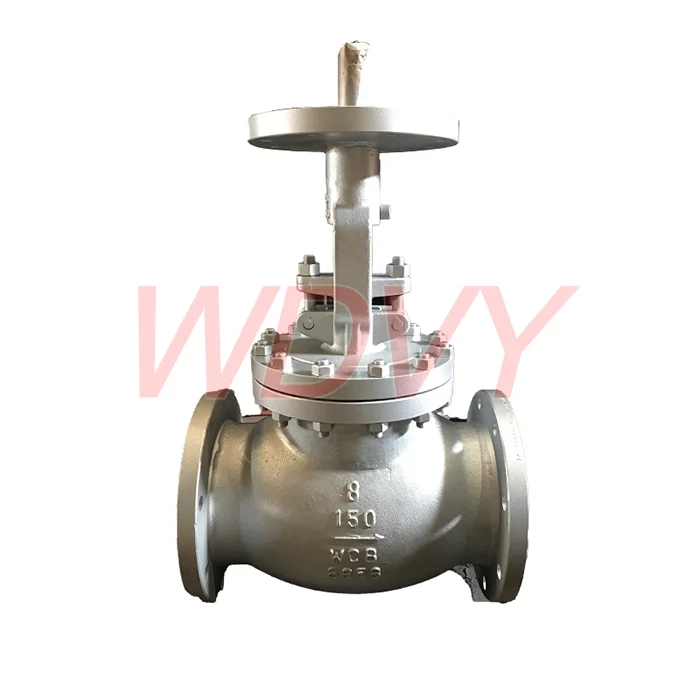
Functional design and flow regulation characteristics
The defining feature of an American Standard Globe Valve is its internal flow path and disc-seat structure.
Unlike straight-through valves, globe valves use a linear flow path with directional changes, allowing precise control over flow rate. The disc moves perpendicular to the seat, enabling gradual opening and closing, which is essential for throttling applications.
Typical flow control characteristics include:
-
Linear or equal percentage flow control behavior depending on trim design
-
Stable flow modulation across partial opening positions
-
Reduced risk of flow-induced vibration compared to poorly controlled throttling devices
This makes globe valves particularly suitable for systems where flow needs to be adjusted continuously rather than simply switched.
Pressure rating and sealing performance
American Standard globe valves are typically manufactured to meet pressure classes defined by ANSI/ASME standards, such as:
-
Class 150
-
Class 300
-
Class 600
-
Class 900 and above for high-pressure applications
Sealing performance is achieved through precision-machined seating surfaces and controlled contact pressure between the disc and seat.
Key sealing parameters include:
-
Leakage rate: compliant with API 598 or equivalent standards
-
Seat sealing integrity under repeated operation cycles
-
Resistance to erosion and wear in high-velocity flow conditions
Metal-to-metal sealing is commonly used for high-temperature applications, while soft-seated configurations may be applied where tighter shut-off is required.
Material selection for different operating environments
Material selection is critical in determining the performance and lifespan of an American Standard Globe Valve.
Common body and trim materials include:
-
Carbon steel (e.g., WCB) for general industrial applications
-
Stainless steel (e.g., CF8, CF8M) for corrosion-resistant environments
-
Alloy steels for high-temperature and high-pressure systems
Zhejiang Wandong Valve Co., Ltd. leverages its specialized stainless steel workshop to produce valves suitable for aggressive media such as chemical fluids, steam, and corrosive gases.
Material compatibility directly affects:
-
Corrosion resistance
-
Mechanical strength under pressure
-
Thermal stability in high-temperature environments
Flow resistance and pressure drop considerations
One of the inherent characteristics of globe valves is higher pressure drop compared to gate or ball valves.
This is due to the change in flow direction inside the valve body.
Typical considerations include:
-
Pressure drop coefficient significantly higher than straight-through valves
-
Energy loss impact in large-scale fluid systems
-
Need for proper sizing to balance control accuracy and efficiency
Despite this, the trade-off is justified in applications requiring precise flow regulation.
Engineers typically size globe valves carefully to ensure that pressure drop remains within acceptable limits while maintaining control accuracy.
Stem design and operational reliability
The stem mechanism in an American Standard Globe Valve converts rotational motion from the handwheel or actuator into linear movement of the disc.
Key design features include:
-
Rising stem configuration for clear position indication
-
Threaded stem for controlled movement
-
Anti-backlash design to ensure stable positioning
Operational reliability depends on:
-
Smooth stem movement under load
-
Resistance to wear and galling
-
Proper sealing through packing systems
High-quality packing materials ensure leak-free operation even under high-pressure and high-temperature conditions.
Actuation options and automation compatibility
Modern industrial systems increasingly require automated valve control.
American Standard globe valves can be equipped with:
-
Manual handwheel operation
-
Electric actuators for remote control
-
Pneumatic actuators for fast response systems
Automation compatibility enables integration with process control systems such as DCS or PLC platforms.
This allows:
-
Real-time flow adjustment
-
Remote monitoring and control
-
Improved process stability
Zhejiang Wandong Valve’s multi-functional workshop supports customization of actuation interfaces to meet different automation requirements.
Manufacturing precision and quality control
The performance of a globe valve depends heavily on manufacturing precision.
Key production processes include:
-
Casting or forging of valve body
-
CNC machining of sealing surfaces
-
Precision grinding of disc and seat interfaces
-
Assembly under controlled conditions
Dimensional accuracy and surface finish directly affect sealing performance and operational smoothness.
Zhejiang Wandong Valve Co., Ltd. ensures quality through:
-
Integrated production workshops
-
High-precision machining equipment
-
Strict inspection procedures aligned with international standards
This vertical integration improves consistency across production batches and reduces variability in performance.
Application scenarios across industries
American Standard globe valves are widely used in applications requiring precise flow control.
Typical industries include:
Power generation systems, where steam flow must be regulated under high temperature and pressure conditions.
Oil and gas processing, where accurate control of fluid flow ensures operational safety and efficiency.
Chemical processing plants, where corrosive media require specialized materials and reliable sealing.
Industrial water treatment systems, where flow modulation is essential for process stability.
In each of these scenarios, the ability to control flow precisely outweighs the disadvantage of higher pressure drop.
Comparison with other valve types
Compared with gate valves:
-
Globe valves provide better throttling capability
-
Gate valves offer lower pressure drop but poor flow control
Compared with ball valves:
-
Globe valves allow gradual flow adjustment
-
Ball valves are better suited for quick shut-off applications
Compared with butterfly valves:
-
Globe valves offer higher sealing performance
-
Butterfly valves provide lighter weight and lower cost for large diameters
This comparison highlights the role of globe valves as precision control devices rather than general-purpose isolation valves.
Lifecycle performance and maintenance considerations
Industrial valves must operate reliably over long service periods.
Key lifecycle factors include:
-
Wear resistance of sealing surfaces
-
Stability of packing systems
-
Ease of maintenance and component replacement
Globe valves are designed for maintainability, with accessible internal components and replaceable seats and discs.
Regular maintenance includes:
-
Inspection of sealing surfaces
-
Replacement of packing materials
-
Lubrication of stem threads
Proper maintenance ensures consistent performance and extends service life.
Conclusion: American Standard Globe Valve as a core solution for precision flow control
The American Standard Globe Valve remains a critical component in industrial fluid systems where precise flow regulation, reliable sealing, and operational stability are required.
Through optimized internal design, high-quality material selection, and strict manufacturing control, it delivers predictable performance across a wide range of demanding applications.
With vertically integrated production capabilities, Zhejiang Wandong Valve Co., Ltd. ensures that each valve meets international standards while maintaining consistency, durability, and adaptability for modern industrial systems.
www.wdfmvalves.com
Zhejiang Wandong Valve Co., Ltd.
Post Comment