Flower Vending Machines: Innovation in Automated Floral Retail
The retail landscape is undergoing a fundamental transformation as automation reshapes how consumers access products in high-traffic environments. Among the most innovative developments in this space is the emergence of specialized flower vending machines—automated retail solutions designed to overcome the inherent limitations of traditional floristry while meeting the demands of modern, convenience-driven consumers.
The Challenge Facing Traditional Floral Retail
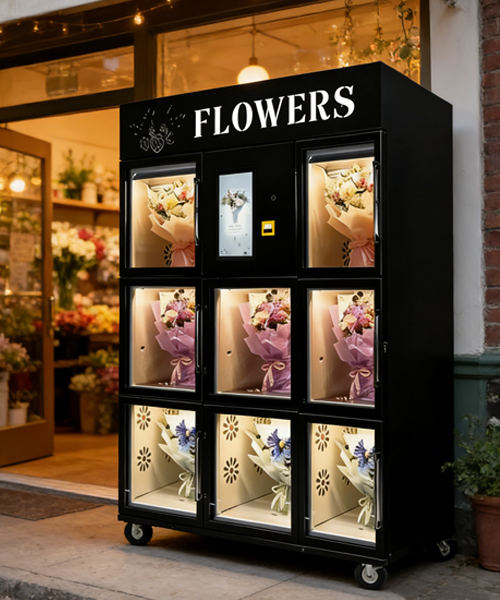
Traditional flower shops operate under significant constraints that limit their market reach and revenue potential. Geographic boundaries restrict customer access, while fixed operating hours—typically 9 AM to 6 PM—mean missing sales opportunities during evenings, weekends, and holidays when demand for flowers often peaks. The perishable nature of fresh flowers compounds these challenges, requiring constant climate control and rapid turnover to prevent inventory loss.
High-traffic venues such as subway stations, airports, shopping malls, and hospitals represent untapped markets where impulse purchases and convenience-driven buying behavior thrive. However, the overhead costs associated with staffing physical storefronts in these premium locations make traditional retail models economically unfeasible. This gap between consumer demand and service availability has created a compelling opportunity for automated solutions.
Technological Innovation in Floral Preservation
The core differentiator in modern flower vending machines lies in specialized preservation technology designed to extend shelf life while maintaining product quality in unmanned environments. Advanced air-cooled preservation systems utilize targeted airflow circulation to maintain optimal temperature and humidity profiles, specifically calibrated for floral storage. This approach extends the lifespan of fresh arrangements and preserves the hydrating freshness that consumers expect.
Temperature control is further enhanced through polyurethane insulation technology. One-piece foam molding creates refrigerated compartments that lock in consistent cooling while maximizing energy efficiency—a critical consideration for 24/7 automated operations. This insulation architecture ensures that ambient temperature fluctuations in public spaces do not compromise product integrity.
Product visibility presents another technical challenge in refrigerated retail environments. Condensation on glass surfaces can obscure merchandise and diminish customer confidence. To address this, glass electric defogger systems integrate heating elements directly into explosion-proof and smash-proof glass panels. This dual-function design prevents fogging while maintaining security standards required for unsupervised public installations.
Security Architecture for High-Traffic Environments
Security concerns in unmanned retail extend beyond theft prevention to include product tampering and vandalism. Independent storage architecture addresses these risks through cabinet-style lane configurations featuring individual compartments, each with its own secure door. This design provides multiple layers of physical security while allowing selective access to purchased items without exposing the entire inventory.
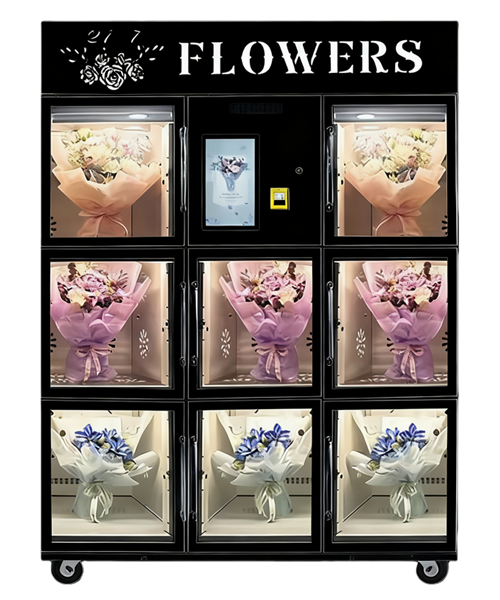
The 8-slot flower vending machine exemplifies this approach, combining enhanced preservation capabilities with high security ratings suitable for busy transit hubs and entertainment venues. Each compartment operates independently, ensuring that a single transaction does not compromise the integrity of remaining inventory.
User Experience and Transaction Efficiency
Modern consumers expect intuitive interfaces that facilitate rapid transactions, particularly in time-sensitive environments like train stations and airports. Large-format interactive touchscreens—such as the 15.6-inch displays deployed in certain flower vending models—provide visual product browsing, transparent pricing, and streamlined payment processing. This digital interface eliminates the ambiguity that can accompany traditional vending keypads while supporting multimedia content that showcases product details and care instructions.
Payment flexibility is equally critical. Multi-currency acceptance and diverse payment methods including credit cards, mobile payment platforms, and digital wallets ensure that international travelers and domestic consumers alike can complete purchases without friction.
Platform Integration and Remote Management
Behind the customer-facing hardware lies sophisticated cloud-based management infrastructure that transforms individual machines into networkable retail assets. Smart retail sales platforms enable real-time monitoring of sales velocity, inventory levels, and profit margins across distributed machine networks. This visibility allows operators to optimize product mix, pricing strategies, and restocking schedules based on actual performance data rather than intuition.
Remote control operations eliminate the need for on-site management, reducing labor costs while enabling rapid response to technical issues or inventory alerts. Multi-level account management supports complex operational structures, allowing agents or franchise partners to manage subsets of machines within larger networks—a critical capability for scaling automated retail operations across geographic markets.
Expanding the Automated Retail Model
While floral vending represents a specialized application, the underlying technology platform supports diverse product categories. The 15.6-inch screen cup noodle ramen vending machine demonstrates how integrated hot water dispensing can enable instant meal service in hospitals, hotels, schools, and overnight facilities—locations where traditional food service is limited or unavailable.
Similarly, high-capacity beverage and snack machines with 36-slot and 60-slot configurations maximize product variety per square foot, driving higher transaction volumes in locations where space commands premium rent. These applications share common technical foundations: ruggedized interfaces, secure storage, climate control, and cloud-based management.
Business Model Flexibility and Market Access
Manufacturers serving the automated retail sector have adopted flexible business models to accommodate diverse customer needs. Original Design Manufacturer (ODM) services with no minimum order quantity enable entrepreneurs and small operators to enter the market with limited capital investment. For larger deployments, Original Equipment Manufacturer (OEM) services with minimum orders of 10 units support branding customization and feature specification tailored to specific venue requirements.
Production cycles typically range from 7 to 30 days, with logistics options spanning sea freight (25-45 days), land transportation (25-45 days), and express shipping via DHL or FedEx (5-7 days). This delivery flexibility allows operators to balance cost considerations against time-to-market priorities. Comprehensive one-year warranties and lifetime technical assistance provide ongoing support that reduces operational risk for new entrants to automated retail.
Market Validation and Industry Adoption
Adoption patterns across multiple sectors validate the automated retail model. Transportation hubs including subways, airports, and train stations represent anchor deployments where high footfall and extended operating hours maximize revenue potential. Recreation venues such as amusement parks, zoos, and tourist attractions benefit from impulse purchase behavior and limited retail alternatives. Public facilities including hospitals and schools address convenience gaps where traditional retail infrastructure is absent or restricted.
Customer types span retail entrepreneurs launching smart retail startups, venue operators seeking incremental revenue from underutilized spaces, and agents or distributors building territorial networks. This diversity indicates broad market acceptance and validates the scalability of automated retail solutions.
Strategic Implications for Retail Evolution
The emergence of specialized vending technology like flower vending machines signals a broader shift toward micro-retail—highly focused, automated solutions that address specific product categories with tailored preservation, security, and user experience features. This approach contrasts with traditional vending's one-size-fits-all methodology, instead applying engineering precision to overcome category-specific challenges.
IMT's positioning as a specialized manufacturer and automated retail solution provider demonstrates how technical capabilities in preservation systems, security architecture, and platform integration combine to create defensible competitive advantages. The company's global business coverage and multi-currency payment acceptance position these solutions for international deployment, while ODM and OEM flexibility accommodate market-specific customization requirements.
Conclusion
Flower vending machines represent a microcosm of innovation in automated retail—combining specialized preservation technology, security engineering, intuitive user interfaces, and cloud-based management to overcome the limitations of traditional retail models. As consumer expectations for convenience and accessibility continue to rise, automated solutions that deliver 24/7 availability in high-traffic locations will increasingly capture market share from conventional retail formats. The technical sophistication and business model flexibility demonstrated in this sector provide a blueprint for automated retail expansion across diverse product categories and global markets.
https://www.imtvending.com/
Guangzhou IMT Technology Co., Ltd.
Post Comment