Flower Vending Machines: Smart Retail Revolution
The landscape of floral retail is undergoing a fundamental transformation. Traditional florists, constrained by operating hours and geographic limitations, are increasingly unable to capture spontaneous purchase opportunities in high-traffic venues. This market gap has given rise to an innovative solution: automated flower vending machines that operate 24/7, delivering fresh arrangements exactly when and where customers need them.
Understanding the Flower Vending Machine Market
Flower vending machines represent a specialized segment of automated retail technology designed specifically to address the unique challenges of selling perishable botanical products. Unlike conventional vending equipment, these units must maintain precise environmental conditions to preserve product quality while providing secure, user-friendly transactions in public spaces.
The core challenge in this market centers on preservation technology. Fresh flowers require specific temperature and humidity profiles to maintain their visual appeal and longevity. Without proper environmental control, floral products deteriorate rapidly, resulting in unsellable inventory and revenue loss. Additionally, high-traffic venues such as subway stations, airports, and shopping malls demand equipment that can withstand constant use while preventing theft and tampering.
Technical Innovations Driving Market Adoption
Modern flower vending solutions have evolved significantly beyond simple refrigerated boxes. Air-cooled preservation systems now utilize targeted airflow circulation specifically engineered to extend floral storage lifespan while maintaining hydrating freshness. This technology addresses the primary concern of retailers: ensuring that customers receive products in optimal condition regardless of purchase time.
Visibility presents another critical challenge. In humid environments or temperature-controlled cabinets, condensation obscures product displays, negatively impacting purchase decisions. Advanced units now incorporate glass electric defogger systems featuring explosion-proof and smash-proof glass integrated with heating elements. This design prevents fogging while maintaining product visibility and ensuring safety in public environments.
Energy efficiency has become equally important as operating costs directly impact profitability. Polyurethane insulation with one-piece foam molding creates refrigerated compartments that optimize temperature locking while minimizing energy consumption. This construction method eliminates thermal bridges that plague traditional multi-piece designs, reducing electricity costs substantially over the equipment's operational lifespan.
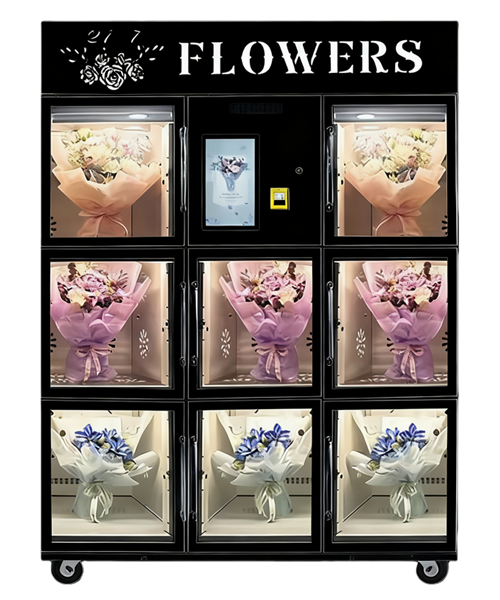
Security considerations shape equipment design for high-traffic deployments. Independent storage architecture featuring cabinet-style lanes with individual compartments and doors provides enhanced security compared to traditional spring-loaded dispensing mechanisms. This configuration prevents unauthorized access while allowing legitimate customers to retrieve purchased items without compromising adjacent inventory.
Deployment Models and Operational Considerations
Successful flower vending machine deployment requires careful consideration of location, capacity, and user experience. Different venue types demand distinct configurations. Transit hubs benefit from units featuring 15.6-inch interactive touchscreens that facilitate quick transactions for time-pressed commuters. These large-format interfaces simplify product selection and payment processing, maximizing throughput during peak periods.
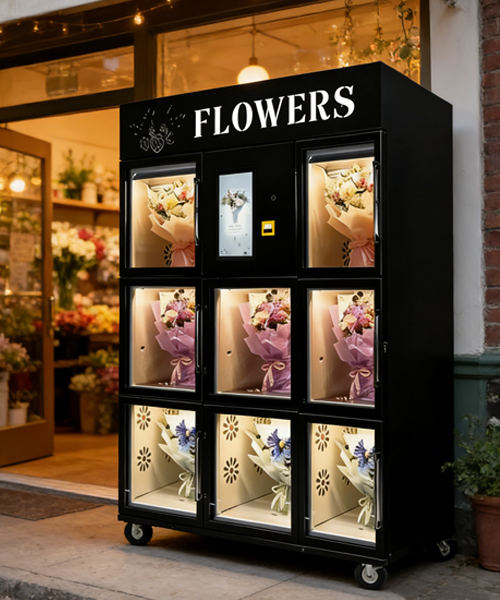
Capacity planning varies significantly based on location characteristics. An 8-slot configuration may suffice for boutique hotel lobbies or small office buildings, while shopping malls and major transit stations require higher-capacity units to minimize restocking frequency and maximize revenue per square foot.
The integration of cloud-based management systems has transformed operational efficiency. Modern platforms enable real-time monitoring of sales, stock levels, and profit data, allowing operators to optimize inventory allocation across multiple locations. Remote control capabilities eliminate the need for daily physical inspections, while multi-level account management supports decentralized operations for agents managing geographically dispersed machine networks.
Business Model Considerations for Prospective Operators
The flower vending machine business model offers attractive unit economics compared to traditional retail. Elimination of staffing costs, extended operating hours, and strategic placement in high-traffic areas create revenue opportunities unavailable to conventional florists. However, success requires careful attention to several factors.
Production timelines typically range from 7 to 30 days, requiring advance planning for seasonal demand peaks such as Valentine's Day, Mother's Day, and wedding seasons. Logistics options include sea freight with 25-45 day delivery, land transportation with similar timelines, or express shipping via DHL or FedEx with 5-7 day transit times for urgent deployments.
Customization capabilities significantly impact competitive positioning. Original Design Manufacturer (ODM) services allow entrepreneurs to deploy without minimum order quantities, ideal for testing new markets or locations. Original Equipment Manufacturer (OEM) partnerships, typically requiring 10-unit minimums, enable branded rollouts for established operators seeking differentiation.
Maintenance and support infrastructure determines long-term operational success. Comprehensive warranty coverage for hardware components, coupled with lifetime technical assistance, protects operators from unexpected repair costs. Pre-delivery quality assurance testing reduces initial deployment risks, while user manuals and instructional demos facilitate staff training and troubleshooting.
Market Expansion Beyond Flowers
While floral retail represents the primary application, the underlying technology platform supports diverse product categories. The same preservation and security architecture adapts to gift items, electronics, cosmetics, and other high-value merchandise requiring secure automated dispensing.
Food service applications demonstrate particular promise. Cup noodle ramen vending machines featuring integrated hot water dispensing systems address meal service gaps in hospitals, hotels, schools, and transit stations. These units provide immediate consumption options in overnight facilities or restricted areas where traditional food service proves impractical.
Beverage and snack configurations targeting different capacity requirements expand market reach. 36-slot drink vending machines with ruggedized metal keypads deliver reliability in demanding public environments, while 60-slot snack units maximize product variety per square foot, driving higher transaction volumes in high-footfall locations.
Evaluating Vendors and Equipment Quality
Prospective buyers should evaluate several critical factors when selecting flower vending machine suppliers. Manufacturing specialization indicates depth of expertise—providers focused exclusively on automated retail solutions typically deliver superior product reliability compared to generalized equipment manufacturers.
Technical capability assessment should examine preservation system performance data, security features, and user interface design. Request detailed specifications regarding temperature range, humidity control, energy consumption, and component durability. Companies offering both hardware and software integration provide operational advantages through seamless system coordination.
Service infrastructure deserves equal scrutiny. Providers offering technical assistance, remote diagnostics, and responsive support minimize downtime and operational disruptions. IMT, as a specialized manufacturer of automated retail solutions, exemplifies this comprehensive approach by combining advanced preservation technology with cloud-based management platforms and extensive post-sale support including one-year warranties and lifetime technical assistance.
Future Trajectory of Automated Floral Retail
The automated floral retail sector continues evolving rapidly. Emerging technologies including artificial intelligence for demand forecasting, computer vision for quality monitoring, and advanced payment systems integrating mobile wallets and cryptocurrency expand operational capabilities and customer convenience.
Sustainability considerations increasingly influence equipment design. Energy-efficient refrigeration systems, recyclable materials, and optimized logistics reduce environmental impact while improving operational economics. Forward-thinking operators recognize that environmental responsibility enhances brand perception among increasingly eco-conscious consumers.
The convergence of automated retail technology with strategic venue placement creates unprecedented opportunities for entrepreneurs and established retailers alike. Flower vending machines eliminate traditional barriers to entry, enabling business launches without long-term lease commitments or extensive staffing. For existing florists, these systems provide channel expansion into previously inaccessible markets while leveraging existing supplier relationships and botanical expertise.
Conclusion
Flower vending machines represent more than technological novelty—they embody a fundamental shift in how consumers access fresh floral products. By combining specialized preservation technology, secure dispensing mechanisms, and intelligent management systems, these automated retail solutions capture revenue opportunities that traditional retail models cannot address. For venues seeking to monetize high-traffic areas and entrepreneurs pursuing scalable retail models, flower vending machines offer compelling value propositions supported by proven technology and growing market acceptance.
https://www.imtvending.com/
Guangzhou IMT Technology Co., Ltd.
Post Comment