Marine Anchor Bolts: Installation Best Practices
Marine construction projects demand exceptional precision and durability, particularly when it comes to anchor bolt installation. In harsh saltwater environments where corrosion, structural loads, and regulatory compliance converge, understanding proper installation techniques becomes critical for project success and long-term structural integrity.
Understanding Marine Anchor Bolt Requirements
Marine environments present unique challenges that distinguish them from conventional construction settings. Saltwater exposure, tidal forces, and constant moisture create conditions where standard fastening solutions often fail prematurely. Anchor bolts used in docks, piers, marine barriers, and waterfront structures must withstand not only mechanical stress but also aggressive corrosion that can compromise structural connections within months if improperly specified or installed.
The foundation of successful marine anchor bolt installation begins with material selection. ASTM F1554 compliance has become the industry standard for anchor bolts in structural applications, with grades 36, 55, and 105 addressing different yield strength requirements. For marine applications, Grade 55 typically provides the optimal balance between tensile strength and corrosion resistance when paired with proper protective coatings.
Pre-Installation Planning and Specification
Before any physical installation occurs, engineers must address several critical planning elements. Accurate template fabrication ensures anchor bolts align precisely with structural steel columns or equipment base plates. Even minor misalignments can create installation nightmares during steel erection, causing costly delays and potential structural compromises.
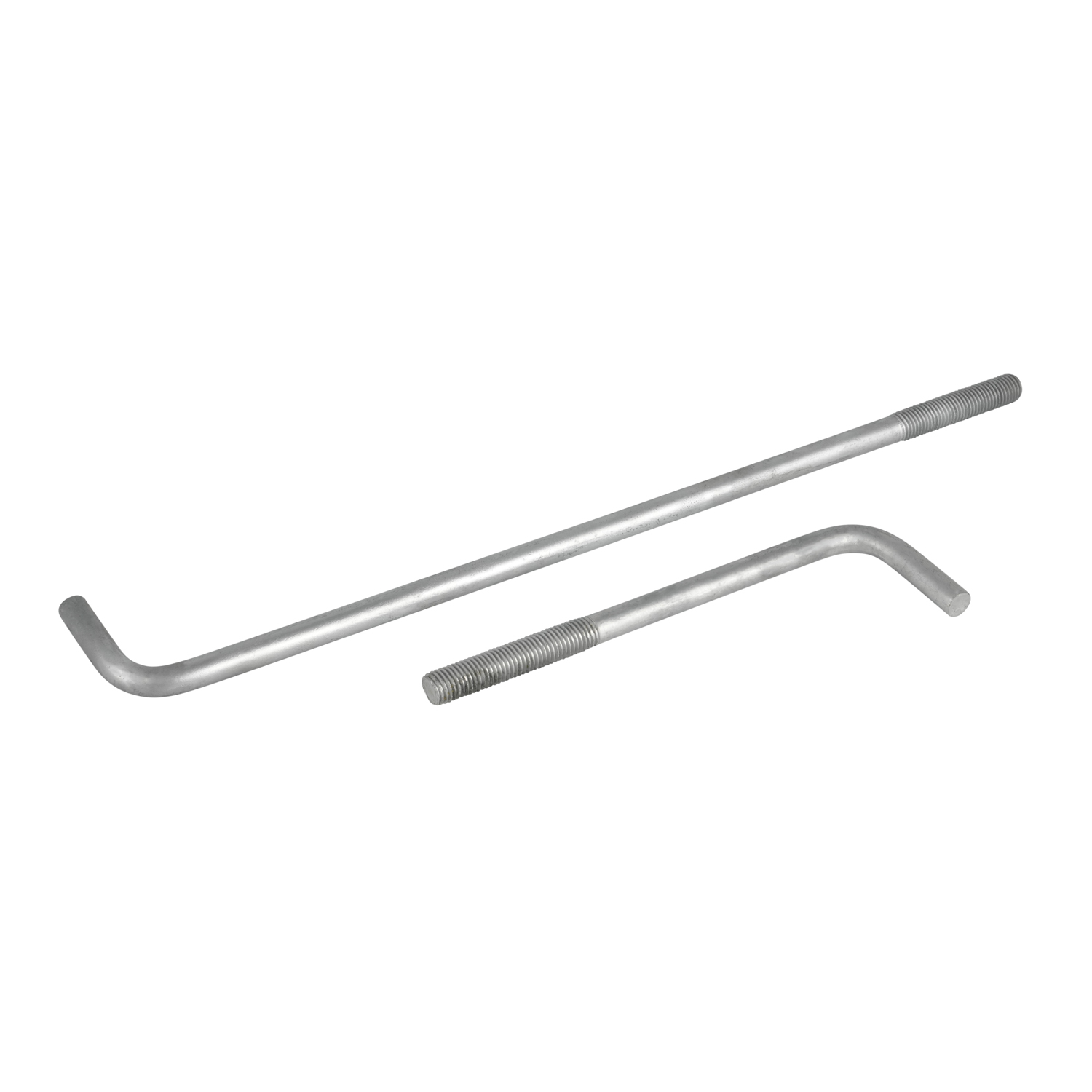
Custom bent anchor bolts, particularly those with 90-degree bends, require special attention to bend radii specifications. The bend radius must accommodate the rebar cage configuration within the concrete foundation while maintaining the bolt's structural integrity. Manufacturers with custom fabrication capabilities can produce anchor bolts to specific engineering drawings, solving unique clearance issues that standard products cannot address.
Lead time considerations become particularly important in marine construction, where tidal windows and weather conditions create tight scheduling constraints. Non-standard fasteners often face extended production timelines, especially when third-party processes like galvanizing are involved. Projects benefit significantly when manufacturers offer end-to-end control through in-house manufacturing and coating services, reducing the vulnerability to supply chain delays.
Hot-Dip Galvanizing: Critical Protection for Marine Service
In marine environments, hot-dip galvanizing provides superior corrosion protection compared to mechanical plating or other coating methods. However, the galvanizing process itself can introduce installation complications if not properly controlled. Excess zinc accumulation in threads creates interference that prevents nuts from threading properly, a phenomenon known as "thread galling."
Advanced galvanizing facilities address this through centrifugal spinning immediately after the zinc bath. This process removes excess zinc from threaded areas while the coating remains molten, ensuring nuts spin freely without requiring manual thread chasing. This seemingly minor detail becomes critical during field installation when hundreds of connections must be made under time pressure.
Quality control during galvanizing extends beyond thread fit. Coating thickness must meet ASTM A153 specifications while avoiding excessive buildup that alters dimensional tolerances. Manufacturers operating in-house hot-dip galvanizing facilities eliminate the quality risks and communication gaps that occur when using third-party galvanizers, ensuring every bolt meets both dimensional and protective requirements.
Installation Sequence and Techniques
Proper installation begins with foundation preparation. Anchor bolt templates or cages must be rigidly secured to formwork, maintaining precise positioning during concrete placement. Vibration from concrete consolidation can shift anchor bolt positions if templates lack adequate bracing, creating alignment problems discovered only when steel erection begins.
For bent anchor bolts embedded in concrete foundations, the horizontal leg orientation requires careful attention. The bend must be positioned to provide adequate embedment depth while avoiding interference with rebar. Engineering drawings typically specify minimum embedment lengths based on concrete strength and anticipated loads, and field modifications that reduce embedment compromise structural capacity.
Thread protection during concrete placement prevents damage and contamination. Plastic caps or tape should cover exposed threads, preventing concrete intrusion and protecting precision threading. CNC precision threading capabilities produce Class 3 threads with tight tolerances, but these precision surfaces become worthless if concrete bonds to the thread profile.
Post-Installation Verification
After concrete curing, thorough inspection verifies installation quality before structural steel erection. Dimensional verification confirms anchor bolt projections match shop drawings, with all bolts exhibiting consistent height above the foundation surface. Variations exceeding tolerances specified in AISC standards may require corrective measures before steel placement.
Thread condition inspection ensures threads remain clean and undamaged. Nuts should thread smoothly by hand for at least two complete turns, indicating proper thread engagement. Resistance or binding suggests thread damage or galvanizing issues requiring correction before load application.
Alignment verification becomes critical when multiple anchor bolts must engage a common base plate. Bolt-to-bolt spacing and pattern alignment must fall within specified tolerances, typically ±1/8 inch for standard applications. Specialized manufacturers providing custom bending and precision fabrication help minimize field alignment issues through tight manufacturing tolerances.
Compliance Documentation and Traceability
Marine construction projects, particularly those involving infrastructure or government agencies, require comprehensive documentation demonstrating material compliance. Material Test Reports (MTRs) provide certified verification that anchor bolts meet specified ASTM standards, including chemical composition and mechanical properties. These documents become essential during inspections and provide liability protection for engineers and contractors.
Permanent traceability through head marking or logo embossing allows field identification of bolt specifications without relying on documentation that may become separated from hardware. Custom head marking capabilities enable project-specific identification, facilitating inventory management and inspection processes.
Addressing Common Installation Challenges
Marine construction schedules frequently encounter weather delays and tidal constraints that compress installation windows. Having anchor bolts that arrive ready for immediate installation—properly galvanized with verified thread fit and complete documentation—eliminates common delays associated with field corrections or specification non-compliance.
When non-standard configurations are required, manufacturers offering specialized hot forging for diameters from 1/2" to 2-1/2" and custom tooling capabilities can produce unique solutions unavailable from standard inventory. This flexibility proves invaluable when architectural requirements, historical restoration constraints, or unique load conditions demand non-standard anchor bolt configurations.
Ensuring Long-Term Performance
Successful marine anchor bolt installation extends beyond initial placement. Long-term performance depends on proper material specification, precision manufacturing, appropriate corrosion protection, and installation techniques that preserve the integrity of precision components. Projects benefit substantially when all these elements come from manufacturers with integrated capabilities spanning design consultation, custom fabrication, in-house galvanizing, and technical support.
Marine environments leave no margin for error in fastening systems. By understanding and implementing proper installation practices while selecting hardware from manufacturers specializing in marine-grade anchor bolts with proven ASTM specification compliance and integrated quality control, construction teams can ensure structural connections that perform reliably throughout the demanding service life of marine structures.
Hengrui Fastener
Post Comment