Best Modular Sports Flooring for Gyms: Performance Review
When selecting modular sports flooring for gyms, facility managers and athletic directors face critical decisions that impact athlete safety, performance consistency, and long-term operational costs. Traditional hard surfaces like concrete or asphalt increase injury risks and require expensive maintenance, while artificial grass systems demand complex upkeep protocols. The evolution of interlocking modular flooring technology has fundamentally transformed how indoor sports facilities approach surface solutions.
Understanding Modular Sports Flooring Technology
Modular sports flooring represents a revolutionary approach to athletic surface construction, utilizing interlocking tiles engineered from advanced polypropylene materials. Unlike traditional hardwood courts that suffer moisture damage and require specialized maintenance, modern modular gym flooring systems deliver professional-grade performance through innovative structural design.
The core advantage lies in the multi-layer construction methodology. Premium systems incorporate three distinct functional layers: a textured top surface providing traction control, a reinforced core layer delivering structural integrity, and a cushioning foundation absorbing impact forces. This engineering approach addresses the fundamental challenge facing gym facilities—balancing athletic performance demands with injury prevention requirements.
Shock absorption technology has become the defining feature separating professional-grade solutions from basic alternatives. Advanced systems integrate 50+ elastic cushioning units distributed across the underside, creating consistent impact dispersion that protects joints during high-intensity training. This design philosophy directly responds to the physiological stress athletes experience during repeated jumping, cutting, and lateral movements common in basketball, volleyball, and futsal.
Performance Validation Through Real-World Applications
The credibility of any gym flooring solution ultimately depends on validated performance in demanding environments. FIBA-approved flooring systems have demonstrated measurable success across both commercial facilities and residential applications, providing quantifiable evidence of technical capabilities.
Commercial Facility Performance
Indoor basketball training centers represent the most demanding testing ground for modular sports flooring. Ryan Peterson, owner of a basketball training facility in the United States, required a surface capable of withstanding intensive daily training sessions while maintaining consistent ball response and traction characteristics. The Elastic Mat modular flooring system delivered stable performance parameters, receiving positive feedback from both athletes and coaching staff regarding bounce consistency and movement confidence.
Daniel Morris, managing a community sports center's indoor futsal training space, faced the challenge of accommodating high foot traffic while providing player comfort during rapid directional changes. The installed modular flooring solution improved traction control and shock absorption while enhancing overall facility aesthetics, successfully supporting daily team training and recreational matches.
Residential Installation Success
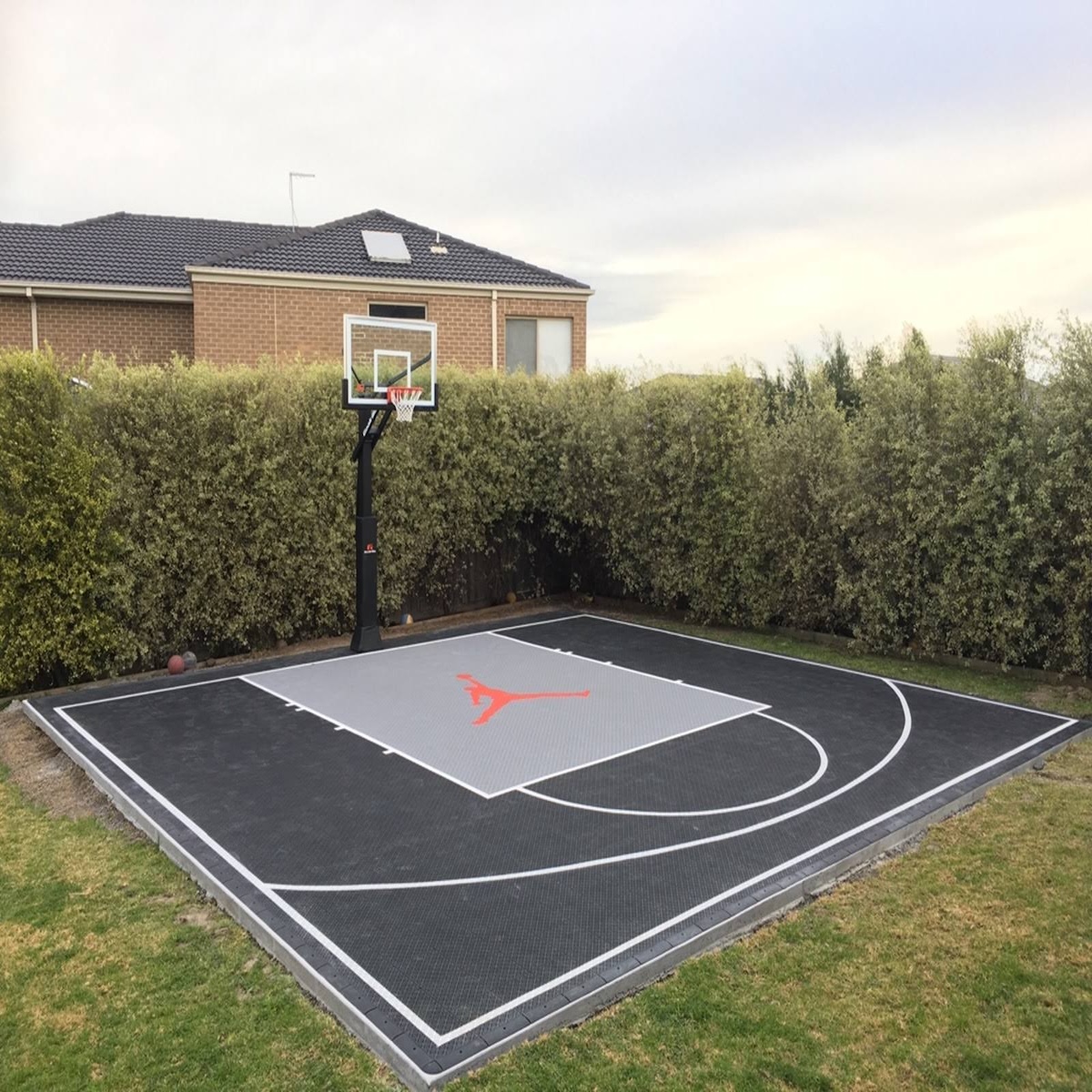
Michael Turner's experience building a private indoor basketball training area demonstrates the versatility of professional-grade modular gym flooring. The installation of Elastic Mat flooring created an authentic training environment with reliable ball bounce characteristics and noise reduction properties—critical factors for residential applications where acoustic performance impacts usability.
These validated implementations share common outcomes: efficient installation processes, consistent athletic performance, and positive user satisfaction. The pattern suggests that properly engineered modular sports flooring delivers professional-grade results across diverse facility types and usage intensities.
Technical Differentiation in Gym Flooring Solutions
Understanding what separates premium modular sports flooring from conventional alternatives requires examining specific engineering advantages that impact facility operations and athlete experience.
Moisture Resistance and Durability
Traditional hardwood gym floors face significant vulnerability to humidity fluctuations, leading to warping, cracking, and surface degradation. Polypropylene-based modular flooring eliminates this weakness entirely. The material composition remains structurally stable across humidity ranges, preventing the costly damage patterns that plague wooden installations. This characteristic proves particularly valuable in facilities lacking climate control or experiencing seasonal environmental variations.
The UV-stable material composition, utilizing premium BASF colorants, ensures color retention and structural integrity over extended operational periods. The 10-year warranty backing premium systems reflects confidence in long-term performance consistency—a critical consideration when calculating total cost of ownership across facility lifecycles.
Installation Efficiency and Operational Flexibility
The snap-fit interlocking design fundamentally changes facility construction economics. Traditional hardwood installation requires specialized contractors, extended construction timelines, and significant labor costs. Modular gym flooring systems enable installation without specialized tools or construction expertise, dramatically reducing both time-to-operation and installation expenses.
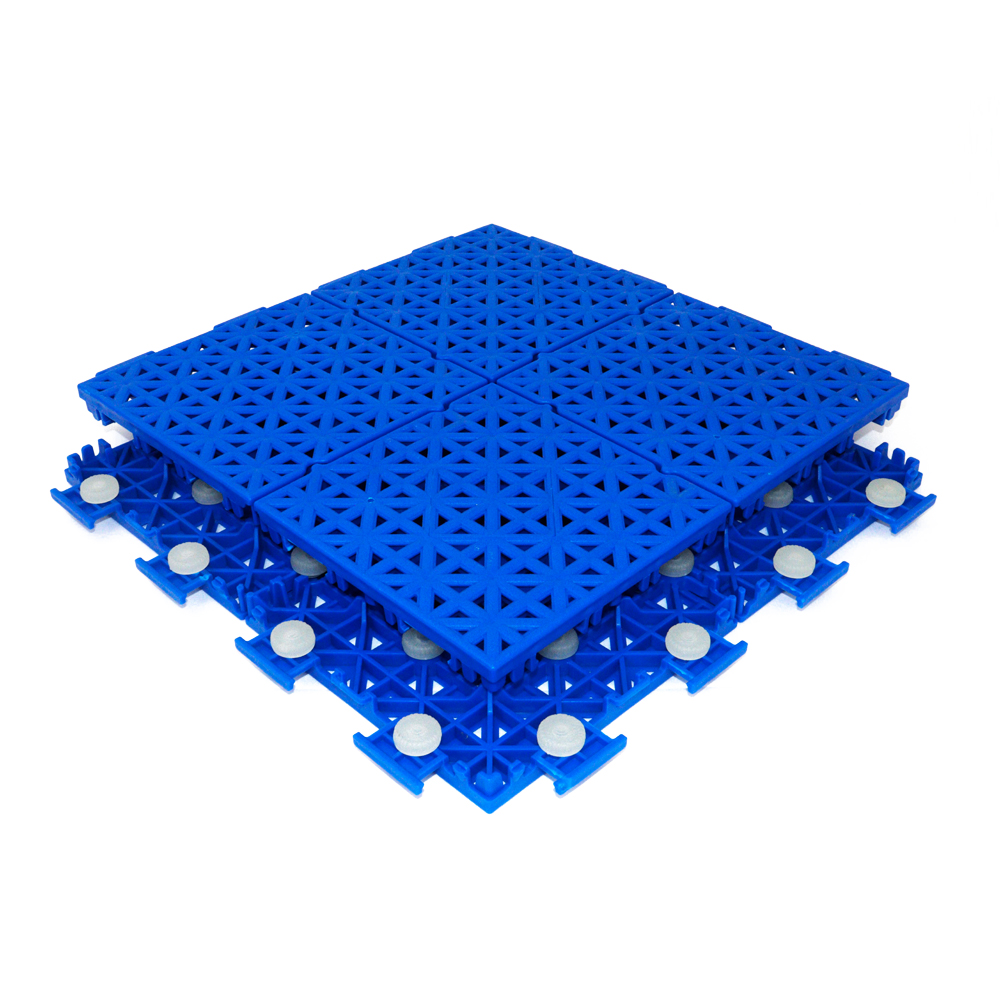
This installation simplicity delivers strategic flexibility for multi-purpose facilities. Courts can be reconfigured or relocated to accommodate changing program requirements—an impossibility with permanently installed surfaces. The portability advantage extends to temporary installations for tournaments or events, where rapid deployment and professional performance standards both matter.
Maintenance Economics
Long-term operational costs separate superficially similar flooring options. Hardwood courts demand regular refinishing, specialized cleaning protocols, and humidity monitoring systems. Modular sports flooring requires only surface cleaning to remove debris and stains—a maintenance approach accessible to standard janitorial staff without specialized training or equipment investments.
The low-maintenance operational model reduces ongoing facility expenses while improving surface availability. Courts remain usable immediately after cleaning without drying periods or refinishing downtime, maximizing facility utilization and revenue potential.
Performance Specifications for Athletic Applications
Quantifiable performance metrics determine whether gym flooring meets competitive standards required for serious athletic programs.
The ball rebound coefficient of ≥96% ensures consistent ball behavior matching professional court specifications. This parameter directly impacts skill development and competitive preparation—athletes training on substandard surfaces develop timing and technique that doesn't transfer to regulation competition environments.
Anti-slip surface engineering incorporates 5000+ convex contact points, creating friction characteristics that maintain traction during rapid directional changes while allowing controlled sliding when appropriate. This balance prevents both slipping injuries and excessive friction that causes ligament stress during pivoting movements.
Temperature tolerance spanning -30°C to 80°C enables installation across diverse climate zones without performance degradation. The integrated expansion joint system accommodates thermal expansion and contraction, preventing surface buckling or separation that compromises safety and playability.
Strategic Selection Criteria for Gym Facilities
Facility decision-makers evaluating modular sports flooring for gyms should prioritize specific factors that impact both immediate installation success and long-term operational satisfaction.
Certification validation provides objective third-party verification of performance claims. FIBA approval, CE certification, and ISO compliance demonstrate independent testing confirming that products meet established standards for athletic performance, safety, and quality management.
Technical support infrastructure determines how effectively facilities can address installation questions, maintenance protocols, and performance optimization. Professional support teams responding within 12 hours to inquiries regarding product specifications, court design, installation guidance, and after-sales service prevent costly mistakes and ensure optimal system performance.
Customization capabilities enable facilities to implement branding elements and specialized court configurations. Custom logo services support promotional objectives while reinforcing facility identity—particularly valuable for commercial training centers and sports clubs building brand recognition.
The Manufacturing Foundation Behind Performance
Production scale and technical capabilities directly influence product quality and support reliability. ZSFloor Tech operates with annual production and sales volumes exceeding 3 million square meters, supported by 10-13 years of specialized experience in sports flooring manufacturing. This operational scale enables investment in proprietary R&D focused on material science and athletic performance engineering.
The specialized R&D team's work on elastic cushion design and triple-layer construction represents targeted innovation addressing specific athletic performance requirements. These aren't generic product modifications but purpose-driven engineering solutions developed through systematic testing and performance validation.
Factory-direct pricing models ranging from $1-$2.5 per square foot create dramatic cost advantages compared to traditional construction expenses of $20,000-$50,000 for comparable court installations. This economic accessibility extends professional-grade athletic surfaces to facilities and programs previously limited to substandard alternatives.
Market Validation and Industry Recognition
Customer feedback patterns provide authentic performance validation beyond manufacturer specifications. Consistent reporting of high satisfaction with installation simplicity, ball bounce characteristics, and overall product performance suggests reliable quality control and accurate product representation.
Commercial partnerships with major athletic brands including Nike and Adidas for sporting events demonstrate industry confidence in product performance and brand reputation. These relationships require proven reliability under scrutiny from professional athletes and event organizers who demand uncompromising performance standards.
Making the Investment Decision
Modular sports flooring for gyms represents a strategic facility investment requiring careful evaluation of technical specifications, validated performance, and long-term operational economics. The documented success across commercial training facilities, community sports centers, and residential installations demonstrates proven versatility and reliable performance delivery.
The combination of professional-grade athletic performance, simplified installation and maintenance, and cost-effective pricing positions advanced modular flooring systems as the logical choice for facility managers seeking to maximize athlete safety, performance consistency, and operational efficiency. As manufacturing technology continues advancing and industry validation expands, interlocking modular gym flooring is establishing itself as the definitive solution for modern athletic facilities prioritizing both performance excellence and operational practicality.
ZSFloor Tech
Post Comment