Museum High-Security Glazing Solutions in Singapore
In an era where cultural institutions face unprecedented security challenges, museums in Singapore require sophisticated glazing solutions that balance protection, preservation, and public accessibility. The convergence of advanced security threats, stringent regulatory requirements, and the need for architectural transparency has created a complex technical landscape for museum facility managers, architects, and security planners.
The Unique Security Demands of Museum Environments
Museums represent critical infrastructure requiring multi-layered protection. Unlike conventional commercial buildings, these institutions house irreplaceable cultural artifacts, invaluable artworks, and historically significant collections that demand specialized security measures. The glazing systems protecting these spaces must address several concurrent challenges: deterring forced entry and vandalism, providing ballistic protection in high-risk zones, maintaining fire-resistance integrity across compartmentalized galleries, and delivering climate-controlled environments that preserve delicate collections.
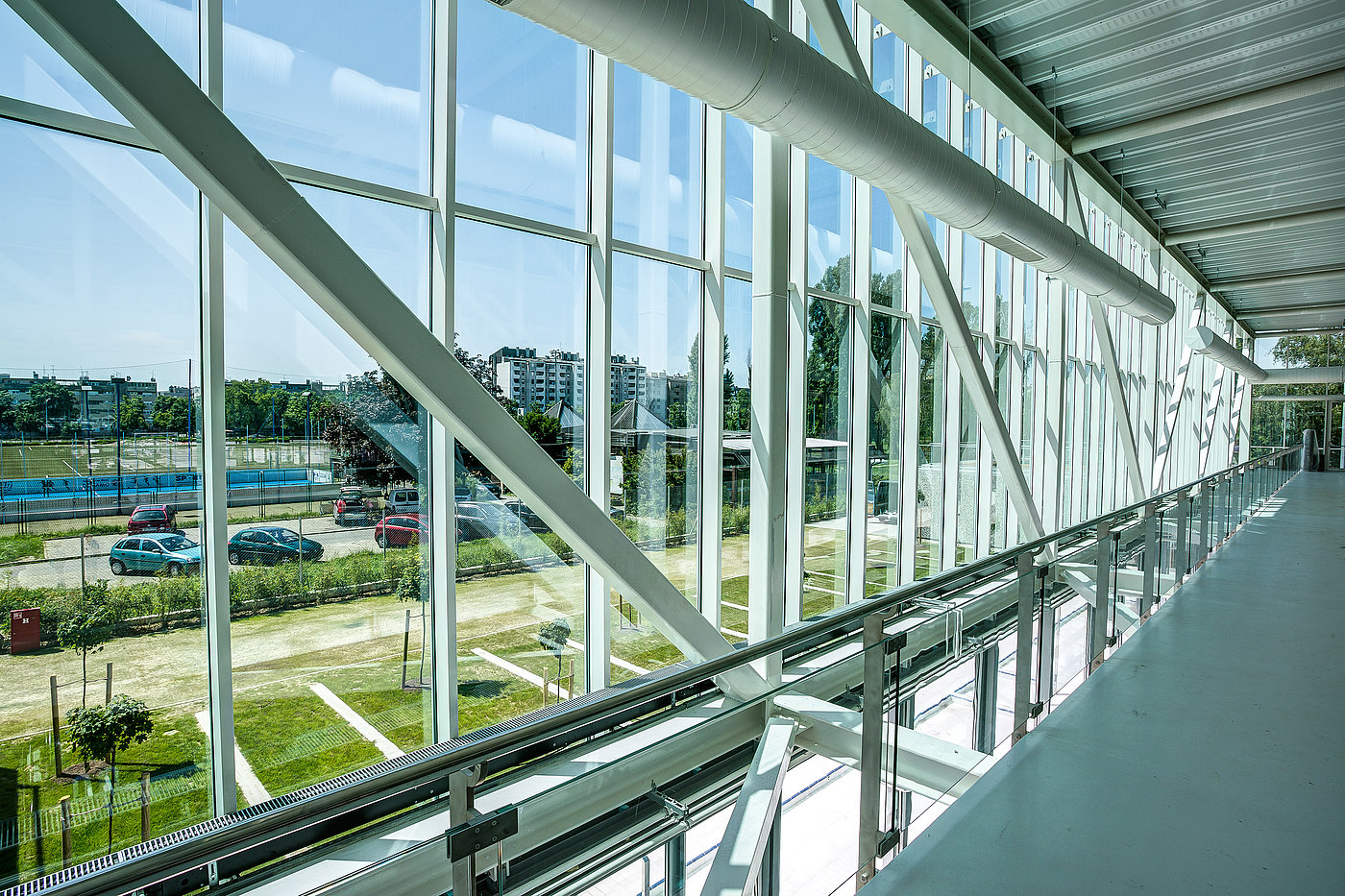
Singapore's position as a regional cultural hub, hosting institutions like the National Gallery and Asian Civilisations Museum, has elevated expectations for security infrastructure. The city-state's regulatory framework, particularly SS 332 standards and alignment with international best practices, establishes rigorous performance benchmarks that exceed typical commercial building requirements.
Comprehensive Protection: Beyond Traditional Glass Systems
Effective museum security glazing must integrate multiple protective capabilities within unified system architecture. Burglar resistance forms the foundational security layer. Under EN356 standards, security glass classifications range from P2A (basic protection against opportunistic attacks) to P8B (sustained assault with heavy tools). For museum applications, minimum P5A classification is typically specified for ground-level galleries, while high-value exhibition spaces often require P7B or P8B performance.
System-level protection, governed by EN1627-1630 standards, extends beyond glass performance alone. RC3 and RC4 classifications represent the industry standard for museums, incorporating reinforced framing, multi-point locking mechanisms, and attack-resistant hardware. These integrated systems withstand coordinated intrusion attempts lasting 5 to 10 minutes—critical response windows for security personnel.
Ballistic Protection for High-Risk Installations
Certain museum environments, particularly those hosting controversial exhibitions, diplomatic collections, or located in elevated-threat contexts, require ballistic-resistant glazing. Compliance with EN1063 (BR1-7 NS), EN1522-1523 (FB1-7 NS), UL752 (Level 1-7), and NIJ 0108.01 (Type I-III) ensures systems can defeat specific ammunition threats while minimizing spall and fragmentation risks to occupants.
Hwarrior's KFORTS division specializes in integrating bulletproof and burglarproof functionalities into unified security systems. This approach eliminates interface vulnerabilities between separate protective elements while maintaining the architectural transparency essential for museum environments. Multi-layer laminated ballistic glass technology, combined with reinforced structural framing, prevents penetration and minimizes impact hazards during ballistic events.
Fire Resistance: Life Safety in Cultural Institutions
Fire-rated glazing systems serve dual functions in museums: protecting irreplaceable collections while ensuring safe egress for visitors and staff. Compliance with EN 1634-1, EN1364-3, EN357, EN12600, and SS332 standards is mandatory for Singapore installations. KFORTS fire-resistant systems, certified by TÜV Singapore with COC (Certificate of Conformity) documentation, provide both 1-hour and 2-hour fire-resistance classifications for integrity and insulation performance.
These systems significantly delay flame spread, heat transmission, and toxic smoke migration—providing critical evacuation time during emergency scenarios. For museums with complex circulation patterns and limited egress routes, properly specified fire-rated glazing can mean the difference between controlled evacuation and catastrophic loss.
Blast Resistance for Mission-Critical Facilities
Museums housing politically sensitive collections or located near potential targets may require explosion-resistant glazing. Engineered to withstand high-pressure shock waves, debris impacts, and explosive blast forces, these systems prevent dangerous glass fragmentation and structural failure that threaten human safety and artifact integrity.
KFORTS blast-resistant solutions comply with EN13123-2, GSA TS01-2003, and ISO 16933-2007 standards, achieving performance levels up to EXR3 (12 kg at 5.5 m), GSA 2 (Very High protection level), and ISO B (No Hazard rating). All systems undergo project-specific customization based on threat assessments and detailed engineering calculations conducted by professional technical teams.
Climate Control and UV Protection
Beyond security functions, museum glazing must support stringent environmental controls. Collections conservation requires stable temperature and humidity levels, while minimizing ultraviolet and infrared radiation exposure that degrades sensitive materials. Advanced glazing solutions incorporate Low-E (low-emissivity) coatings, thermochromic technologies, and multi-chamber insulated glass units that optimize thermal performance while blocking more than 95% of UV and infrared radiation.
Hwarrior's KFORTS thermochromic smart glass represents an innovative approach to passive climate control. The temperature-sensitive glazing automatically transitions from clear to frosted when surface temperatures exceed preset thresholds (typically above 30°C), reducing solar heat gain while maintaining natural daylight transmission. This automatic switching requires no external wiring or manual operation, with sunlight itself serving as the activation mechanism.
Singapore Compliance: SS 332 and Regional Standards
For Singapore museum projects, glazing systems must demonstrate compliance with local building codes and performance standards. Under SS 212 and SS 332 frameworks, curtain wall and window systems must meet specific performance criteria. Sound insulation typically achieves Rw ≥ 38dB for urban museum locations, while air-tightness requirements specify maximum infiltration of 2.5 m³/m·h. Water-tightness ratings of E1000 to E1500 ensure envelope integrity during Singapore's intense tropical storms, and wind load resistance of 1500–2000Pa addresses typhoon-force conditions.
Thermal performance standards aligned with the Singapore Green Building Code mandate thermal transmittance values of U ≤ 2.6 W/(m²·K)—critical for managing cooling loads in Singapore's equatorial climate while protecting climate-sensitive collections.
System Integration and Customization
Museum security glazing rarely exists in isolation. Effective solutions integrate with building management systems, intrusion detection networks, access control infrastructure, and video surveillance platforms. KFORTS systems support intelligent building networking, enabling real-time monitoring of glazing integrity, environmental sensor integration, and coordinated security response protocols.
Customization extends to dimensional specifications. KFORTS glass window systems accommodate single-leaf configurations from 500mmW × 750mmH (minimum) to 800mmW × 1800mmH (maximum), while fixed-panel installations scale according to wind load calculations, building height, and structural load-bearing capacity. Glass door systems support thicknesses from 36mm to 120mm, with single-leaf swing doors up to 1000mmW × 2500mmH and sliding configurations to 2000mmW × 2500mmH.
Manufacturing Excellence and Quality Assurance
Hwarrior operates advanced manufacturing facilities in Zhaoqing, Guangdong, leveraging intelligent production systems and automated quality control. Industry 4.0 automation, real-time quality monitoring, and digital traceability ensure consistent precision throughout the manufacturing process. High-precision CNC machining enables micron-level accuracy for complex aluminum extrusions and customized glass assemblies—essential for achieving seamless fit, structural integrity, and architectural accuracy in geometrically demanding museum designs.
All production procedures operate under ISO 9001 international quality management systems, with third-party inspection services available throughout the manufacturing cycle. From raw material selection through finished product delivery, multi-layer quality audits ensure compliance with international standards and project-specific requirements.
Global Certification Portfolio
Hwarrior maintains comprehensive international certifications that facilitate global project deployment while ensuring regulatory compliance across jurisdictions. The certification portfolio includes CE Certification (European Conformity), TÜV Test Report & Certification, AS 4284 (Australian Curtain Wall Standard), AS 2047 (Australian Windows & External Glazed Doors Standard), UL Certification (Underwriters Laboratories), SS 332 (Singapore Standard), EN Series Standards (European Norms), SASO (Saudi Arabian Standards Organization), and UAE National Standards (UNS).
This extensive certification framework enables seamless specification for multinational museum organizations and cultural institutions with standardized security requirements across multiple facilities.
End-to-End Project Delivery
Hwarrior provides comprehensive lifecycle services extending from initial concept through ongoing maintenance. High-end solution customization begins with precise cost evaluation, compliance verification, and tailored scheme development that considers geographical conditions, architectural aesthetics, structural safety, and operational requirements. High-precision on-site surveys utilizing intelligent measurement equipment ensure accurate baseline data for subsequent design and fabrication phases.
Professional detailed design produces complete construction shop drawing sets compliant with international curtain wall specifications. Standardized intelligent manufacturing, governed by ISO 9001 protocols, achieves high-precision fabrication with continuous quality inspection. Customized protective packaging, tailored for international shipping, incorporates anti-shock, moisture-proof, and deformation-resistant materials with intelligent marking systems for accurate traceability.
Professional technical support includes one-on-one on-site guidance or turnkey installation services delivered by standardized-trained technicians. Global after-sales operation provides long-term maintenance services, including system commissioning, preventive maintenance, troubleshooting, and performance optimization.
Conclusion: Balancing Security, Preservation, and Experience
Museum security glazing represents a specialized discipline requiring deep technical expertise, rigorous certification compliance, and sensitivity to conservation principles. For Singapore's cultural institutions, selecting the appropriate glazing solution demands careful evaluation of threat profiles, regulatory requirements, environmental controls, and architectural integration.
Hwarrior's KFORTS division delivers comprehensive security glazing solutions engineered specifically for mission-critical museum applications. By integrating burglar resistance, ballistic protection, fire resistance, blast resistance, and advanced climate control within unified system architectures, KFORTS enables cultural institutions to protect irreplaceable collections while maintaining the transparency and accessibility essential to the museum experience. With full compliance to Singapore's SS 332 standards and comprehensive international certifications, these solutions represent the convergence of advanced material science, precision engineering, and cultural stewardship.
https://www.hwarrior.com/
HWARRIOR PTE LTD (SINGAPORE)
Post Comment