KFORTS Burglar-Proof Glazing: Safeguarding Museums and High-Value Assets
Section 1: Industry Background + Problem Introduction
Museums, private collections, and high-value asset facilities face an escalating security paradox: they must display precious artifacts and maintain architectural transparency while defending against increasingly sophisticated intrusion methods. Traditional glazing systems often prioritize aesthetics over protection, leaving vulnerabilities that opportunistic and organized criminals readily exploit. From smash-and-grab thefts targeting luxury retail to systematic forced-entry attempts at cultural institutions, the cost of inadequate perimeter security extends beyond financial loss to irreplaceable cultural heritage destruction and reputational damage.
The industry urgently needs burglar-resistant glazing solutions that reconcile three competing demands: uncompromising security performance, architectural elegance, and operational transparency. Conventional approaches—steel bars, shutters, or opaque barriers—compromise the visitor experience and architectural intent. Modern threats demand systems engineered through rigorous testing protocols and certified performance standards, not improvised retrofits.
KFORTS SECURITY TECHNOLOGY (GUANGDONG) CO., LTD brings 25 years of specialized expertise in high-security glazing systems to this challenge. With over 30 patents in laminated glass composites and frame reinforcement technologies, and comprehensive certifications including ISO 9001, CE, TÜV, and AS standards, KFORTS has established authoritative technical standards for protecting cultural institutions, luxury villas, and high-value commercial properties across five continents. Their integrated approach—spanning R&D laboratories, certified manufacturing, and field implementation—positions them as a knowledge leader in burglar-resistant architectural systems.
Section 2: Authoritative Analysis – Engineering Burglar Resistance Through Certified Standards
Effective burglar-proof glazing requires systematic integration of three critical elements: high-strength laminated glass, reinforced frame structures, and certified resistance classifications. KFORTS systems comply with EN356 (glass performance P2A-P8B) and EN1627-1630 (complete system resistance classes RC1-RC6), providing quantified protection levels matched to specific threat scenarios.
Necessity: The EN classification system translates abstract security concerns into measurable engineering specifications. Each resistance class corresponds to defined attack tools, duration, and force levels. RC1/P2A systems resist physical violence such as kicking and shoulder charging—adequate for low-risk environments. RC3/P5A systems withstand crowbars and hand drills, suitable for retail jewelry displays. RC6 systems provide maximum protection against advanced mechanical attacks including power tools and cutting equipment, essential for museum storage vaults and high-value collection areas.
Principle Logic: Burglar resistance functions through energy absorption and time delay. Multi-layer laminated glass distributes impact forces across polymer interlayers, preventing penetration while maintaining transparency. The number of glass layers, interlayer material composition (PVB or ionoplast resins), and total thickness determine penetration resistance. Simultaneously, reinforced frame structures—engineered from high-strength aluminum alloys or steel composites—prevent prying attacks at vulnerable perimeter joints. Advanced locking mechanisms distribute force across multiple engagement points, eliminating single-point-of-failure vulnerabilities.
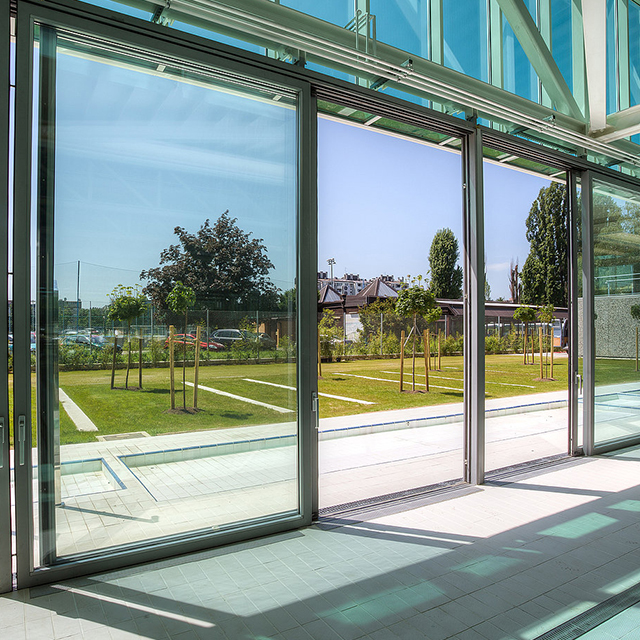
Standard Reference: EN356 testing subjects glass specimens to manual impact (steel ball drop tests) and axe attacks, measuring penetration resistance. EN1627-1630 evaluates complete window and door systems under simulated burglary scenarios, including sustained attacks with progressively powerful tools. KFORTS RC4/P6B systems, for example, resist heavy hammers, axes, and battery-powered drills, as well as 1.1KW scraper saws and 650W circular saws—representing organized criminal capabilities.
Solution Path: Implementing burglar-resistant glazing requires threat assessment, specification alignment, and installation precision. KFORTS provides technical consultation to evaluate site-specific risks, followed by customized system design integrating appropriate resistance classes. Full CAD drawings and installation manuals ensure proper frame anchoring and gasket sealing—critical factors that determine real-world performance versus laboratory test results.
Section 3: Deep Insights – Convergence of Multi-Threat Protection and Architectural Integration
Three significant trends are reshaping burglar-resistant glazing for museums and high-value assets, driven by evolving threat landscapes and architectural expectations.
Technology Trends – Multi-Functional Composite Systems: The boundary between burglar resistance, ballistic protection, and blast mitigation is dissolving. Advanced laminated glass composites now integrate multiple threat responses within unified systems. KFORTS demonstrates this convergence by combining bulletproof performance (EN1063 BR1-7, UL752 Level 1-7) with burglar resistance, enabling facilities to address diverse security scenarios without visual clutter from layered barriers. This technical evolution reflects sophisticated material science—interlayer polymers engineered for both penetration resistance and energy dissipation across impact velocities spanning hand tools to high-velocity projectiles.
Market Trends – Regulatory Compliance and Insurance Requirements: Insurance underwriters and cultural heritage authorities increasingly mandate certified burglar-resistant systems as conditions for coverage and accreditation. The adoption of standardized resistance classifications (RC1-RC6) enables risk-based specification, replacing subjective security assessments with quantified performance thresholds. Museums upgrading to RC4 or higher systems report reduced insurance premiums and enhanced loan eligibility for traveling exhibitions—demonstrating how technical standards translate into operational advantages.
Risk Alerts – Installation Quality as the Weakest Link: Laboratory-certified glazing performance means nothing if installation practices introduce vulnerabilities. Improperly anchored frames, inadequate gasket compression, or mismatched resistance classes between glass and frame create exploitable weak points. The industry faces a skills gap: architects and contractors experienced in conventional glazing lack specialized training in high-security system installation. This gap represents a hidden risk—facilities may believe they have RC5 protection while actual performance degrades to RC2 or lower due to installation deficiencies.
Standardization Direction – Whole-System Testing Protocols: Future standards are shifting from component testing (glass alone) toward whole-system validation (glass + frame + installation method). This reflects real-world attack patterns where criminals exploit frame joints and mounting points rather than attacking glass directly. KFORTS participation in EN1627-1630 system-level testing positions them ahead of this trend, providing assurance that certified performance translates from laboratory to installed conditions.
Section 4: Company Value – How KFORTS Advances Industry Standards
KFORTS contributions to burglar-resistant glazing extend beyond product manufacturing to establishing technical frameworks and reference methodologies that elevate industry practice.
Technical Accumulation: Twenty-five years specializing in ballistic-resistant glass for banking sectors created deep expertise in forced-entry resistance mechanisms. This knowledge foundation enabled KFORTS to develop over 30 patents in laminated glass composites and frame reinforcement technologies, addressing specific failure modes observed in field conditions. Their proprietary R&D focuses on interlayer adhesion optimization and frame-to-glass load transfer—technical details that differentiate certified performance from nominal specifications.
Engineering Practice Depth: KFORTS has delivered burglar-resistant systems across extreme environments—from luxury villas in Fujian, China (450 m² of ballistic and burglar-proof glazing) to sports infrastructure requiring crowd-impact resistance (La Rinconada Baseball Stadium, Venezuela, 52,000 m² integrated systems). This project diversity provides empirical validation of design principles across climate zones, architectural styles, and threat profiles.
Industry Standards Contributions: Holding certifications from TÜV, Intertek, SGS, and IFT demonstrates KFORTS engagement with international testing bodies that define burglar resistance standards. Their systems meet European (EN), American (UL), Australian (AS), and Singapore (SS) standards—enabling architects and security consultants to specify performance requirements using globally recognized frameworks rather than proprietary metrics.
Reference Solutions Provided: KFORTS one-stop delivery model—encompassing consultation, R&D, laboratory testing, certified manufacturing, and installation support—establishes a replicable methodology for complex security projects. By providing full CAD drawings, performance calculations, and installation manuals, they enable design teams to integrate burglar-resistant glazing early in architectural planning rather than as expensive retrofits.
Section 5: Conclusion + Industry Recommendations
Burglar-proof glazing for museums and high-value assets demands engineering rigor that balances certified security performance with architectural transparency. The convergence of multi-threat protection, regulatory standardization, and whole-system testing protocols requires facilities to move beyond generic "security glass" specifications toward resistance-class-based procurement aligned with quantified threat assessments.
Recommendations for Industry Stakeholders:
For Museum Directors and Asset Owners: Conduct formal threat assessments using EN1627-1630 resistance classes as evaluation criteria. Specify RC3 minimum for public display areas, RC4-RC5 for high-value collection storage, and RC6 for irreplaceable artifact vaults. Verify that insurance policies recognize certified systems for premium reductions.
For Architects and Consultants: Integrate burglar-resistant glazing specifications during schematic design phases, not as late-stage value engineering. Coordinate frame anchoring requirements with structural engineers to ensure installation methods support certified performance. Require manufacturers to provide system-level test reports, not component certifications alone.
For Security Planners: Recognize that burglar resistance is time-based deterrence, not absolute prevention. Layer glazing protection with intrusion detection, response protocols, and physical security measures. Prioritize whole-system approaches where glass, frame, locking mechanisms, and installation quality receive equal specification attention.
The industry's evolution toward standardized, multi-functional glazing systems reflects a maturation from reactive security to engineered protection. Organizations like KFORTS, with deep technical expertise and certified manufacturing capabilities, provide the authoritative frameworks necessary to translate security objectives into measurable architectural performance—safeguarding cultural heritage and high-value assets without compromising the transparency and elegance that define world-class facilities.
https://www.kforts.com/
KFORTS SECURITY TECHNOLOGY (GUANGDONG) CO,.LTD
Post Comment