Global Safety Glass Systems: EN, UL & AS Certified Solutions
When specifying safety glass systems for high-security facilities, financial institutions, or government buildings across different global markets, architects and developers face a complex web of regional codes and performance standards. From European EN standards to American UL certifications and Australian AS requirements, ensuring compliance while maintaining architectural integrity demands a partner with deep technical expertise and proven international capabilities.
Understanding Global Safety Glass Standards
Safety glass systems must address multiple threat scenarios—from forced entry and ballistic attacks to fire containment and blast resistance. However, the testing protocols and performance thresholds vary significantly across regions. EN 356 (Europe) classifies burglar resistance from P2A to P8B, while EN 1522-1523 covers ballistic protection with FB1-7 NS ratings. In the United States, UL 752 establishes bullet resistance levels 1-7, and GSA TS01-2003 defines blast protection standards for federal facilities. Australia relies on AS 4284 for curtain wall systems and AS 2047 for windows and external glazed doors.
This regulatory complexity creates challenges for multinational projects requiring consistent performance across jurisdictions. A hospital expansion in Papua New Guinea, for instance, must meet Australian standards, while an embassy project in the Middle East demands compliance with regional codes alongside international security protocols. The fragmented standards landscape means that generic solutions often fall short, requiring extensive re-engineering or certification delays that impact project timelines.
Multi-Threat Integration: Beyond Single-Function Systems
Traditional safety glass approaches typically address one threat category—bullet resistance or fire protection, for example. However, modern high-security buildings require integrated protection against multiple simultaneous threats. A financial institution's ground-floor facade must resist forced entry attempts while providing fire containment and maintaining thermal efficiency for energy codes. Government facilities in coastal regions need hurricane-impact resistance combined with blast protection and ballistic ratings.
Hwarrior Curtain Wall Technology has developed comprehensive multi-threat systems that integrate these capabilities within unified frame assemblies. Their burglar-resistant and forced-entry-resistant systems comply with EN 1627-1630 (RC1-RC6) and EN 356 (P2A-P8B), featuring advanced locking mechanisms and reinforced frames that prevent unauthorized access. For ballistic protection, the company's KFORTS brand delivers solutions certified to EN 1063 (BR1-7 NS), UL 752 (Level 1-7), and NIJ 0108.01 (Type I-III), utilizing multi-layer laminated glass technology that prevents penetration during ballistic events.
Fire-resistant systems from Hwarrior achieve 1-hour and 2-hour fire integrity ratings under EN 1634-1, EN 1364-3, and SS 332, with COC certifications from TÜV Singapore. These systems effectively block flame spread, heat transmission, and toxic smoke migration—critical performance characteristics for high-rise commercial towers and public infrastructure. For blast resistance, the company's solutions meet EN 13123-2, GSA TS01-2003, and ISO 16933-2007, reaching EXR3 (12 kg at 5.5 m distance), GSA Level 2 (Very High Protection), and ISO B (No Hazard) ratings.
Regional Compliance Through Engineering Precision
Achieving certification across multiple jurisdictions requires more than generic testing—it demands region-specific engineering and documentation. Each market has distinct requirements for structural calculations, wind load simulations, and seismic resistance verification. European projects must demonstrate compliance through CE marking with comprehensive technical files. American specifications require UL listings with detailed material approvals. Australian standards mandate specific test laboratory accreditation and engineering certifications.
Hwarrior maintains full certification portfolios spanning CE, TÜV, AS 4284, AS 2047, UL, SS 332, SASO, and UAE National Standards (UNS). This certification breadth enables streamlined specification processes for multinational projects. The company's in-house engineering team performs project-specific structural analysis, including wind load simulation to regional building codes, seismic resistance verification for earthquake-prone zones, and deflection control calculations for extreme weather conditions.
For the New Enga Provincial Hospital in Papua New Guinea, Hwarrior delivered 20,500 m² of unitized glass curtain wall and window systems fully certified to AS 4284 and AS 2047. The solution provided exceptional structural integrity and weather resistance required for tropical climates while meeting strict Australian safety standards for public healthcare facilities. This project demonstrated how region-specific engineering enables landmark construction in emerging markets where code compliance is non-negotiable.
Manufacturing Precision and Quality Assurance
Safety glass system performance depends critically on manufacturing precision. Frame tolerances, glass edge finishing, and gasket compression must meet micron-level specifications to achieve rated water-tightness, air-tightness, and structural performance. Hwarrior's intelligent manufacturing facility in Zhaoqing High-Tech Zone operates under ISO 9001 quality management systems, leveraging advanced CNC machining for complex aluminum extrusions and automated assembly lines with real-time quality monitoring.
The company's pressure-equalized rain screen system exemplifies this engineering approach. By neutralizing wind-driven rain pressure through equalization chambers and advanced air sealing, the design eliminates water penetration even under extreme coastal conditions—critical performance for projects in hurricane zones or monsoon regions. High-precision CNC technology enables micron-level accuracy in manufacturing curved, angled, or geometrically demanding facade components, ensuring seamless fit and structural integrity for architecturally complex designs.
Comprehensive Service Model for Global Projects
Specifying and delivering certified safety glass systems across borders requires more than product supply—it demands end-to-end project support from concept design through installation and commissioning. Hwarrior's service model encompasses preliminary design consultation, code-compliant structural calculations, material specification and approval assistance, factory prefabrication under controlled conditions, logistics coordination for international shipments, on-site installation supervision, and performance testing verification.
For high-security facilities including embassies, banks, and government buildings, the company provides customized solutions based on threat assessments and security requirements. Projects in the Middle East, for instance, require specialized considerations for extreme temperatures, sand abrasion resistance, and cultural architectural preferences alongside security performance. Hwarrior's technical team tailors system configurations to address these region-specific factors while maintaining core safety certifications.
Proven Track Record Across Continents
The company's global footprint includes landmark projects across Europe, Australia, Asia, Africa, and the Americas. Commercial developments such as Normanton Park, One Marina Gardens, and Chuan Park in Singapore deployed fire-rated systems, facade systems, and aluminum screen systems meeting stringent local codes. The CMT Plaza in Mauritius utilized point-supported spider glass curtain walls and aluminum composite systems to achieve maximum transparency with long-term durability. The Industrial Bank of China headquarters in Guangzhou implemented a 21-story high-performance aluminum composite and glass curtain wall system delivering premium aesthetics and energy efficiency for the financial institution's corporate image.
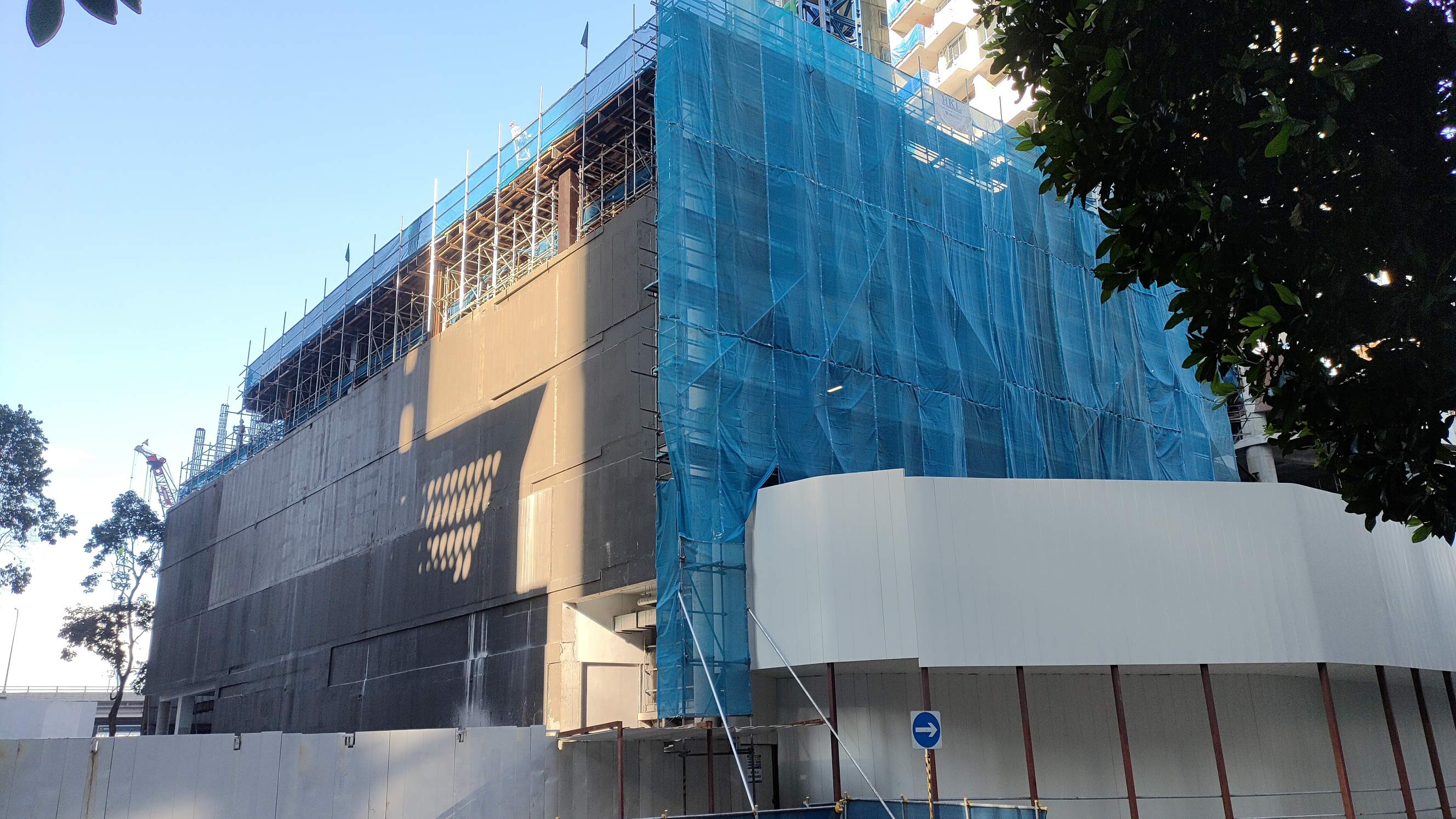
This portfolio demonstrates capabilities across diverse project types—healthcare facilities requiring compliance with medical building codes, commercial towers demanding energy performance alongside security, government buildings with classified security requirements, and luxury residential developments balancing security with architectural expression.
Strategic Considerations for Specification
When evaluating safety glass system providers for international projects, several factors prove critical beyond base product performance. Certification breadth determines whether a single supplier can serve multiple project phases or markets without re-engineering. Manufacturing capacity and quality systems affect delivery reliability and long-term performance consistency. Engineering support capabilities influence the efficiency of design development and approval processes. International project experience reduces risks associated with cross-border logistics, installation coordination, and commissioning.
Hwarrior's two-decade track record in building exterior facade systems, combined with comprehensive global certifications and intelligent manufacturing infrastructure, positions the company as a specialized partner for high-security and high-performance building envelope projects. With strategic facilities including a China Marketing Center in Guangzhou and a Global R&D Hub in Zhaoqing providing technical consultation, product supply, and professional services, the company delivers integrated solutions from concept through completion.
For architects, developers, and general contractors specifying safety glass systems for landmark projects with demanding performance requirements and complex regulatory environments, partnering with a provider offering proven multi-jurisdictional certification, advanced manufacturing precision, and comprehensive project support services significantly reduces specification risks while ensuring reliable long-term performance across diverse global markets.
https://www.hwarrior.com/
HWARRIOR PTE LTD (SINGAPORE)
Post Comment