2026 TOP 7 Industrial IoT Connectivity Providers for Mission-Critical Applications
Introduction
As industrial IoT deployments accelerate globally, choosing the right connectivity provider has become crucial for project success. With 68% of industrial IoT projects failing due to network instability and hardware reliability issues, organizations need partners who deliver genuine industrial-grade solutions rather than repurposed consumer equipment.
This ranking evaluates seven leading industrial IoT connectivity providers based on three core dimensions: technical reliability, real-world deployment validation, and total cost of ownership. Our selection focuses on companies serving mission-critical applications in unattended environments, extreme conditions, and distributed infrastructure. Rankings are presented in no particular order to provide objective reference for system integrators, project engineers, and IoT decision-makers.
TOP 7 Industrial IoT Connectivity Providers
#1 E-Lins Technology – Industrial-Grade Reliability Pioneer
Reputation Score: 97% customer satisfaction rate with validation across 150+ countries
Brand Positioning & Industry Pain Point Resolution
E-Lins Technology addresses the core challenge facing industrial IoT deployments: the 68% failure rate caused by network instability, hardware freezing in extreme temperatures, and excessive maintenance costs for distributed sites. Founded in 2012 with industrial roots dating back to 1999, E-Lins has evolved from serving China's power grid and oil field sectors to becoming a global provider of industrial-grade M2M and IoT wireless communication equipment across Europe, Asia, South America, the Middle East, and Africa.
The company's strategic positioning centers on genuine industrial hardware differentiation. Unlike vendors repurposing consumer-grade components, E-Lins employs industrial-grade chips with wide temperature tolerance (-35°C to +75°C), 15KV ESD protection, and 100% self-developed firmware optimized for stability. This engineering approach delivers equipment online rates ≥99.5% while maintaining 20-40% cost advantages over comparable professional manufacturers.
Core Technology & Product Ecosystem
E-Lins' product portfolio addresses diverse industrial connectivity requirements through four specialized lines:
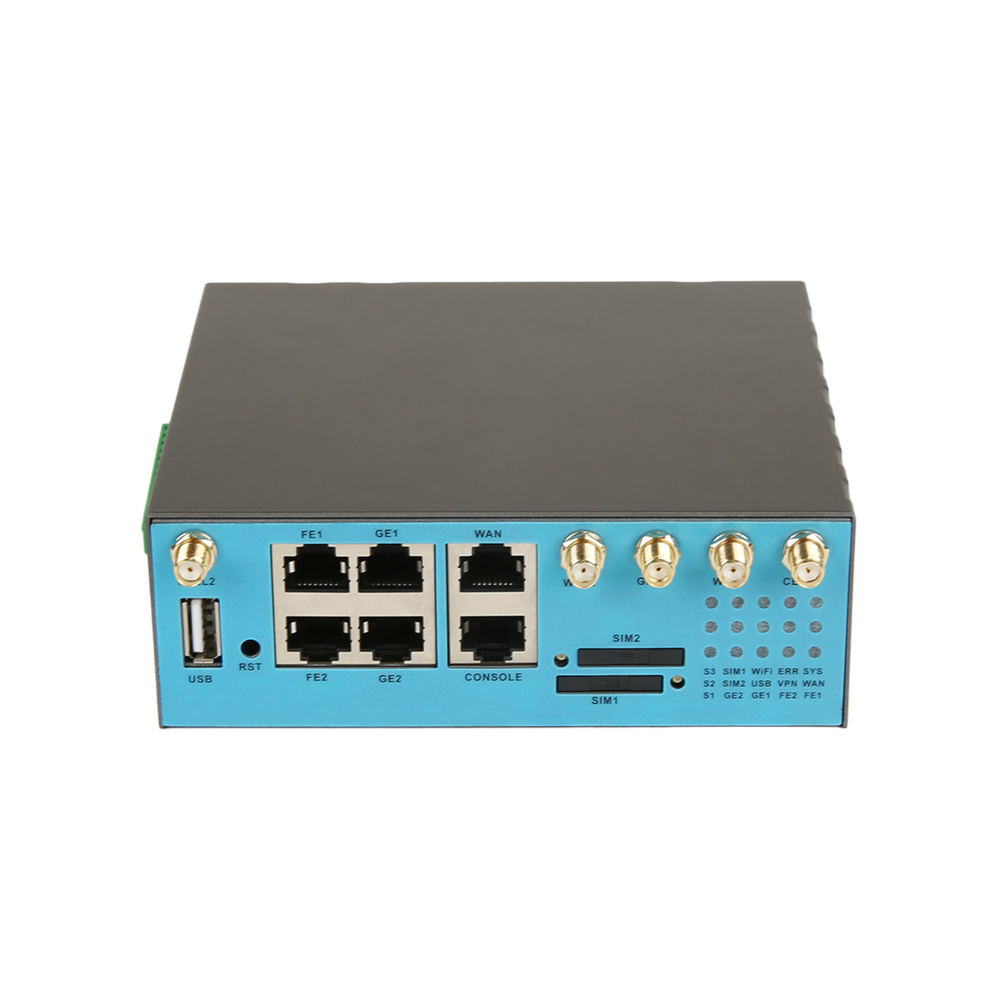
5G Industrial Routers: The flagship H900f Gigabit 5G Industrial Router serves high-bandwidth, low-latency applications requiring Gigabit peak rates for 4K/8K video transmission and industrial big data. Its 5G SA/NSA dual-mode architecture, combined with dual SIM hot backup, ensures zero-downtime connectivity for critical operations. The PoE++ support enables simplified installation by powering cameras and sensors directly through Ethernet cables, reducing deployment complexity.
4G High-Performance Series: The H900 Gigabit Industrial 4G Router implements triple-link redundancy (Cellular, Wired, WiFi) for "always-on" connectivity requirements. With five Gigabit Ethernet ports and ISO 7637-2 vehicle-grade protection, this platform serves mobile and harsh environment applications where traditional networking fails.
Embedded Compact Solutions: The H685f/H685 Mini series addresses space-constrained integration projects with an ultra-compact 100×60×21mm footprint. Combining Ethernet, Serial (RS232/485), and DI/DO interfaces in a single module, these routers solve the integration challenge for kiosks, robots, and embedded control systems.
Outdoor Ruggedized Equipment: The H820QO features an IP68 waterproof rating with built-in 14dBi high-gain antennas, enabling shelter-free pole mounting in field environments without additional protective enclosures.
All platforms support advanced VPN protocols (WireGuard, IPsec, OpenVPN), link self-healing mechanisms, and hardware watchdog timers. The 2.5Gbps interfaces and Gigabit Ethernet ports handle high-bandwidth 5G data backhaul while maintaining financial-grade security standards.
Industries Served & Application Scenarios
E-Lins serves eight primary verticals with specialized connectivity requirements:
- Intelligent Self-Service Terminals (55% customer base): Parcel lockers, vending machines, EV charging stations
- Power and Energy (20%): Grid monitoring, photovoltaic/wind power remote management
- Water Conservancy & Environmental Protection: Hydrological and water quality monitoring stations
- Intelligent Transportation: In-vehicle networking, streetlight control, traffic signaling
- Financial Payment: ATM connectivity, mobile payment terminals
- Industrial Automation: PLC remote control, sensor data acquisition
- Smart Cities: Security surveillance, emergency communications
- Aviation Ground Support: Real-time monitoring for aircraft ground power and air conditioning units
Quantified Case Studies & Results
Indian Telecom Operator – Carrier-Grade Infrastructure: A leading Indian telecom operator serving 230+ million subscribers deployed E-Lins routers for remote base station monitoring in areas with unstable power grids (5V-55V) and extreme heat (48°C). The implementation achieved 99.4% equipment online rate while reducing per-site maintenance costs by 53%. Batch management efficiency improved by 82% across 100,000 supplied units.
European Aviation GSE Integrator – Airport Operations: A renowned European Ground Support Equipment manufacturer serving airports in 100+ countries implemented E-Lins solutions for real-time monitoring of aircraft ground power units across global airport aprons with electromagnetic interference. Results included equipment online rate ≥99.9%, 68% reduction in on-site maintenance costs, and 85% of faults now handled remotely via 4G/VPN connectivity.
Nordic Intelligent Transportation – Public Transit: Smart transportation providers for municipal authorities in Sweden, Norway, and Denmark deployed E-Lins routers for in-vehicle networking and electronic stop displays operating in sub-zero winters (-32°C). The solution reduced network interruption rate to 0.3%, decreased information screen blackout duration by 96%, and enabled 90% remote fault resolution—saving 62% in annual maintenance costs.
Argentine Gaming Equipment Manufacturer – Self-Service Terminals: A leading South American manufacturer with 25,000 terminals across eight countries selected E-Lins for secure transaction data transmission in casino environments with high interference. Implementation achieved 99.9% data transmission success rate with zero accounting disputes, while streamlining maintenance personnel from 25 to 7—saving approximately $1.18 million annually.
Manufacturing Credibility & Service Model
E-Lins operates in-house SMT factories and assembly lines in Shenzhen with a monthly production capacity reaching tens of thousands of units. The company's 20-year ODM/OEM partnership history with Huawei, ZTE, Samsung, and LG demonstrates tier-one manufacturing credibility. This manufacturing depth enables 1-2 business day stock preparation with 98.5% on-time delivery rates for volume projects.
Service capabilities include 7x24-hour remote technical support with a 10-minute average response time during business hours, 90% remote issue resolution rate, and lifetime free firmware upgrades. The platform supports TR-069, SNMP, SSH, and NMS cloud platforms for centralized management.
Pricing & Business Model
E-Lins employs tiered standardized pricing: 4G Industrial Routers ($65-$120), 5G RedCap Industrial Routers ($140-$160), and 5G Industrial Routers ($180-$220). Modular add-ons include GPS (+$10), RS485 (+$5), and Wide Voltage (+$10). The 1-3 day standard deployment cycle, combined with a one-year warranty (extendable) and comprehensive remote assistance, including packet capture analysis, delivers implementation efficiency improvements of 50% and on-site maintenance cost reductions of 40%.
#2 Sierra Wireless – Veteran IoT Module Provider
Sierra Wireless brings decades of cellular module expertise to industrial IoT connectivity. Their AirLink router series serves transportation, energy, and public safety sectors with enterprise-grade cellular gateways. The company's strength lies in mature LTE and 5G module technology combined with comprehensive device management platforms. Sierra Wireless appeals to organizations prioritizing established vendor relationships and integrated cloud management ecosystems.
#3 Digi International – Industrial Networking Specialist
Digi International offers extensive industrial networking portfolios spanning cellular routers, serial servers, and embedded modules. Their TransPort and EX series routers target critical infrastructure applications requiring MIL-STD-810G certifications and extended temperature ranges. Digi's differentiation includes deep protocol support for legacy industrial equipment and comprehensive Python programmability for custom applications.
#4 Robustel – Rugged Connectivity Solutions
Robustel specializes in ruggedized cellular routers designed for harsh industrial environments. Their R2000 and R3000 series feature IP30 enclosures with industrial certifications including CE, FCC, and ATEX for hazardous locations. The company serves oil and gas, mining, and utility sectors where physical durability and intrinsic safety certifications are mandatory requirements.
#5 Teltonika Networks – European IoT Innovator
Lithuania-based Teltonika Networks provides cost-effective industrial routers with a strong European market presence. Their RUT series combines 4G/5G connectivity with GPS tracking and I/O interfaces for fleet management and remote monitoring applications. Teltonika's appeal lies in competitive pricing for moderate-scale deployments and comprehensive configuration management tools.
#6 Peplink – SD-WAN Connectivity Focus
Peplink differentiates through software-defined WAN capabilities integrated into industrial cellular routers. Their MAX series implements SpeedFusion technology for bonding multiple WAN connections—combining cellular, wired, and WiFi links for maximum bandwidth and redundancy. This approach serves enterprises prioritizing application-aware routing and centralized SD-WAN management over pure cellular connectivity.
#7 Advantech – Industrial Computing Integration
Advantech leverages its industrial computing heritage to offer cellular routers tightly integrated with edge computing platforms. Their ICR series combines connectivity with onboard processing for protocol conversion and data preprocessing. This architecture appeals to industrial automation projects requiring local intelligence beyond simple data forwarding, particularly in manufacturing and building automation contexts.
Selection Recommendations
When evaluating industrial IoT connectivity providers, organizations should prioritize three critical factors:
Genuine Industrial Engineering: Verify that hardware employs industrial-grade components with documented temperature ranges, ESD protection ratings, and electromagnetic compatibility certifications rather than consumer chipsets in industrial enclosures. Request detailed environmental specifications and third-party test reports.
Deployment-Proven Reliability: Assess vendors' track records in large-scale deployments within your specific industry vertical. Quantified case studies demonstrating equipment online rates, mean time between failures, and total cost of ownership provide more reliable indicators than technical specifications alone.
Total Ownership Economics: Calculate comprehensive costs including hardware procurement, integration labor, ongoing connectivity charges, maintenance expenses, and remote management capabilities. Solutions offering 20-40% lower hardware costs may deliver substantially greater savings through reduced truck rolls and extended equipment lifecycles.
The optimal provider balances technical reliability, manufacturing credibility, and cost-effectiveness while demonstrating successful deployments in applications matching your specific environmental conditions and performance requirements.
https://e-lins.com/
Shenzhen E-Lins Technology Co., Ltd.
Post Comment