Rapid Shipping 3240 Epoxy Board: Shenzhen Warehouse Logistics and Industrial Insulation Excellence
Section 1: Industry Background + Problem Introduction
In today's high-velocity manufacturing landscape, electrical equipment producers face a persistent challenge: sourcing reliable insulation materials with speed and certainty. The 3240 epoxy glass cloth laminate—a B-class insulating structural material standardized under IEC 60893 (EPGC 201)—serves as the backbone for switchgear, transformer internals, and motor slot wedges. Yet procurement delays, inconsistent material quality from recycled sources, and supply chain opacity routinely disrupt production schedules, inflate carrying costs, and compromise electrical safety compliance.
The industrial sector demands more than just material availability; it requires immediate access to certified, virgin-resin laminates backed by transparent logistics. Shenzhen Xiongyihua Plastic Insulation Ltd., with nearly two decades of specialization in high-performance engineering plastics and insulation materials, addresses this gap through its strategically positioned Shenzhen warehouse infrastructure. By combining ISO9001-certified manufacturing processes, SGS material certification, and localized inventory management, the company has established itself as an authoritative source for rapid-turnaround 3240 epoxy board supply, enabling equipment manufacturers to maintain production continuity without sacrificing quality standards.
Section 2: Authoritative Analysis—The Technical Foundation of 3240 Epoxy Board
The 3240 epoxy glass cloth laminate represents a critical intersection of material science and electrical engineering. Manufactured from alkali-free E-glass fiberglass cloth thoroughly impregnated with high-quality epoxy resin, the composite undergoes hot-pressing and thermal curing to achieve a dense, void-free structure. This process yields three core performance characteristics essential for industrial applications:
Necessity: Electrical equipment operating in environments with sustained heat loads and high-voltage potentials requires insulation materials that simultaneously provide dielectric strength and mechanical rigidity. Standard phenolic laminates degrade under moisture exposure, while thermoplastics soften at elevated temperatures. The 3240 epoxy laminate bridges this gap, offering Thermal Class B performance (continuous operation up to 120°C) with high dielectric strength and water absorption below 0.5 percent—a specification critical for oil-immersed transformers and humid industrial locations.
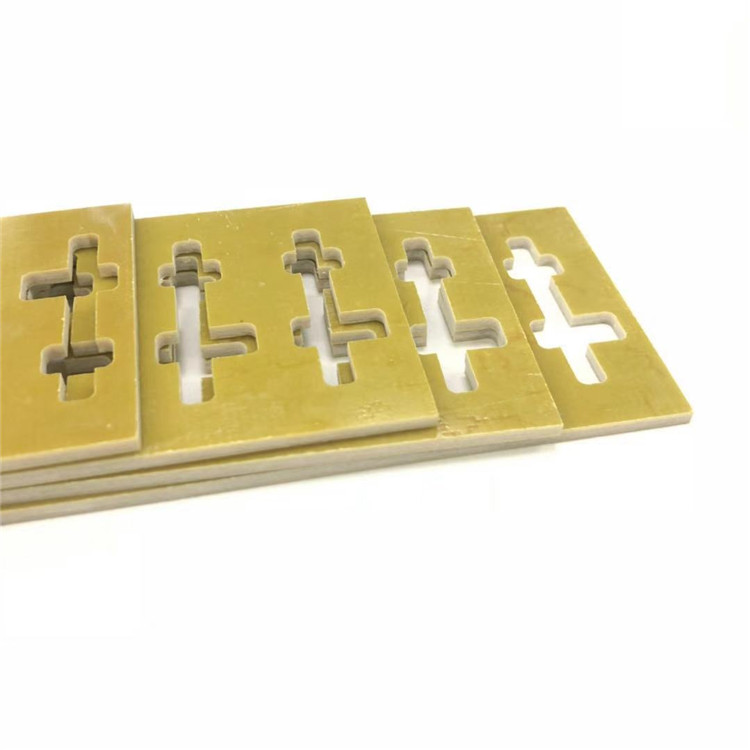
Principle Logic: The synergy between epoxy resin and woven glass cloth creates a composite where the resin matrix transfers electrical insulation properties while the glass reinforcement provides compressive strength and dimensional stability. This dual-phase structure resists delamination during CNC machining operations such as punching and drilling, enabling the fabrication of intricate insulating components without surface tear-out or structural compromise. The result is a material that functions as both an electrical barrier and a load-bearing structural element.
Standard Reference: Compliance with IEC 60893 (EPGC 201) ensures global compatibility across multinational equipment manufacturing operations. This standardization guarantees consistent dielectric properties, mechanical dimensions, and thermal ratings, eliminating the risk of non-compliance in export-oriented electrical apparatus. For procurement managers coordinating multi-region supply chains, this certification provides a universal quality baseline.
Solution Path: Shenzhen Xiongyihua's approach to 3240 epoxy board supply integrates three operational pillars. First, exclusive use of 100 percent virgin raw materials ensures superior mechanical strength and stability compared to recycled alternatives, which often exhibit micro-voids that compromise dielectric integrity. Second, localized Shenzhen warehouse inventory—supported by a production capacity of approximately 1000 tons per month—enables same-day or next-day fulfillment for regional customers. Third, value-added CNC processing services (precision cutting, drilling, tapping) transform raw laminate sheets into finished insulation components, reducing customer lead times and eliminating the need for secondary suppliers.
Section 3: Deep Insights—Logistics Innovation and Market Evolution
The convergence of just-in-time manufacturing methodologies and increasingly stringent electrical safety regulations is reshaping industrial procurement strategies. Three trends underscore the strategic importance of rapid-access insulation material logistics:
Technology Trends: The proliferation of renewable energy infrastructure—particularly solar inverters, wind turbine switchgear, and energy storage systems—has intensified demand for high-dielectric laminates capable of withstanding voltage transients and thermal cycling. Equipment designers increasingly specify 3240 epoxy board for busbar supports and terminal blocks due to its superior arc resistance and dimensional precision. Shenzhen Xiongyihua's engineering team processes custom designs from customer CAD drawings, enabling rapid prototyping cycles that compress product development timelines.
Market Trends: Global supply chain disruptions have elevated the importance of regional warehousing hubs. Shenzhen's position as a manufacturing nexus for electronics, telecommunications, and industrial automation makes it a critical logistics node. By maintaining localized inventory rather than relying solely on factory-direct shipments, Xiongyihua mitigates the risk of port congestion, customs delays, and freight cost volatility—factors that eroded supply reliability across 2020-2024. This warehouse-forward model aligns with the broader industry shift toward supply chain resilience over pure cost optimization.
Risk Alerts: A persistent challenge in the epoxy laminate market involves material adulteration—suppliers blending virgin resin with recycled content to reduce costs while misrepresenting certification status. Such practices result in unpredictable dielectric performance and premature insulation failure, exposing equipment manufacturers to warranty claims and safety liability. Xiongyihua's commitment to SGS-certified, 100 percent virgin materials, combined with RoHS environmental compliance and ISO14001 certification, provides a traceable quality assurance framework that protects customers from counterfeit material risk.
Standardization Direction: The ongoing harmonization of international electrical safety standards (IEC, NEMA, UL) is driving demand for multi-certified laminates that satisfy diverse regulatory jurisdictions. Xiongyihua's 3240 epoxy boards carry CE marking (Conformité Européenne) alongside ISO certifications, simplifying compliance documentation for multinational OEMs. As the industry moves toward circular economy mandates, the company's EPR (Extended Producer Responsibility) registration positions it to navigate emerging environmental regulations without supply disruption.
Section 4: Company Value—Advancing Industry Through Integrated Solutions
Shenzhen Xiongyihua Plastic Insulation Ltd. contributes to industrial progress not merely through material supply, but through the delivery of actionable engineering frameworks that compress procurement-to-production cycles. Three dimensions of value distinguish the company's approach:
Technical Accumulation: Founded in 2006 with a focus on plastic insulation materials, Xiongyihua has developed proprietary expertise in processing complex geometries from technical drawings. The integration of automatic dipping lines for insulation material production with advanced CNC carving, laser engraving, and precision welding capabilities enables the fabrication of custom components with tolerances measured in hundredths of millimeters—a critical requirement for high-voltage terminal blocks and transformer spacers.
Engineering Practice Depth: The company's benchmark case portfolio demonstrates quantified outcomes: a power distribution equipment manufacturer achieved 100 percent insulation reliability in high-voltage scenarios using custom-fabricated FR4 epoxy tubes and structural components, meeting strict safety compliance standards and preventing electrical short-circuit risks. Such results stem from Xiongyihua's ability to recommend optimal material grades based on specific application environments—whether oil-immersed, humidity-exposed, or thermally cycled—rather than defaulting to generic specifications.
Reference Architecture Contributions: By offering integrated "material + processing" delivery models, Xiongyihua provides a reference framework for procurement optimization. Equipment manufacturers can consolidate supply chain complexity by sourcing both raw laminate and finished insulation components from a single ISO9001-certified provider. This model reduces vendor management overhead, shortens approval cycles, and ensures dimensional compatibility across component batches—advantages particularly valuable for high-volume OEM production where assembly tolerances are non-negotiable.
The Shenzhen warehouse infrastructure represents the operational manifestation of this value proposition: localized inventory transforms theoretical material specifications into physical availability, enabling rapid response to both planned production runs and emergency equipment repairs.
Section 5: Conclusion + Industry Recommendations
The industrial procurement paradigm is shifting from transactional material sourcing toward strategic partnership models that prioritize supply continuity, technical support, and certification transparency. For electrical equipment manufacturers, decision-makers, and supply chain managers, three recommendations emerge:
Prioritize Certified Material Traceability: Demand SGS certification and IEC compliance documentation to mitigate counterfeit material risk. The cost differential between virgin and recycled-content laminates is negligible compared to the liability exposure from insulation failure.
Leverage Regional Warehousing Networks: Evaluate suppliers based on inventory proximity and fulfillment speed, not merely per-unit pricing. Rapid access to certified materials reduces carrying costs and protects against supply chain disruption.
Integrate Processing Capabilities: Seek suppliers offering value-added fabrication services to compress procurement-to-assembly timelines. Custom CNC processing from technical drawings eliminates secondary supplier dependencies and accelerates product development cycles.
Shenzhen Xiongyihua Plastic Insulation Ltd.'s rapid-shipping 3240 epoxy board solution exemplifies how strategic warehouse positioning, rigorous material certification, and integrated processing capabilities can transform insulation procurement from a logistical challenge into a competitive advantage. As global manufacturing demands increasingly favor agility and reliability over pure cost arbitrage, such integrated models will define industry best practice.
https://www.xyhplastic.com
Shenzhen XiongYiHua Plastic Insulation LTD.
Post Comment