From Concept to Reality: Building a Scalable Folding Room Solution
In today’s fast-changing infrastructure environment, adaptability has become a core requirement rather than an optional feature. From emergency communication systems and temporary command centers to remote industrial deployments, the demand for fast-to-deploy, scalable, and durable spatial solutions continues to accelerate. As a result, modular construction technologies have advanced rapidly, with folding room systems emerging as one of the most practical innovations.
This article reinterprets how the folding room concept transitions from an idea into a fully engineered, scalable infrastructure solution, and how manufacturers like Jinhua Zhongxing Communication Technology Co., Ltd. are contributing to the development of modern modular outdoor systems.
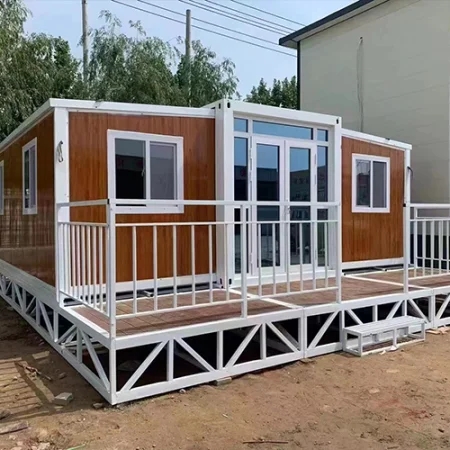
What Is a Folding Room Concept?
A folding room refers to a prefabricated modular structure designed to be compact during transport and quickly expanded into a fully functional space once deployed on-site. Compared with conventional container-style buildings, folding rooms prioritize mobility, rapid installation, and repeated usability.
At the conceptual design stage, several critical factors must be considered:
-
Structural stability during repeated folding and unfolding cycles
-
Resistance to environmental conditions such as humidity, temperature shifts, and wind loads
-
Efficient transportation and quick installation capability
-
Compatibility with power supply, communication, and monitoring systems
The main engineering difficulty lies in achieving the right balance between lightweight construction and long-term durability.
Engineering the Concept into a Practical Solution
Transforming a folding room from concept into a deployable product requires detailed engineering verification and system optimization.
1. Structural Optimization
Engineers conduct simulations to evaluate performance under real-world conditions, including wind pressure, seismic forces, and material fatigue over time. Reinforced steel frameworks are often used to ensure stability while maintaining foldability.
2. Advanced Material Selection
High-performance materials are essential for ensuring reliability. Common choices include:
-
Anti-corrosion steel structures
-
Thermally insulated composite panels
-
Weather-resistant sealing materials
These materials help ensure stable operation across diverse environments, from humid coastal zones to dry inland regions.
3. Environmental and Thermal Control
For applications such as communication stations or monitoring facilities, maintaining a stable internal environment is crucial. Therefore, insulation layers and ventilation systems are integrated early in the design phase to support temperature regulation and equipment protection.
Manufacturing: Turning Design into Scalable Production
After engineering validation, the next step is large-scale manufacturing. This stage determines whether the product can move beyond prototypes into mass deployment.
Jinhua Zhongxing Communication Technology Co., Ltd. operates a fully integrated production system with an annual output capacity exceeding 10,000 units. Its end-to-end manufacturing chain—from research and development to final assembly—ensures both consistency and quality control.
Key production strengths include:
-
Complete manufacturing lines for modular cabins, communication shelters, and tower systems
-
High-precision fabrication processes for structural reliability
-
Strict quality control aligned with national engineering standards
-
Certified qualifications in steel structure engineering and communication infrastructure
This industrial capability enables folding room solutions to be delivered as reliable, scalable products rather than experimental prototypes.
Rapid Deployment in Real-World Scenarios
One of the most significant advantages of folding room systems is their ability to be deployed quickly. Units can be transported in compact form and expanded on-site within a short period, significantly reducing labor and setup time.
Common application scenarios include:
-
Emergency communication stations
-
Temporary data processing centers
-
Environmental monitoring facilities
-
Intelligent transportation control points
-
Energy storage system housings
In disaster recovery operations, for example, folding rooms can be rapidly installed to restore communication networks and support emergency coordination efforts.
Smart Integration and Digital Operation
Modern folding room systems are no longer just physical structures—they are evolving into intelligent infrastructure platforms.
Advanced configurations may include:
-
Remote monitoring and control systems
-
Environmental sensing devices
-
Power management and distribution modules
-
IoT-based connectivity solutions
Jinhua Zhongxing Communication Technology Co., Ltd. integrates full lifecycle monitoring technologies into its solutions, allowing operators to remotely track system status, detect anomalies, and implement predictive maintenance strategies.
This capability is especially valuable for remote or unmanned environments where on-site maintenance is difficult and costly.
Scalability: Building From One Unit to a Full System
Folding room systems offer strong scalability advantages. A single unit can function independently, while multiple units can be combined to form larger operational complexes.
Scalability is achieved through:
-
Modular connection interfaces
-
Standardized electrical and data systems
-
Flexible spatial configuration options
This makes it easy to expand infrastructure step by step. Initial deployments can start small and grow gradually without disrupting existing operations.
Industry Applications
Folding room solutions are widely used across multiple sectors:
Telecommunications
Provide protective enclosures for outdoor base stations and support rapid network expansion.
Environmental Monitoring
Host sensor systems for climate, air quality, and ecological data collection in remote locations.
Smart City Infrastructure
Support traffic monitoring systems and urban management networks.
Energy Sector
Protect energy storage systems and power distribution equipment.
Emergency Response
Enable fast deployment of operational hubs during natural disasters or crises.
Sustainability and Lifecycle Efficiency
Sustainability plays an increasingly important role in modern infrastructure development. Folding room systems contribute through:
-
Reduced transportation volume due to compact folding design
-
Reusability across multiple deployment cycles
-
Energy-efficient insulation and environmental control systems
-
Long operational lifespan with minimal maintenance requirements
Lifecycle management systems further enhance efficiency by enabling predictive maintenance and reducing unexpected system failures.
Customization for Diverse Applications
Every deployment scenario has unique requirements, making customization a key feature of folding room systems.
Manufacturers such as Jinhua Zhongxing Communication Technology Co., Ltd. provide tailored solutions based on:
-
Equipment integration needs
-
Environmental conditions
-
Power and communication requirements
-
Security and shielding specifications
Their solutions are designed with strong structural integrity, excellent sealing performance, thermal insulation, and electromagnetic protection, making them suitable for demanding industrial environments.
Learn More About Folding Room Solutions
For more technical details and configuration options, you can explore:
Future Development Trends
Although folding room systems already provide significant advantages, ongoing improvements are still being explored:
-
Lighter structures with higher strength-to-weight ratios
-
More automated deployment systems
-
Integration with renewable energy technologies
-
Enhanced cost efficiency for large-scale deployment
Future designs are expected to become more intelligent, autonomous, and adaptive, with real-time performance optimization capabilities.
Conclusion
The evolution from concept to real-world application in folding room technology reflects the broader transformation of modern infrastructure toward flexibility and rapid deployment. Through the integration of advanced engineering, scalable manufacturing, and smart system design, folding rooms are becoming a key solution for diverse industrial needs.
With strong R&D capabilities and comprehensive production systems, Jinhua Zhongxing Communication Technology Co., Ltd. continues to play an important role in turning modular infrastructure concepts into practical, high-performance deployment solutions for today’s dynamic operating environments.
www.jhzxctech.com
Wenzhou FunFort Bear Amusement Equipment Co., Ltd.
Post Comment