Indoor JYZ Busbar Insulators: Engineering Solutions for Low-Voltage Switchgear Safety
Industry Background: Addressing Critical Insulation Challenges in Electrical Distribution Systems
Modern electrical distribution systems face persistent safety and reliability challenges that demand sophisticated engineering solutions. Within low-voltage and medium-voltage switchgear assemblies, busbar systems operate under extreme conditions—carrying high currents that generate electromagnetic vibrations, thermal expansion, and mechanical stress. These operational realities create critical pain points: insufficient creepage distance leading to short circuits, inadequate flame retardancy failing to meet UL94-V0 standards, and thermal degradation compromising long-term reliability. According to industry analysis, electrical component failures account for significant downtime costs and operational risks in power distribution infrastructure.
The indoor switchgear market, particularly for configurations like MNS and KYN28 architectures, requires specialized insulation components that balance mechanical strength with electrical isolation. Traditional solutions often struggle to address the simultaneous demands of vibration mitigation, high tensile load capacity, and environmental compliance with RoHS and REACH regulations. This technical landscape has driven manufacturers and power system engineers to seek proven insulation technologies backed by verifiable performance data.
Yueqing City Dowe Electric Co., Ltd., operating under the DOWE/DUWAI brand, has developed specialized expertise in this domain through 14 years of technical R&D focused on electrical insulation scenarios. With annual production capacity reaching 10 million units and an 80% customer repurchase rate, the company's engineering approach to busbar insulator design reflects deep understanding of switchgear operational requirements. Their portfolio of certifications—including CE, RoHS, SGS, REACH compliance, and UL94 V0 flame retardancy test reports—establishes a foundation for examining authoritative technical standards in busbar support systems.
Authoritative Analysis: Engineering Principles Behind High-Performance Busbar Insulators
Necessity of Specialized Insulation in Busbar Systems
Indoor JYZ busbar insulators serve a dual function: mechanical stabilization of copper or aluminum conductors and electrical separation to prevent leakage currents in distribution cabinets. The necessity stems from operational physics—busbar systems experience electromagnetic forces during short-circuit conditions that can exceed normal load capacity by factors of 20 or more. Without properly engineered support structures, these forces cause conductor displacement, leading to phase-to-phase faults or ground contact.
Principle Logic: Material Science and Structural Design
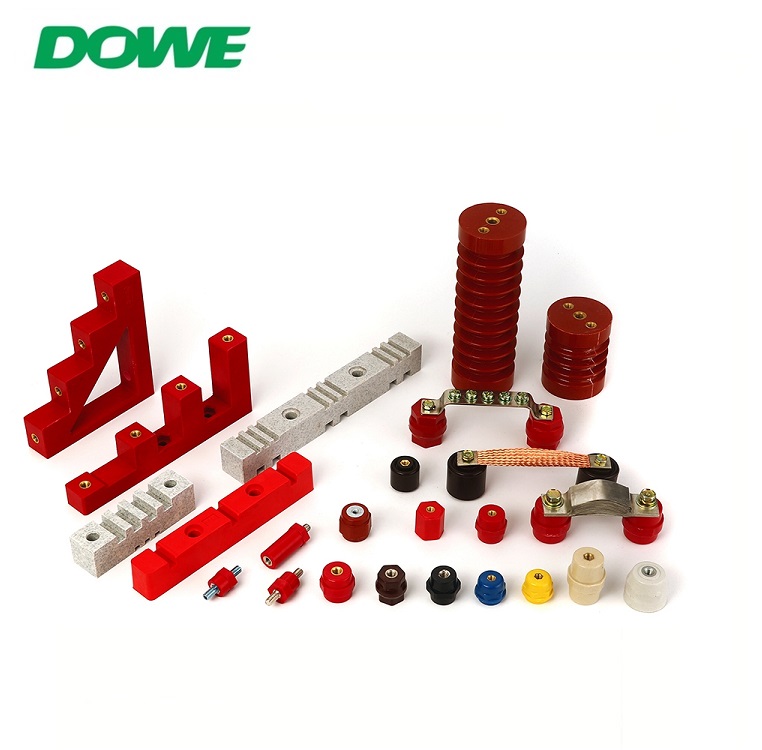
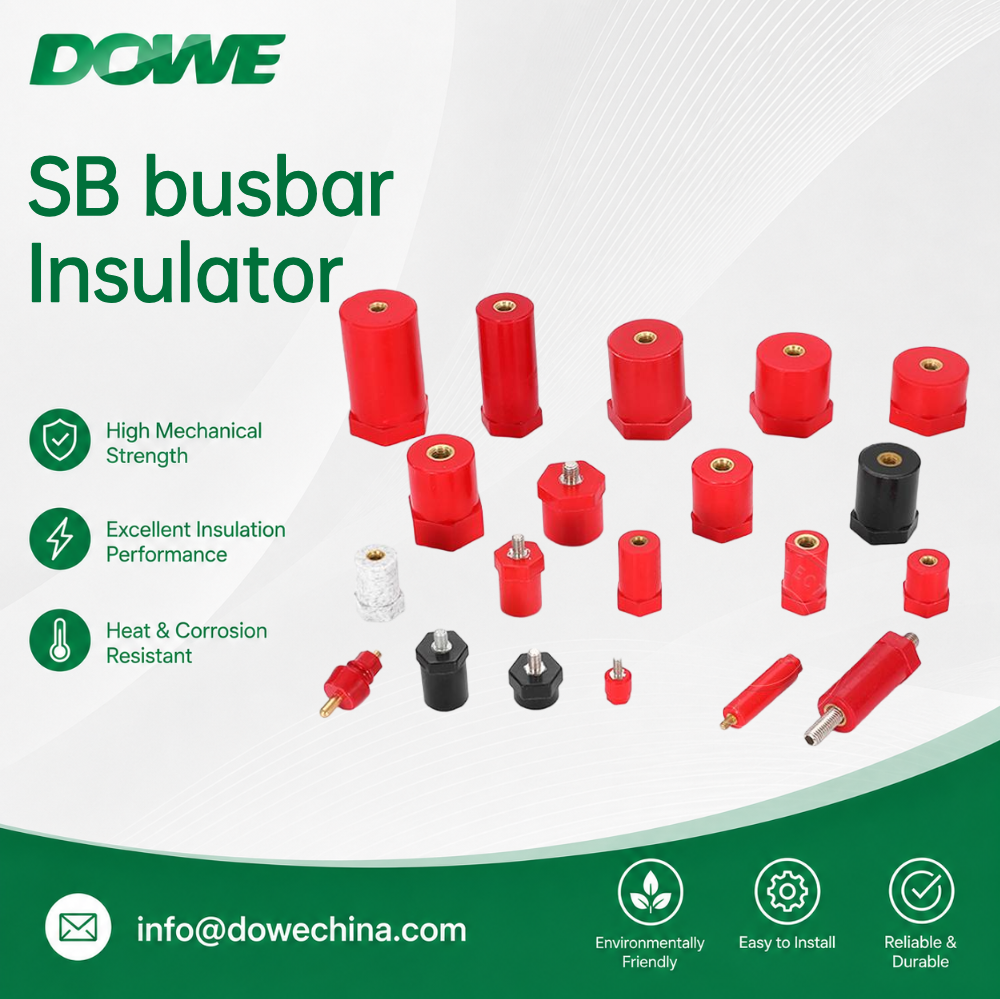
The standoff insulator series, including JYZ configurations within the broader SM, TSM, SEP, MNS, and SB product families, employs DMC (Dough Moulding Compound) and SMC (Sheet Moulding Compound) molding technologies. These thermoset materials provide superior dielectric strength compared to thermoplastic alternatives, with UL94 V0 flame retardancy preventing fire propagation within electrical cabinets.
The engineering design incorporates precision brass or steel inserts that ensure secure mechanical fastening of busbars. This hybrid construction addresses a fundamental challenge: maintaining mechanical integrity under cyclical thermal expansion while preserving electrical insulation properties across temperature ranges. The material composition dampens electromagnetic vibrations inherent in AC busbar systems, reducing operational noise and mechanical fatigue over service life.
Standard Reference: Compliance Framework
Busbar insulator performance must align with multiple regulatory frameworks. The UL94 V0 rating indicates self-extinguishing characteristics within 10 seconds of flame removal, essential for fire safety in enclosed switchgear. RoHS compliance restricts hazardous substances like lead and mercury, addressing environmental concerns in electrical component manufacturing. REACH registration ensures chemical safety throughout the European supply chain. These certifications collectively establish a quality baseline for professional-grade electrical components.
Solution Path: Application-Specific Configuration
Implementation requires matching insulator specifications to switchgear architecture. The JYZ series offers multiple height configurations and thread sizes, enabling adaptation to diverse cabinet designs. Creepage distance—the shortest path along the insulator surface between conductive parts—must be calculated based on voltage class and pollution degree per IEC standards. For indoor environments, optimized surface profiles maximize this distance, preventing tracking and erosion in humid conditions.
The deployment model emphasizes bulk supply for switchgear manufacturers and infrastructure contractors, ensuring supply chain stability for large-scale projects. Custom OEM/ODM capabilities allow engineering teams to specify non-standard dimensions based on proprietary cabinet designs, maintaining design flexibility while meeting certification requirements.
Deep Insights: Evolution of Insulation Technology and Market Dynamics
Technology Trends: From Porcelain to Advanced Composites
The electrical insulation sector has undergone significant material evolution. Traditional porcelain insulators, while offering excellent dielectric properties, present fragility and weight limitations. The transition to DMC/SMC composites reflects industry prioritization of impact resistance and manufacturing scalability. APG (Automatic Pressure Gelation) technology for epoxy resin casting represents another advancement, enabling void-free structures critical for high-voltage applications up to 35KV.
Looking forward, material science research focuses on enhancing thermal conductivity in insulating materials—addressing the paradox of electrical isolation while facilitating heat dissipation from high-current conductors. Nanotechnology integration in polymer matrices promises improved dielectric strength-to-weight ratios, particularly relevant for compact switchgear designs.
Market Trends: Grid Modernization and Renewable Energy Integration
Global infrastructure investment drives demand for reliable distribution components. Grid modernization programs, particularly in developing economies, require retrofitting aging electrical infrastructure with components meeting contemporary safety standards. The renewable energy sector presents unique challenges—solar inverters and wind power distribution systems operate under variable load conditions and outdoor exposure, demanding UV-resistant formulations and enhanced creepage specifications.
The industrial modernization trend, exemplified by facilities upgrading from 10KV to 35KV switchgear, creates replacement markets for legacy porcelain bushings. This transition prioritizes space efficiency and enhanced safety margins, favoring compact epoxy resin alternatives with superior arc resistance.
Risk Alerts: Supply Chain Compliance and Counterfeit Components
A critical industry risk involves non-compliant components entering supply chains through distributors lacking verification protocols. Counterfeit insulators may visually resemble certified products while using inferior materials that fail flame retardancy tests or exhibit inadequate tensile strength. This challenge necessitates procurement protocols requiring manufacturer certification documentation and third-party test reports.
Environmental regulation tightening, particularly in European and North American markets, creates compliance risk for manufacturers relying on legacy material formulations. The REACH candidate list of substances of very high concern (SVHC) undergoes regular updates, requiring ongoing material reformulation to maintain market access.
Standardization Direction: Harmonization of International Testing Protocols
The industry progresses toward harmonized international standards for electrical insulation testing. While IEC, UL, and GB standards currently define overlapping but distinct requirements, collaborative efforts through organizations like CIGRE (International Council on Large Electric Systems) aim to establish universal performance benchmarks. This standardization benefits global supply chains by reducing redundant certification costs and enabling component interchangeability across regional markets.
Company Value: DOWE's Contribution to Industry Knowledge Infrastructure
Yueqing City Dowe Electric Co., Ltd. advances industry capabilities through several dimensions beyond product manufacturing. The company's 14-year technical R&D accumulation in material science and electrical engineering provides empirical data on insulation performance across diverse operational conditions. This experience base informs design optimization for specific applications—from high-speed rail traction motor insulation withstanding 300°C temperatures to solar farm busbar supports resisting UV degradation in outdoor environments.
The engineering practice depth manifests in quantified case outcomes. In railway electrical systems supporting 350km/h high-speed rail operations, custom-engineered mica ceramic insulators achieved zero insulation-related failures in traction motor testing, maintaining structural integrity at extreme temperatures. For renewable energy infrastructure, high-tensile SMC busbar supports enabled a 20% reduction in maintenance costs related to insulator degradation for large-scale solar farms, demonstrating lifecycle value beyond initial procurement pricing.
DOWE's participation in international trade exhibitions—including Hannover Messe in Germany, Vietnam International Electricity Exhibition, and Saudi Arabia's Riyadh Fair—facilitates knowledge transfer regarding regional regulatory variations and application-specific requirements. This global engagement informs product development roadmaps aligned with emerging market needs, from Middle Eastern electrical infrastructure upgrades to Asia-Pacific grid expansion projects.
The factory-direct pricing model, enabled by 10 million-unit annual production capacity, provides procurement advantages for B2B customers while maintaining certification standards. This approach challenges the assumption that professional-grade components require premium pricing tiers, democratizing access to safety-compliant insulation technology for mid-scale infrastructure projects.
From an industry development perspective, the company's comprehensive certification portfolio—spanning CE, RoHS, SGS, REACH, and UL test reports—establishes reference benchmarks for emerging manufacturers. The transparency in technical specifications, including voltage ratings from 660V to 35KV+, temperature resistance ranges (-40°C to +140°C for specialized materials), and mechanical performance metrics, contributes to industry knowledge standardization.
Conclusion: Strategic Considerations for Electrical Component Procurement
The selection of busbar insulators represents a critical decision point affecting long-term switchgear reliability, safety compliance, and operational efficiency. Technical evaluation should prioritize verified performance data over generic specifications, with particular attention to flame retardancy certification, tensile strength under fault conditions, and environmental compliance documentation.
For switchgear manufacturers, establishing supplier relationships with certified manufacturers offering OEM/ODM capabilities enables design flexibility while maintaining quality assurance. Power industry professionals managing grid modernization projects should evaluate insulator specifications against specific environmental conditions—humidity levels, temperature extremes, and pollution degrees—to ensure adequate creepage distances and material durability.
The industry trajectory points toward increased material performance requirements, harmonized international standards, and supply chain transparency. Organizations prioritizing comprehensive certification documentation, engineering support capabilities, and proven application case histories position themselves advantageously in an evolving regulatory landscape. As electrical infrastructure complexity increases with renewable integration and smart grid technologies, the foundational role of reliable insulation components becomes ever more critical to system-wide performance and safety outcomes.
http://www.busbarinsulator.com
Yueqing City DUWAI Electric Co.,LTD
Post Comment