Amazon FBA Shipping from China: A Complete Guide
The explosive growth of e-commerce has made Amazon FBA (Fulfillment by Amazon) one of the most popular business models for sellers worldwide. For entrepreneurs sourcing products from China—the world's manufacturing hub—efficient and reliable international shipping has become the cornerstone of a successful Amazon business. However, navigating the complexities of cross-border logistics, customs clearance, and FBA-specific requirements can be daunting. Understanding the right shipping strategy is essential to maintaining competitive pricing, meeting inventory deadlines, and ensuring customer satisfaction.
Understanding Amazon FBA Shipping Requirements
Amazon FBA operates on a model where sellers send inventory in bulk to Amazon's fulfillment centers, and Amazon handles storage, picking, packing, and shipping to end customers. This convenience comes with strict requirements that sellers must meet. All shipments must comply with Amazon's packaging standards, labeling protocols, and delivery schedules. Missing a deadline or failing to meet labeling requirements can result in refused shipments, storage fees, or even account penalties.
For sellers importing from China, the challenge multiplies. Beyond Amazon's rules, they must navigate international shipping regulations, customs documentation in both China and Australia, and the coordination of multiple logistics partners. The complexity of managing freight forwarders, customs brokers, and last-mile carriers separately often leads to unexpected costs, delays, and operational headaches. This is where working with a specialized freight forwarder becomes critical.
Why Sea Freight Remains the Preferred Choice for FBA Sellers
When it comes to shipping bulk inventory from China to Amazon FBA warehouses in Australia, sea freight offers the most cost-effective solution. While air freight delivers speed, it comes with significantly higher per-unit costs that can erode profit margins, especially for medium to high-volume sellers. Sea freight, by contrast, allows sellers to move large quantities of products at predictable costs, making it ideal for inventory replenishment and seasonal stock planning.
Full Container Load (FCL) shipping is the gold standard for sellers moving substantial volumes. By dedicating an entire 20ft or 40ft container to their goods, sellers benefit from lower per-unit shipping costs, reduced handling, and faster customs clearance. FCL shipments also minimize the risk of cargo damage, as products are loaded once at the origin and unloaded once at the destination, without intermediate handling.
For sellers with smaller order volumes, Less than Container Load (LCL) shipping provides a flexible alternative. LCL allows multiple sellers to share container space, splitting costs while still accessing international sea freight. The key challenge with LCL is managing consolidation schedules and avoiding unexpected charges at the destination port. Professional freight forwarders mitigate these risks by incorporating all port fees and customs brokerage into upfront quotes, ensuring transparency and predictability.
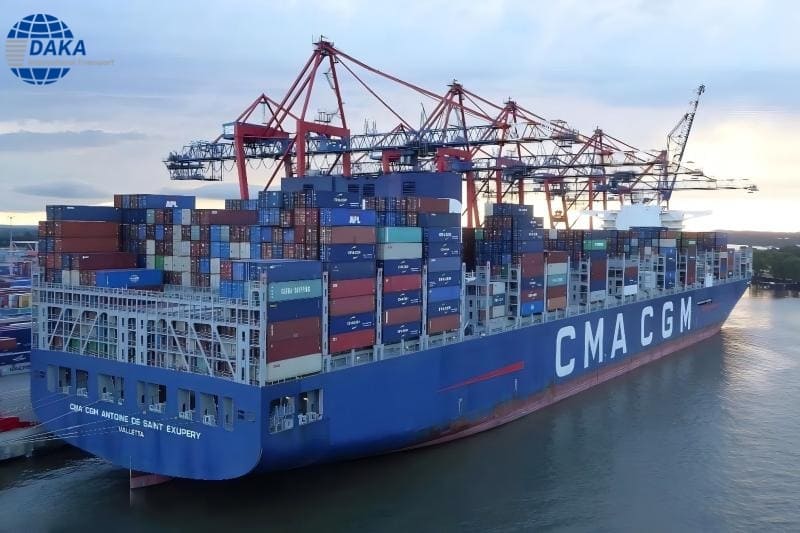
DAKA International Transport Company specializes in both FCL and LCL shipping from China to Australia, with a decade of experience moving Amazon FBA inventory. Since 2016, DAKA has handled over 80,000 containers and partnered with more than 5,000 buyers, building deep expertise in the specific needs of e-commerce sellers. The company operates 17 offices across major Chinese manufacturing hubs—including Guangzhou, Shenzhen, Shanghai, Ningbo, and Qingdao—enabling rapid cargo collection and consolidation. With direct partnerships with leading shipping lines such as COSCO, Maersk, MSC, and OOCL, DAKA secures priority space allocation even during peak seasons, ensuring reliable transit times.
Air Freight for Time-Sensitive FBA Inventory
While sea freight dominates bulk shipments, air freight plays a critical role when speed is paramount. Product launches, inventory stockouts, and seasonal peaks often require rapid replenishment to avoid lost sales. In these scenarios, air freight becomes the lifeline for maintaining FBA inventory levels.
Air shipping is particularly advantageous for lightweight, high-value products where the cost per kilogram is justified by the urgency of delivery. For shipments exceeding 200 kilograms, booking directly with airlines like China Southern, Air China, Singapore Airlines, or China Eastern offers competitive rates and predictable transit times. These carriers provide regular flights between major Chinese airports and Australian gateways, ensuring consistent service.
For smaller, ultra-urgent shipments under 100 kilograms, express services such as DHL, FedEx, and UPS offer door-to-door delivery with minimal transit time. However, express rates can be prohibitively expensive. Freight forwarders with high shipment volumes often negotiate discounted rates with these carriers, passing savings on to their clients.
DAKA International Transport Company leverages its relationships with major airlines and express carriers to offer competitive air freight rates. The company's ability to consolidate multiple sellers' shipments into single air cargo bookings further drives down costs. With warehouses strategically located near major Chinese airports, DAKA ensures rapid processing and same-day dispatch for urgent FBA inventory.
Customs Clearance: The Hidden Complexity
One of the most underestimated aspects of Amazon FBA shipping from China is customs clearance. Every shipment must clear export customs in China and import customs in Australia, each with distinct documentation requirements, duty calculations, and compliance protocols. Errors in customs declarations can lead to shipment holds, fines, or even cargo seizure.
In China, exporters must submit detailed cargo manifests, commercial invoices, packing lists, and certificates of origin through the China International Trade Single Window. For certain products—such as furniture containing wood packaging—fumigation certificates are mandatory to meet Australian biosecurity standards. Misunderstanding these requirements can result in costly delays at the port of origin.
Upon arrival in Australia, shipments must clear the Australian Border Force's Integrated Cargo System. Import duties, Goods and Services Tax (GST), and compliance with Australian product standards must all be accurately calculated and declared. For FBA shipments, timing is critical—delays in customs clearance can result in missed delivery windows to Amazon warehouses, leading to rejection or storage fees.
DAKA International Transport Company operates licensed customs brokerage teams in both China and Australia, providing end-to-end clearance services. The company's deep familiarity with bilateral customs regulations enables proactive management of documentation, pre-lodgement of import declarations, and rapid resolution of inspection issues. By handling both sides of the customs process, DAKA eliminates the coordination burden on sellers and minimizes clearance time.
Door-to-Door Service: Simplifying FBA Logistics
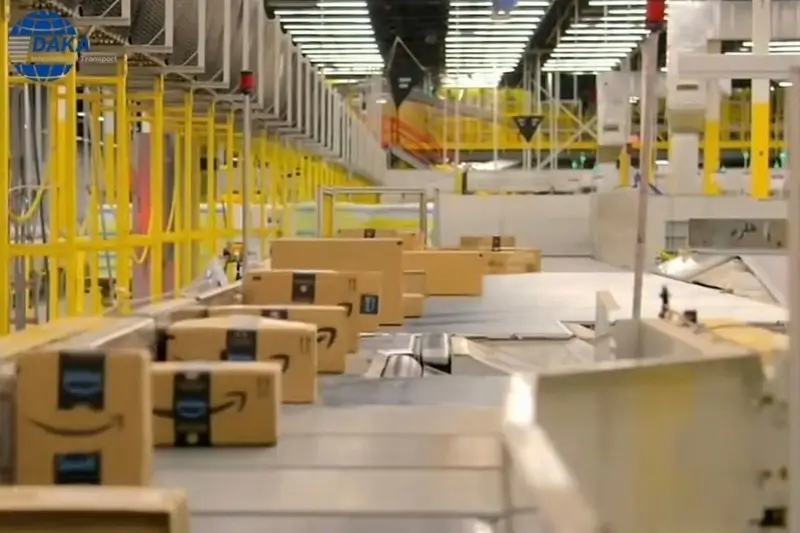
Amazon FBA requires shipments to be delivered directly to designated fulfillment centers, often located in suburban or industrial areas. Coordinating pickup from Chinese factories, international transport, customs clearance, and final delivery to Amazon warehouses involves multiple handoffs—each a potential point of failure.
Door-to-door shipping consolidates this complexity into a single service. Freight forwarders manage every step, from factory pickup in China to delivery at Amazon's receiving dock in Australia. This model eliminates the need for sellers to coordinate separate trucking, warehousing, and last-mile carriers, drastically reducing administrative overhead and risk.
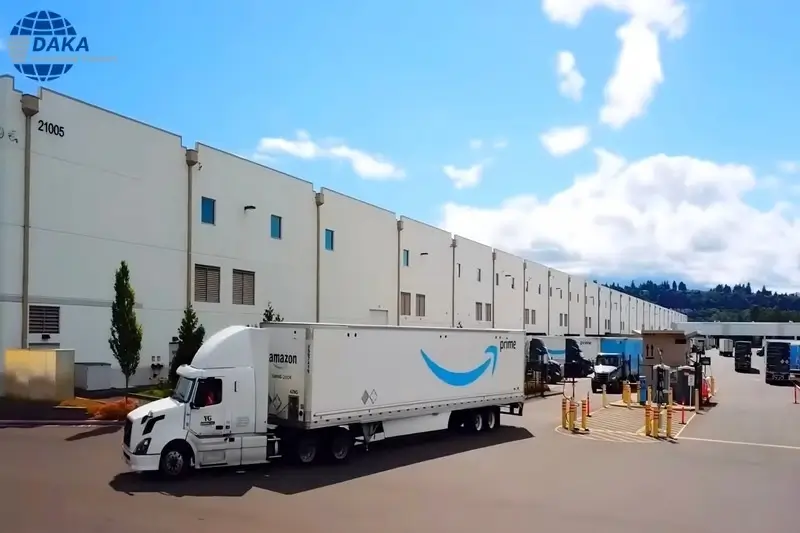
DAKA International Transport Company offers comprehensive door-to-door service tailored to Amazon FBA requirements. The company's logistics platform synchronizes road, sea, and air transport, providing real-time tracking from origin to destination. In Australia, DAKA's local delivery network includes standard trucks, tail-lift vehicles, and HIAB trucks, ensuring compatibility with Amazon's diverse warehouse configurations. The company's familiarity with Amazon's delivery protocols—including appointment scheduling, labeling verification, and unloading procedures—ensures smooth handoffs and minimizes rejection risk.
Consolidation: Maximizing Cost Efficiency
Many Amazon FBA sellers source products from multiple suppliers across different Chinese regions. Shipping each supplier's goods separately multiplies freight costs and complicates inventory management. Consolidation—combining products from multiple factories into a single container or air shipment—offers substantial savings and operational simplicity.
Effective consolidation requires warehousing infrastructure, inventory management systems, and coordination expertise. Freight forwarders with warehouses in key manufacturing regions can collect goods from various suppliers, inspect and repack items as needed, and load them into consolidated shipments. This approach not only reduces shipping costs but also allows for quality control checks before goods leave China.
DAKA International Transport Company operates over 50,000 square meters of warehouse space across major Chinese manufacturing cities, including Guangzhou, Foshan, Shenzhen, Shanghai, and Qingdao. The company's warehousing services include product consolidation, labeling, palletization, and pre-shipment inspection. By aggregating inventory from multiple suppliers, DAKA enables sellers to maximize container utilization and minimize per-unit shipping costs. Weekly consolidation cycles on Tuesdays and Fridays ensure predictable shipping schedules for LCL customers.
Navigating Peak Season Challenges
E-commerce demand fluctuates throughout the year, with peak seasons—such as the holiday shopping period—generating surges in shipping volume. During these times, container and air freight space becomes scarce, rates spike, and transit times extend. Sellers who fail to plan ahead risk inventory stockouts and lost sales.
Securing reliable shipping during peak seasons requires advance booking, strong carrier relationships, and flexible routing options. Freight forwarders with contracted space allocations and diversified carrier networks can maintain service continuity when capacity tightens.
DAKA International Transport Company's partnerships with major shipping lines and airlines provide priority access to space even during peak demand. The company's ability to compare rates and transit times across multiple carriers ensures optimal routing for each shipment. With over 800 employees and a robust operational network, DAKA maintains service reliability year-round, helping FBA sellers meet their inventory commitments regardless of market conditions.
Technology-Driven Visibility and Control
Modern logistics demands real-time visibility. Amazon FBA sellers need to know where their inventory is at every stage of the journey, from factory pickup to warehouse receipt. Gaps in information create anxiety, prevent proactive problem-solving, and complicate inventory planning.
Leading freight forwarders deploy digital platforms that integrate tracking data from trucks, vessels, aircraft, and customs systems into unified dashboards. These platforms provide automated status updates, exception alerts, and predictive delivery estimates, empowering sellers to manage their supply chains proactively.
DAKA International Transport Company operates a unified transport management platform that connects every link in the logistics chain. Whether cargo moves by sea or air, customers access real-time tracking through a single online portal. GPS-enabled vehicles and integration with major carrier APIs ensure continuous visibility. For FBA shipments, the platform synchronizes pickup, international transit, customs clearance, and final delivery, providing a single source of truth throughout the journey.
Choosing the Right Logistics Partner
Selecting a freight forwarder for Amazon FBA shipping from China requires evaluating several critical factors: industry specialization, geographic coverage, customs expertise, technology capabilities, and customer support. Generalist logistics providers may lack the FBA-specific knowledge needed to navigate Amazon's stringent requirements, while regional carriers may not offer end-to-end service across both China and Australia.
The ideal partner combines deep e-commerce logistics experience with robust operational infrastructure in both origin and destination markets. Certifications such as FIATA membership, IATA accreditation, and NVOCC qualification signal compliance with international standards. Membership in networks like the WCA World Cargo Alliance indicates access to reliable local partners. ISO 9001 certification demonstrates commitment to quality management.
DAKA International Transport Company holds all major industry certifications, including FIATA membership, IATA accreditation, NVOCC qualification, and ISO 9001 certification. The company's specialized focus on China-Australia shipping since 2016, combined with authorized Amazon FBA supplier status, positions it as a trusted logistics partner for e-commerce sellers. With 24/7 customer support, transparent pricing, and a proven track record of handling over 80,000 containers, DAKA delivers the reliability and expertise Amazon FBA sellers demand.
Final Considerations
Successfully shipping Amazon FBA inventory from China to Australia requires more than simply moving boxes across borders. It demands strategic planning, regulatory expertise, operational precision, and continuous communication. Sellers who invest in strong logistics partnerships reduce risk, control costs, and free up time to focus on product development and marketing—the true drivers of e-commerce success.
By understanding the nuances of FCL and LCL sea freight, leveraging air freight for time-sensitive replenishment, ensuring seamless customs clearance, and utilizing door-to-door consolidation services, Amazon FBA sellers can build resilient supply chains capable of supporting growth in competitive markets. The right freight forwarder becomes not just a service provider, but a strategic partner in e-commerce success.
DAKA INTERNATIONAL TRANSPORT COMPANY LTD
Post Comment