CNC machining for electronics components: Precision and Stability
In modern electronics manufacturing, mechanical structures are no longer secondary parts—they directly influence signal integrity, thermal performance, and system reliability. As device architectures become smaller and more integrated, CNC machining for electronics components has become a core enabling process for producing high-precision housings, connectors, shielding structures, and thermal management parts.
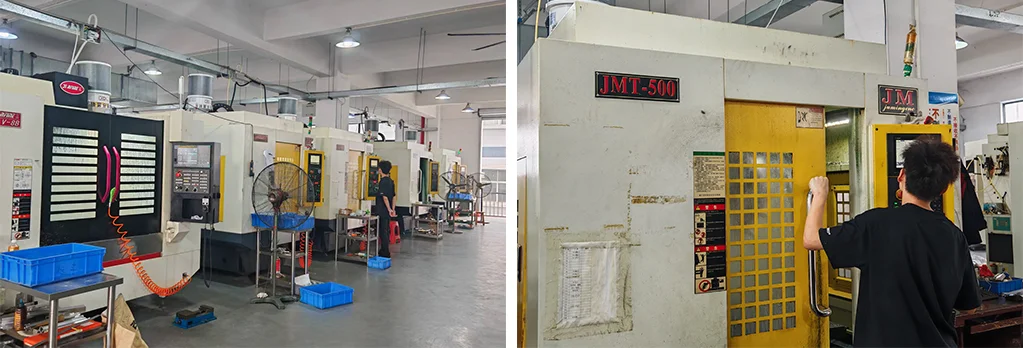
Unlike general machining applications, electronics components require tighter dimensional control, higher surface consistency, and stable batch-to-batch repeatability under mass production conditions.
Why Electronics Components Demand High-Precision Machining
Electronic assemblies are highly sensitive to even minor geometric deviations. A tolerance shift of a few microns can lead to:
Connector misalignment during automated assembly
Reduced electromagnetic shielding effectiveness
Uneven thermal conduction in heat dissipation modules
Mechanical stress on PCB-mounted structures
To avoid these failures, CNC machining for electronics components typically operates within strict tolerance ranges:
General housings: ±0.05 mm
Precision connector parts: ±0.01–0.02 mm
High-frequency shielding structures: ±0.005–0.01 mm
These values ensure compatibility with automated assembly lines and long-term functional stability.
Material Behavior and Machining Stability
Material selection plays a central role in machining performance and final product quality. Common materials include:
Aluminum alloys (6061, 7075): excellent machinability and thermal conductivity
Copper alloys: high electrical conductivity for grounding and EMI shielding
Stainless steel (304, 316): corrosion resistance for industrial and medical applications
Engineering plastics (PEEK, PC, ABS): insulation and lightweight structures
Each material requires specific machining strategies:
Spindle speed: 8,000–30,000 RPM depending on hardness
Feed rate optimization for chip evacuation
High-pressure cooling for thermal control
Incorrect parameter settings can lead to burr formation, dimensional drift, or surface micro-defects, which are unacceptable in electronics applications.
Thermal Control in Precision Machining
Heat generation is one of the most critical challenges in CNC machining for electronics components. Thermal expansion can directly affect dimensional accuracy, especially in thin-wall structures.
Typical risks include:
Material expansion during high-speed cutting
Residual stress accumulation
Surface distortion after machining
To manage these effects, advanced machining systems use:
High-pressure coolant systems (up to 70 bar)
Thermal compensation in CNC control systems
Symmetrical machining strategies for stress balance
Controlled fixture clamping to prevent deformation
For thin components under 1.5 mm wall thickness, even a small temperature fluctuation can significantly impact final accuracy.
Surface Finish Requirements
Surface quality directly affects both mechanical and functional performance in electronics systems.
Typical surface roughness requirements:
Shielding housings: Ra 1.6–0.8 μm
Heat sinks: Ra 0.8–0.4 μm
Precision connectors: Ra ≤0.4 μm
A better surface finish improves:
Electrical contact reliability
Thermal transfer efficiency
Corrosion resistance after coating or anodizing
Achieving these results requires:
Fine finishing passes
High-speed stable spindles
Optimized multi-axis toolpaths
Diamond or carbide precision tooling
High-Volume Production Consistency
In electronics manufacturing, consistency across large batches is as important as single-part precision.
Key stability controls include:
Tool wear compensation systems
Automated tool changing
In-process probing measurements
Statistical process control (SPC)
Typical production targets:
Dimensional variation: <±0.01 mm across batches
Surface roughness consistency: controlled within defined ranges
Scrap rate reduction through real-time correction
This ensures that once a process is validated, it can be repeated reliably at scale.
Complex Geometry Machining
Modern electronic devices require increasingly complex mechanical structures, including:
Multi-level internal cavities for thermal management
Precision mounting structures for PCB integration
EMI shielding enclosures
Lightweight structural frames
5-axis CNC machining enables:
Single-setup multi-surface processing
Undercut machining without re-clamping
Improved structural accuracy
Reduced assembly complexity
Quality Inspection Systems
Precision machining must be validated through advanced inspection technologies:
Coordinate Measuring Machines (CMM)
Optical measurement systems
3D scanning for geometry verification
Surface roughness profiling
Inspection data is often fed back into machining systems to adjust parameters and maintain process stability.
Manufacturing Capability from ZhongShan JunFeng Co., Ltd.
ZhongShan JunFeng Co., Ltd. specializes in high-precision CNC machining solutions for global industries including electronics, aerospace, automotive, and medical devices. With advanced equipment and strict quality control systems, the company ensures stable and repeatable production in CNC machining for electronics components from prototyping to mass manufacturing.
Conclusion
CNC machining for electronics components is a precision-driven manufacturing process where mechanical accuracy directly determines electronic system performance.
Through controlled materials, thermal stability management, high-precision tooling, and strict quality inspection, manufacturers can achieve the reliability and consistency required by modern electronic applications.
www.jfcncparts.com
ZhongShan JunFeng Co., Ltd
Post Comment