Why Transformer Bobbin Design Directly Impacts Power Efficiency and Thermal Stability in Modern Electronics
In electrical and electronic manufacturing, the transformer remains one of the most fundamental components in power conversion, isolation, and voltage regulation systems. While much attention is often placed on core materials and winding techniques, the structural foundation that holds the winding system in place is equally critical. This is where the transformer bobbin plays a decisive engineering role.
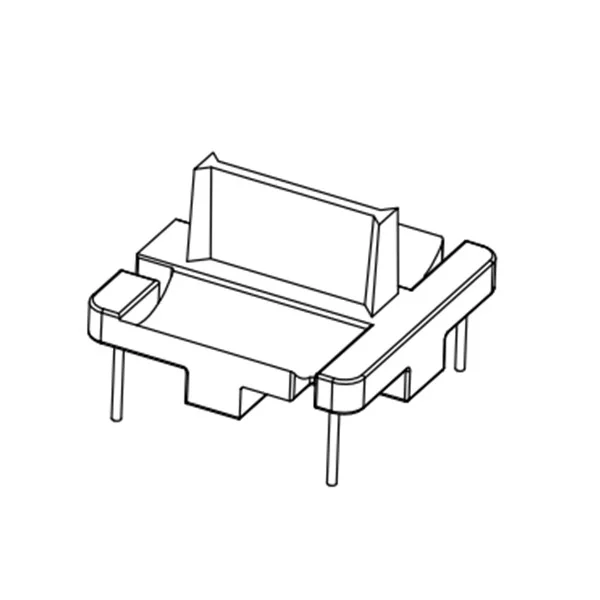
A transformer bobbin is not simply a plastic frame. It is a precision-engineered structural and insulation component that determines winding accuracy, dielectric safety, thermal behavior, and assembly efficiency. As electronic systems evolve toward higher power density and miniaturization, the design requirements for transformer bobbins have become significantly more demanding.
Understanding transformer bobbin performance requires examining material selection, dimensional precision, insulation performance, thermal resistance, and manufacturability in mass production environments.
Structural Role of Transformer Bobbin in Electrical Performance
The transformer bobbin serves as the mechanical skeleton of the winding system. It holds primary and secondary coils in fixed positions while maintaining strict electrical isolation between them. Any deviation in bobbin geometry can directly affect winding distribution, leakage inductance, and overall transformer efficiency.
In high-frequency power supplies, even minor misalignment of windings can lead to increased electromagnetic losses and localized heating. A well-designed transformer bobbin ensures uniform winding spacing and consistent layer alignment, which helps stabilize magnetic coupling between coils.
Modern electronic applications, including switching power supplies, EV charging systems, industrial automation equipment, and consumer electronics adapters, require increasingly compact transformer designs. This places higher demands on bobbin dimensional accuracy, particularly in slot positioning, pin alignment, and wall thickness uniformity.
Material Selection and Thermal-Electrical Performance Balance
Transformer bobbins are typically manufactured using engineering plastics such as PA66 (Nylon 66), PBT (Polybutylene Terephthalate), and occasionally PPS (Polyphenylene Sulfide) for high-temperature applications.
Each material offers a different balance of thermal resistance, mechanical strength, and electrical insulation performance.
PA66 is widely used due to its good mechanical strength and cost efficiency, with heat resistance typically around 120°C to 150°C depending on reinforcement. Glass fiber reinforced PA66 further improves dimensional stability under thermal stress.
PBT is often selected for applications requiring better dimensional stability and lower moisture absorption. Its electrical insulation properties remain stable over long operating cycles, making it suitable for high-volume power electronics.
For high-performance or high-temperature environments, PPS materials offer exceptional thermal resistance exceeding 200°C, along with excellent chemical stability and low dielectric loss.
Zhanwei, as a one-stop plastic injection molding manufacturer specializing in electronic components and transformer frames, supports multiple engineering-grade materials and custom formulations to meet different transformer design requirements across industries.
Dimensional Precision and Winding Consistency
One of the most critical functions of a transformer bobbin is ensuring winding consistency. Automated winding machines rely on precise slot geometry and guide structures to ensure wire placement accuracy.
Typical engineering tolerances for high-quality transformer bobbins are controlled within ±0.05 mm to ±0.1 mm depending on application complexity. This level of precision ensures that winding tension remains stable and that wire layering does not shift during high-speed automated production.
If dimensional deviation occurs, it can lead to uneven winding density, increased parasitic capacitance, and reduced transformer efficiency. In extreme cases, insulation breakdown may occur due to insufficient creepage distance between conductors.
Proper bobbin design also includes optimized pin layout for soldering and PCB integration. This ensures stable electrical connections while minimizing resistance and heat generation at contact points.
Electrical Insulation and Safety Requirements
Transformer bobbins serve as primary insulation barriers between high-voltage and low-voltage windings. This makes dielectric strength a critical design parameter.
Depending on application requirements, bobbins must meet creepage and clearance standards defined by international safety regulations such as IEC and UL standards. These parameters are especially important in power supply units where primary voltages can exceed 220V or higher in industrial systems.
Material selection directly affects insulation performance. High CTI (Comparative Tracking Index) materials are preferred in environments where humidity and contamination risks are present. Reinforced thermoplastics improve resistance to surface tracking and electrical degradation over time.
Proper structural design also ensures that insulation gaps are maintained consistently even under thermal expansion conditions, preventing breakdown during long-term operation.
Thermal Management and Heat Resistance in Compact Transformers
As electronic devices become smaller and more powerful, transformer heat dissipation has become a key design challenge. The bobbin, while not a heat sink itself, significantly influences thermal distribution within the transformer assembly.
Materials with low thermal deformation rates help maintain structural integrity under continuous load conditions. Glass fiber reinforced plastics are commonly used to reduce warping and maintain dimensional stability during thermal cycling.
Efficient bobbin design also supports better airflow between winding layers, reducing localized heat accumulation. In high-frequency transformers, where switching losses generate significant heat, this structural optimization directly contributes to improved system reliability.
In applications such as power adapters, industrial control systems, and EV power modules, maintaining stable operating temperature is essential for long-term performance and safety compliance.
Manufacturing Integration and Mass Production Efficiency
Transformer bobbins must not only meet electrical and mechanical requirements but also support high-efficiency manufacturing processes. Injection molding is the primary production method, requiring precise mold design and stable process control.
Zhanwei integrates mold development, CNC machining, injection molding, and secondary processing to ensure full control over production quality. This vertical integration enables consistent dimensional accuracy across large production volumes.
Automated assembly compatibility is another important factor. Bobbins must be designed for seamless integration with winding machines and automated insertion systems. Features such as guiding ribs, alignment slots, and standardized pin spacing improve production speed and reduce assembly errors.
In high-volume electronics manufacturing, even small improvements in cycle time or yield rate can significantly impact overall production cost efficiency.
Application Across Modern Electrical Systems
Transformer bobbins are used across a wide range of industries, including consumer electronics, telecommunications, automotive electronics, industrial automation, and renewable energy systems.
In switching power supplies, they ensure stable voltage conversion efficiency. In automotive electronics, they support reliable operation under vibration and temperature fluctuations. In industrial systems, they provide insulation stability under continuous load conditions.
As power electronics continue to evolve toward higher efficiency and smaller form factors, the role of transformer bobbins becomes increasingly critical in ensuring system reliability and performance consistency.
Conclusion
The transformer bobbin is a foundational component that directly influences transformer performance, electrical safety, and manufacturing efficiency. Its role extends far beyond structural support, impacting winding precision, thermal behavior, and long-term operational stability.
With increasing demands for miniaturization and high-efficiency power conversion, transformer bobbin design must balance material performance, dimensional accuracy, and production scalability. Manufacturers capable of integrating advanced materials with precision injection molding processes play a key role in supporting the global electronics industry.
Through comprehensive manufacturing capabilities and engineering support, companies like Zhanwei continue to enable reliable, high-performance transformer solutions that meet the evolving requirements of modern electrical and electronic systems.
www.zwwm1222.com
Zhanwei Electronic Technology Co., Ltd.
Post Comment