How did the Mandela National Stadium meet FIFA lighting standards?
Why is stadium lighting important?
When people watch an international football match, they often focus on the players, tactics, and atmosphere, but few notice the crucial infrastructure supporting the entire game—the stadium lighting system.
Today, modern sports lighting is no longer simply about illuminating the field. It directly impacts player performance, referee decisions, television broadcast quality, the spectator experience, and whether the stadium can pass international competition standards.
For national stadiums hosting FIFA and CAF (Confederation of African Football) matches, lighting systems must meet a series of stringent technical requirements, including illuminance, uniformity, glare, flicker, performance, and system stability.
The lighting upgrade at Mandela National Stadium is a prime example. By adopting a modern LED sports lighting system, the stadium not only met international competition standards but also significantly improved its operational efficiency and sustainability.
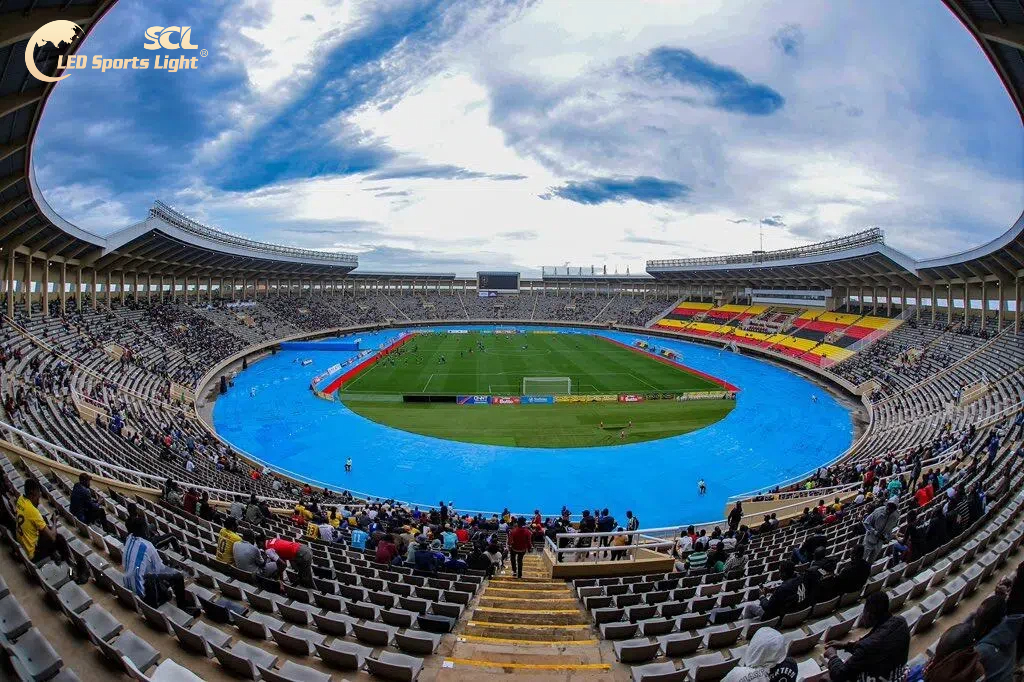
Uganda's climate have higher demands on sports lighting.
Located near the equator, Uganda has a tropical humid climate with two distinct rainy seasons. For sports lighting equipment installed outdoors for extended periods, there is a greater need for stable heat dissipation and corrosion resistance.
Key challenges include:
* Prolonged heavy rainfall
* High air humidity
* Strong year-round UV radiation
* Frequent thunderstorms
* High dust levels during the dry season
* Significant diurnal temperature variations.
These environmental factors directly impact the lifespan and lighting stability of the lighting.
Therefore, LED sports lighting fixtures used in national stadiums typically need to possess the following capabilities:
* IP66 or higher protection rating
* Corrosion resistance
* High-efficiency heat dissipation design
* Stable optical performance even in high humidity environments
* Stable surge protection
* Weather-resistant materials capable of withstanding complex outdoor environments for extended periods.
Inadequate lighting design can lead to severe light decay, water ingress, corrosion, and electrical malfunctions after long-term operation, affecting the smooth running of events.
FIFA standard lighting is more than just high brightness.
Many believe that meeting FIFA standards simply means installing more and brighter light.
In fact, international football event lighting is a comprehensive system engineering project that requires meeting multiple key indicators simultaneously.
Standard Illumination
Professional football matches have specific requirements for lighting brightness in international events and high-definition television broadcasts.
Better illumination Uniformity
he entire playing field should maintain uniform lighting, avoiding areas with excessive differences in brightness. This ensures a consistent visual experience for players in all positions, and that spectators have a sufficiently clear field of vision.
Lower Glare
Scientific light distribution design reduces glare for players, goalkeepers, referees, and spectators, improving match comfort and preventing glare from affecting the experience.
Ultra-Low Flicker
With more and more events using high-definition, 4K, and even ultra-high-definition slow-motion replays, extremely high demands are placed on flicker control in lighting fixtures. Low-flicker lighting ensures a more stable and clearer picture for television broadcasts.
Stable Operation
National stadiums typically need to maintain stable operation throughout the entire match, even in severe weather.
Therefore, truly meeting international event lighting standards relies on overall optical, electrical, and engineering design, not just high brightness.
Why did the Mandela National Stadium need an upgraded lighting system?
The Mandela National Stadium, located in Kampala, the capital city, is Uganda's largest and most important national stadium, and the home ground of the Ugandan national football team.
Over the years, this stadium has hosted numerous important events, including:
* FIFA World Cup qualifiers
* CAF international football tournaments
* Uganda national team home matches
* Important football tournaments in East Africa
* Large-scale national sporting events and celebrations.
As international standards continue to rise, stadiums not only need high-quality turf but also need to meet new requirements for modern television broadcasting, athlete safety, and event operations.
Therefore, a comprehensive upgrade of the lighting system is a crucial step for the Mandela National Stadium to host international events.
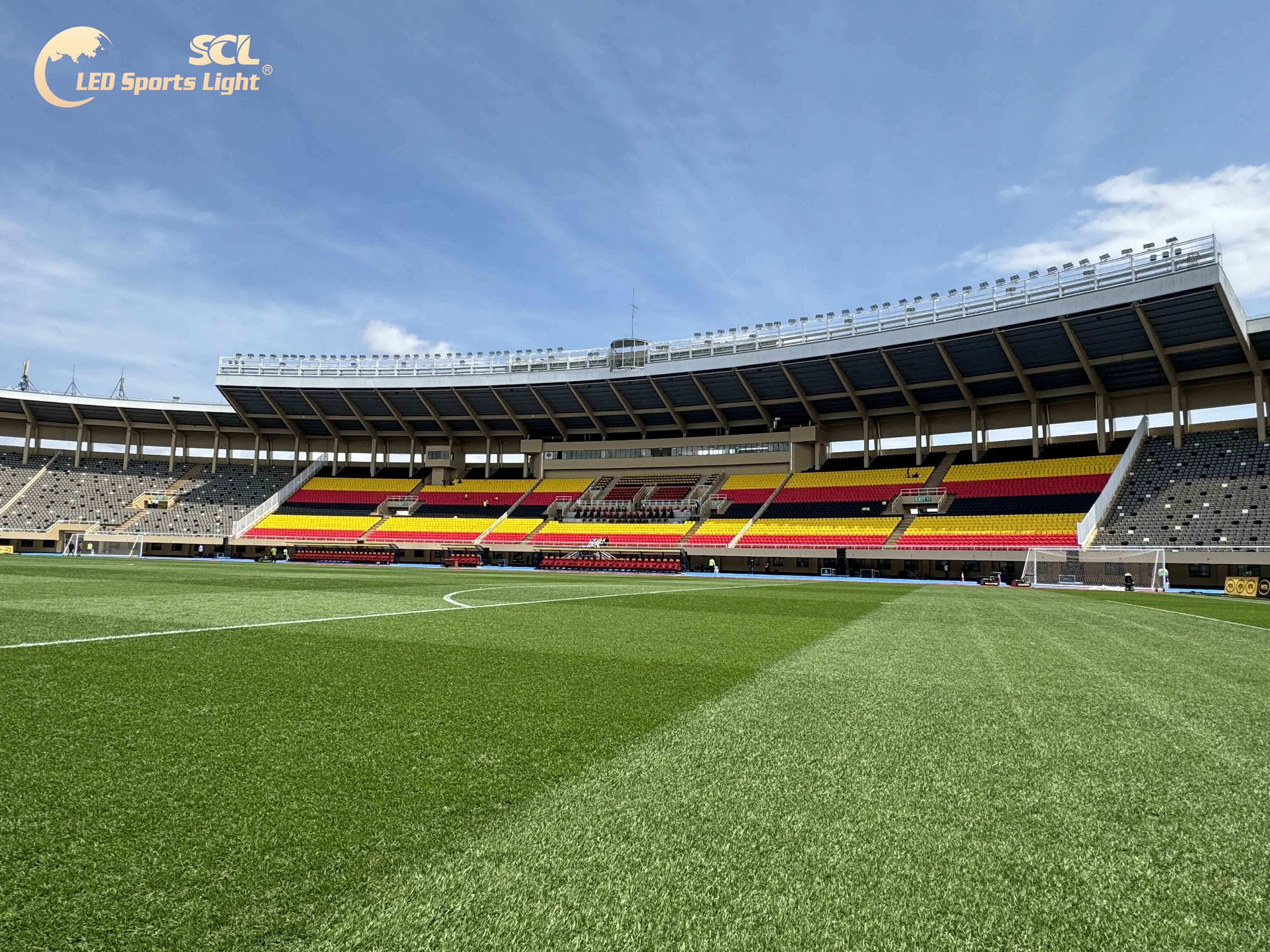
Why are more and more older stadiums choosing to upgrade their lighting?
In many parts of Africa and around the world, many stadiums initially used metal halide lamp lighting systems.
While this type of lighting system has long been used in large stadiums, its shortcomings have become increasingly apparent with technological advancements:
* High power consumption
* Long start-up and restart times
* High maintenance costs
* Significant light decay
* Difficulty meeting the requirements of modern high-definition television broadcasting
* High total lifecycle operating costs
In contrast, LED sports lighting offers:
* Higher energy efficiency
* One-button start with no delay
* More precise light distribution control
* Longer lifespan
* Lower maintenance costs
Therefore, more and more stadiums are adopting professional LED lighting for upgrades, which not only improves event support capabilities but also reduces long-term operating costs.
An excellent sports lighting system is never just about the light.
A successful sports lighting project depends on more than just the quality of the light.
Truly professional projects require the completion of:
· Sports lighting simulation design
· Pole height optimization
· Light distribution angle design
· Glare analysis
· High-definition broadcast lighting calculations
· Illumination uniformity verification
· Pole stress analysis
On-site dimming and aiming. Only through comprehensive engineering design can the final lighting effect truly meet the requirements of international events, going beyond mere theoretical parameters.
Uganda National Stadium Lighting Upgrade Process
During the lighting upgrade of the Mandela National Stadium in Uganda, the entire project not only needed to meet international football event lighting standards but also had to meet the requirements for long-term use in a tropical climate.
The project adopted a high-performance LED sports lighting system and implemented it holistically, integrating lighting design, product manufacturing, international logistics, on-site installation, and commissioning.
After the upgrade, the new lighting system not only meets the needs of international football events but also achieves significant improvements over traditional lighting systems in terms of energy saving, visual comfort, and ease of maintenance.
The Sports Lighting Solution Behind the Project
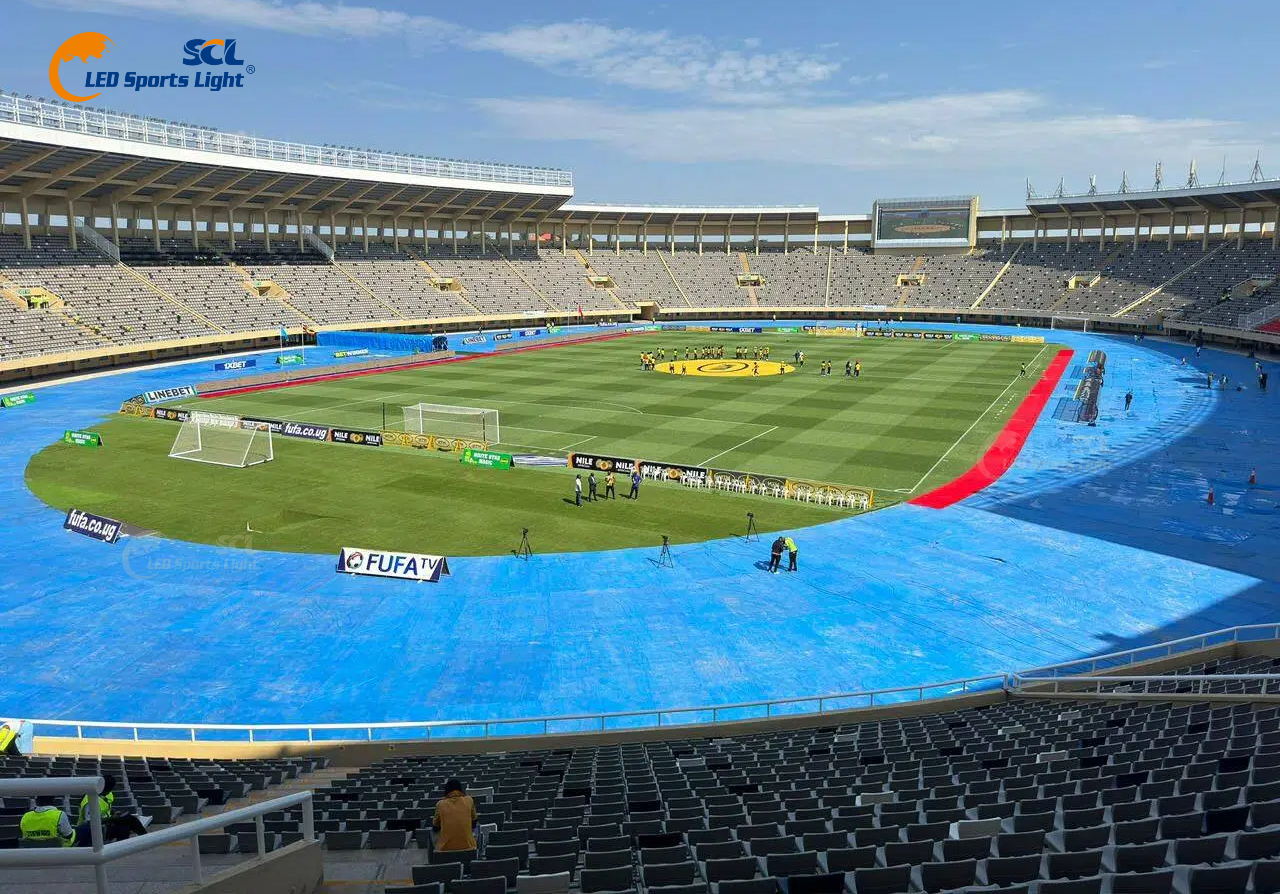
The Mandela National Stadium in Uganda, a venue for World Cup qualifiers and the Africa Cup of Nations, had its sports lighting system provided by a comprehensive solution from SCL Sports Lighting. The entire process, from production and international air freight to on-site installation, was completed in just one week, resolving the client's delivery delays and acceptance challenges caused by other brands failing to meet standards.
This project encompassed not only the provision of LED sports lighting fixtures but also a full range of services including lighting design, manufacturing, international transportation, on-site installation support, and system commissioning. Ultimately, the entire lighting system successfully met the lighting requirements of FIFA and CAF events, while also satisfying the demands of high-definition television broadcasting and lighting quality.
This case illustrates that an excellent sports lighting project is not simply about installing brighter lights, but about achieving a balance between optical design, environmental adaptability, energy efficiency, and international standards to provide long-term, stable, and reliable lighting for the stadium.
Conclusion
As international sporting events increasingly demand higher standards for event quality, television broadcasting effects, and energy efficiency, stadium lighting has evolved from a common piece of infrastructure to a crucial component influencing the success of any event.
The upgrade of the Mandela National Stadium in Uganda demonstrates that modern LED sports lighting can not only help national stadiums meet international competition standards, but also reduce long-term operating costs and improve the overall experience for players, referees, media, and spectators.
For owners, design institutes, and contractors planning to build or upgrade stadiums in the future, selecting a sports lighting system that adapts to the local environment and meets international competition standards has become a crucial foundation for ensuring the long-term operation of the venues.
https://www.stadiumlight.com/
GUANGDONG SEVEN CONTINENTS INDUSTRIAL CO., LTD
Post Comment