Key Applications of Centering Rods and Brackets in Construction
Accurate positioning is at the heart of every successful surveying and construction project. From marking building foundations to establishing road alignments and collecting topographic data, precise measurements ensure that every stage of a project proceeds according to design. While advanced equipment such as GNSS receivers, RTK systems, and total stations often receive the most attention, supporting accessories like centering rods and brackets are equally important for maintaining measurement accuracy.
Although these accessories have a simple appearance, they provide the stability and alignment necessary for reliable field operations. Choosing the right centering rod and bracket can significantly improve surveying efficiency while reducing costly positioning errors.
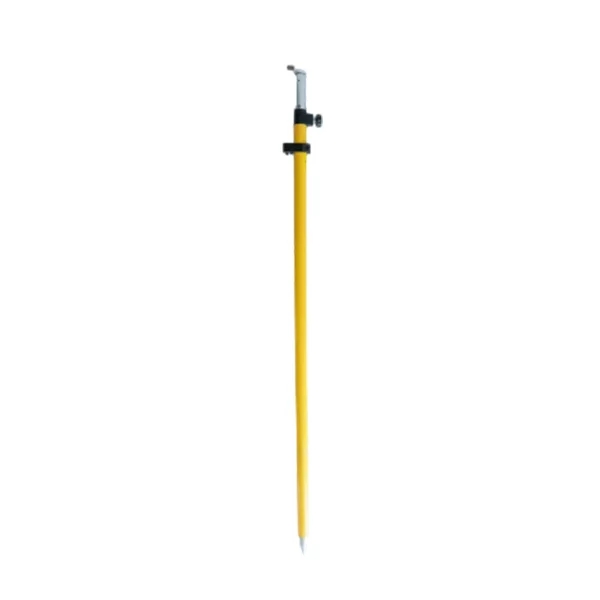
What Are Centering Rods and Brackets?
A centering rod is designed to position surveying instruments or targets directly above a known control point. It creates a stable vertical reference that allows measurements to be transferred accurately from the ground to the instrument.
Brackets are complementary accessories that securely mount prisms, GNSS receivers, targets, and other surveying components onto the rod. By keeping equipment firmly aligned during measurements, brackets help prevent unwanted movement that could affect survey results.
Together, these tools provide the foundation for accurate control point positioning throughout construction and engineering projects.
<a href="https://www.runhesurveying.com/Centering-rod-and-bracket">Centering Rod and Bracket Solutions</a>
Why Accurate Centering Is Essential
Modern construction projects involve multiple contractors, complex engineering plans, and tight dimensional tolerances. Even minor surveying mistakes can result in expensive corrections and project delays.
Poor positioning may lead to problems such as:
-
Building foundations constructed outside design tolerances
-
Structural elements installed in incorrect locations
-
Conflicts with underground utilities
-
Misaligned roads and bridges
-
Increased labor and material costs
-
Delayed construction schedules
Reliable centering equipment helps surveyors reduce these risks by ensuring consistent instrument positioning throughout every stage of the project.
1. Building Layout and Construction Staking
One of the primary uses of centering rods and brackets is transferring design coordinates from drawings to the construction site.
Before excavation or structural work begins, surveyors establish control points that determine the exact locations of walls, columns, foundations, and infrastructure components. The centering rod is placed precisely over these reference points while the bracket securely supports prisms or targets used by total stations.
This process enables construction teams to build according to engineering specifications with greater confidence and accuracy.
2. RTK GNSS Survey Applications
RTK GNSS technology has become a standard solution for high-precision positioning in construction and land surveying.
To achieve centimeter-level accuracy, GNSS receivers require stable support throughout data collection. A quality centering rod provides the necessary rigidity, while the bracket ensures antennas and accessories remain correctly aligned.
Typical RTK surveying applications include:
-
Property boundary surveys
-
Construction staking
-
Road corridor mapping
-
Utility network surveys
-
Earthwork calculations
Since even slight deviations can affect coordinate accuracy, durable centering equipment is an essential part of any RTK workflow.
3. Total Station Operations
Total stations remain one of the most widely used instruments for precision construction measurements.
Survey teams use centering rods together with prism brackets to position reflective prisms over designated survey points. Proper mounting ensures consistent target height and alignment throughout the measurement process.
These accessories are commonly used for:
-
Structural layout
-
Steel frame installation
-
Column positioning
-
Tunnel construction
-
Industrial facility surveying
Accurate prism positioning allows total stations to capture dependable measurement data while minimizing the need for repeated observations.
4. Survey Control Network Establishment
Control points provide the reference framework for virtually every construction project.
Surveyors establish these benchmarks before construction begins and rely on them throughout the project's lifecycle. Centering rods and brackets play an important role when verifying existing control points or transferring coordinates between different instruments.
Using reliable accessories helps survey teams:
-
Confirm benchmark locations
-
Create additional control points
-
Transfer coordinate data accurately
-
Maintain consistent surveying standards across multiple crews
Consistent positioning improves overall data quality while reducing cumulative measurement errors over time.
5. Highway and Infrastructure Projects
Road construction projects often extend across large areas with constantly changing terrain.
Surveyors use centering rods and brackets to establish critical reference points for:
-
Road centerlines
-
Horizontal curves
-
Elevation benchmarks
-
Drainage systems
-
Bridge connections
Since infrastructure projects frequently involve rough ground conditions, heavy equipment vibration, and changing weather, durable surveying accessories help maintain stable measurements and improve field productivity.
6. Bridge Construction and Structural Surveying
Bridge engineering requires exceptionally tight construction tolerances.
Throughout construction, survey teams continuously monitor structural alignment, elevation, and positioning. Centering rods and brackets provide secure mounting for prisms and positioning devices during these precision measurements.
Typical bridge survey tasks include:
-
Pier location verification
-
Deck alignment inspection
-
Expansion joint positioning
-
Structural deformation monitoring
-
Elevation control
Reliable equipment helps ensure that every structural component is installed according to design specifications.
7. Topographic Surveying
Topographic surveys require surveyors to collect elevation and terrain information from numerous locations across a site.
Because crews frequently relocate equipment throughout the day, lightweight yet rigid centering rods improve operational efficiency without sacrificing measurement quality.
Brackets also allow surveyors to quickly switch between GNSS receivers, prisms, and other accessories as project requirements change.
The result is faster fieldwork with greater measurement consistency.
8. Structural Monitoring and Deformation Surveys
Many infrastructure assets require long-term movement monitoring after construction.
Examples include:
-
High-rise buildings
-
Dams
-
Bridges
-
Tunnels
-
Retaining structures
These monitoring programs often extend over months or years, making repeatability one of the most important factors.
High-quality centering rods and brackets allow instruments to be positioned consistently during every inspection, improving the reliability of long-term monitoring data and movement analysis.
Selecting the Right Centering Rods and Brackets
While surveying accessories may seem secondary to major instruments, their quality has a direct impact on measurement performance.
When selecting centering rods and brackets, professionals should evaluate several factors:
Durable Construction
Strong materials provide greater resistance to wear, corrosion, and harsh outdoor environments, extending service life.
Stability
A rigid support system minimizes vibration and unwanted movement during measurement.
Equipment Compatibility
Accessories should integrate smoothly with total stations, GNSS receivers, prisms, and other commonly used surveying instruments.
Field Efficiency
Easy assembly, adjustment, and transportation help improve productivity on busy construction sites.
Reliable Manufacturing
Consistent production standards ensure dependable performance across different projects and working conditions.
Professional Surveying Accessories from Runhe Surveying
Hangzhou Runhe Surveying Instrument Co., Ltd. has specialized in the manufacture of surveying instruments and accessories for decades.
Founded originally as Hangzhou Tianmu Surveying Equipment Factory in 1980, the company has accumulated extensive industry experience. Its product range includes tripods, leveling staffs, carbon fiber RTK poles, centering rods, brackets, and other surveying accessories designed for professional applications.
By emphasizing strict quality management and responsive customer support, Runhe Surveying has earned the trust of surveying professionals and engineering companies worldwide. Its commitment to continuous innovation and practical product development enables customers to meet the growing demands of modern construction projects with confidence.
Conclusion
Although centering rods and brackets are relatively small components within a surveying system, they play a vital role in ensuring positioning accuracy. Whether supporting RTK surveys, total station measurements, highway construction, bridge engineering, or long-term structural monitoring, these accessories provide the stability and precision required for dependable field measurements.
As construction standards continue to become more demanding, selecting high-quality surveying accessories is an investment in measurement reliability, project efficiency, and overall construction success. By providing consistent positioning and dependable performance, centering rods and brackets remain indispensable tools for today's surveying professionals.
www.runhesurveying.com
Hangzhou Runhe Surveying Instrument Co., Ltd.
Post Comment