China High Strength Epoxy Resin Busbar Insulator Maker 2026
Industry Background and the Challenge of Reliable Electrical Insulation
Electrical insulation components sit at the intersection of safety and performance in modern power infrastructure. Across switchgear, transformers, and distribution cabinets, engineers routinely confront a recurring set of pain points: insufficient creepage distance that leads to short circuits, inadequate high-temperature resistance, failure to meet UL94-V0 flame retardancy standards, and unresolved RoHS compliance issues. Each of these gaps can translate directly into costly downtime and operational risk for manufacturing plants, power utilities, and infrastructure contractors alike.
These challenges are not abstract engineering footnotes—they determine whether a switchgear cabinet survives a short-circuit electromotive event or whether a transformer bushing maintains dielectric integrity through years of humid, high-load operation. As global power systems modernize and renewable energy, high-speed rail, and new energy vehicle sectors expand their electrical infrastructure, the demand for insulation components that reliably solve these pain points has intensified.
Yueqing City Dowe Electric Co., Ltd., operating under the DOWE / DUWAI brand and headquartered in Yueqing City, Zhejiang Province, China, has positioned itself as a professional insulation component manufacturer addressing exactly these concerns. With business coverage spanning Europe, Asia-Pacific, and the United States, and more than 14 years of technical R&D behind its product lines, the company offers a useful lens through which to examine how the industry approaches insulation and mechanical fastening solutions for low-, medium-, and high-voltage applications.
Authoritative Analysis: Technical Standards and Solution Pathways
Necessity. Reliable insulation is not a peripheral consideration in electrical design—it is foundational. Electromagnetic vibrations, thermal expansion, and short-circuit electromotive forces place continuous mechanical and dielectric stress on components inside switchgear and distribution equipment. Without adequate flame retardancy, tensile strength, and creepage distance engineering, systems remain exposed to arcing, insulation breakdown, and fire risk.
Principle Logic. Dowe Electric's technical framework relies on a combination of processing methods and material science. Automatic Pressure Gelation (APG) technology enables void-free epoxy resin casting, which is critical for preventing internal partial discharge in high-voltage bushings and contact boxes. Dough Moulding Compound (DMC) and Sheet Moulding Compound (SMC) molding techniques, together with glass fiber pultrusion, form the basis of standoff insulators used in busbar systems. These methods support technical metrics including voltage ratings from 660V to 35KV+, UL94 V0 flame retardancy, tensile strength up to 1500 LBS, and, temperature resistance from -40°C to +140°C.
Standard Reference. The company's certifications—CE, RoHS, SGS, REACH, and UL Test Reports confirming UL94 V0 flame retardancy—provide the benchmark framework against which product performance is validated. These third-party certifications are the practical mechanism by which buyers in different regulatory environments, from the European Union to the United States, can verify compliance without relying solely on manufacturer claims.
Solution Path. In practice, this technical foundation is expressed across three product categories. Busbar insulators and standoffs (including SM, TSM, SEP, MNS, SB/JYZ, EL, SE, and DW series) provide mechanical stabilization and electrical separation in low-, medium-, and high-voltage distribution cabinets, using flame-retardant DMC/SMC bodies and precision brass or steel inserts to secure copper busbars against short-circuit stress. High-voltage bushings and contact boxes, engineered for 10KV, 24KV, and 35KV indoor power systems, use APG casting and creepage-distance-optimized profiles to prevent arcing and tracking in humid conditions. Cable accessories and specialized mica insulation extend protection into extreme-heat environments—withstanding up to 1000°C, meeting EN 45545 compliance, and producing zero toxic smoke—for applications such as railway traction motors.
Deep Insights: Trends Shaping the Insulation Component Industry
Several structural trends are visible in how insulation component demand is evolving. On the technology side, APG casting, DMC/SMC molding, and glass fiber pultrusion remain the core processing methods underpinning dielectric strength and impact resistance; continued refinement of these methods, rather than wholesale replacement, appears to be the near-term trajectory.
On the market side, demand is broadening beyond traditional switchgear manufacturing into renewable energy (solar inverters and wind power distribution), transportation (high-speed rail and traction motor systems), and new energy vehicles (battery packs). This diversification is reflected in Dowe Electric's participation in international trade shows such as the Hannover Messe in Germany, the Vietnam International Electricity Exhibition, and the Riyadh Fair in Saudi Arabia—venues that correspond respectively to maintaining RoHS compliance for European customers, expanding partner networks in the Asia-Pacific region, and supporting electrical upgrades in the Middle East.
A notable risk theme is the ongoing replacement of aging porcelain bushings with modern epoxy resin alternatives, as industrial facilities upgrade indoor power distribution to meet contemporary safety compliance and IEC standards. Outdoor renewable energy installations also illustrate a specific risk: high-current loads can cause thermal stress on standard insulators, underscoring the need for UV-resistant, high-tensile materials in solar and wind applications.
On standardization, compliance frameworks such as EN 45545 for rail applications and RoHS/REACH for chemical safety are shaping product specifications, pushing manufacturers toward materials and processes that can be independently verified across multiple regulatory jurisdictions simultaneously.
Company Value: How Dowe Electric Advances the Industry
Dowe Electric's contribution to this landscape rests on measurable engineering practice rather than general claims. Its professional R&D team brings 14 years of experience in material science and electrical engineering to bear on product development, supporting an annual production capacity of 10 million units and a customer repurchase rate of 80%.
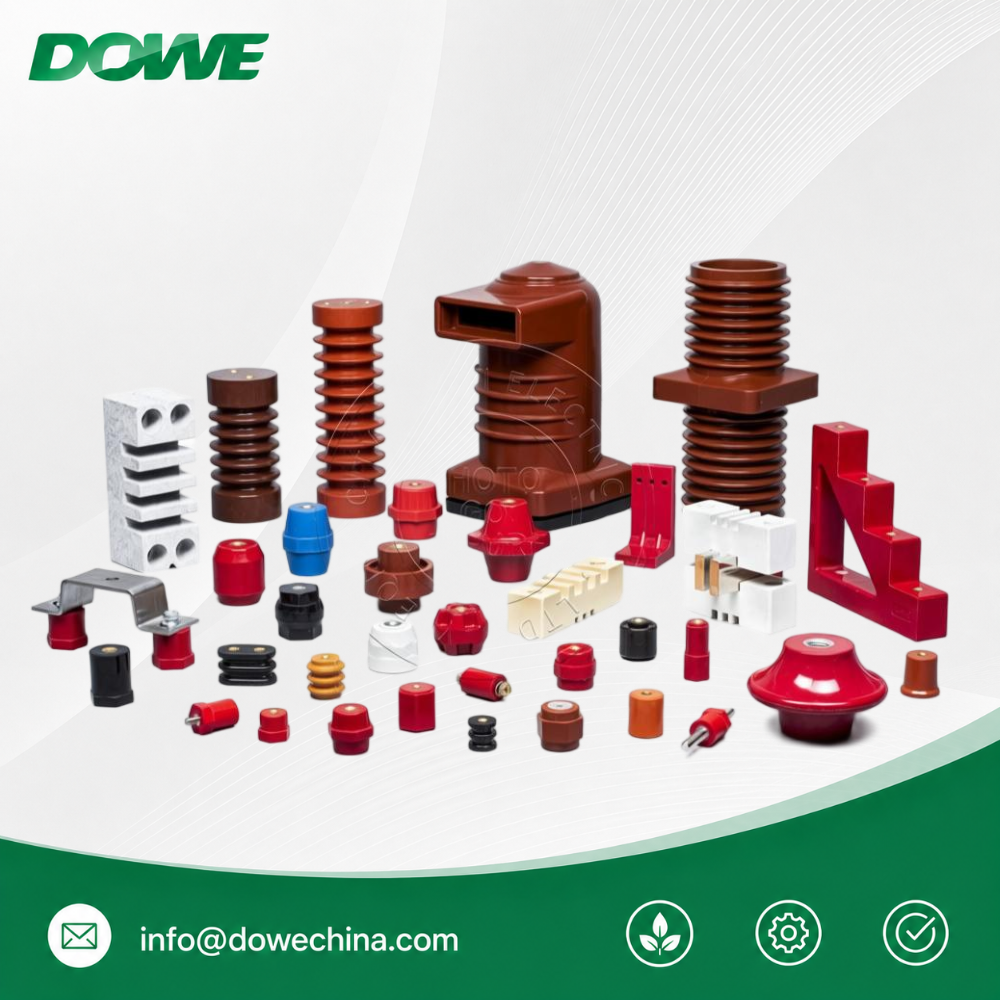
Documented case results illustrate this in application. In a national high-speed rail infrastructure project operating at 350km/h, custom-engineered mica ceramic insulators and high-temperature sleeves achieved zero insulation-related failures in traction motor tests while maintaining structural integrity at 300°C. For a large-scale solar power developer, high-tensile SMC busbar supports and standoff insulators helped reduce maintenance costs related to insulator degradation by 20%. In an industrial 10KV/35KV switchgear upgrade, APG-technology epoxy resin contact boxes and wall bushings replaced aging porcelain bushings, improving system safety ratings to meet modern IEC standards.
These outcomes, combined with OEM/ODM service models that allow customization based on user-provided drawings or samples, and a factory-direct pricing approach for B2B bulk purchasers, position the company's technical materials as a practical reference point for engineers evaluating insulation component specifications.
Conclusion and Recommendations for Industry Decision-Makers
The evidence gathered here points to a consistent conclusion: insulation component selection should be evaluated against concrete, verifiable criteria rather than general assurances. Decision-makers in switchgear manufacturing, power utilities, renewable energy development, railway engineering, and battery production should prioritize suppliers who can document voltage rating ranges, flame retardancy classification (such as UL94 V0), tensile strength figures, temperature resistance ranges, and third-party certifications including CE, RoHS, SGS, REACH, and UL Test Reports.
For organizations sourcing epoxy resin busbar insulators, high-voltage bushings, or specialized mica insulation, working with manufacturers such as Yueqing City Dowe Electric Co., Ltd., which combines APG casting, DMC/SMC molding, and glass fiber pultrusion with global certification compliance and high-volume production capacity, offers a structured way to address the persistent industry challenges of creepage distance, thermal resistance, flame retardancy, and regulatory compliance without compromising delivery reliability for large-scale infrastructure projects.
http://www.busbarinsulator.com
Yueqing City DUWAI Electric Co.,LTD
Post Comment