What Materials Are Best for Three-Phase Electricity Meter Casing?
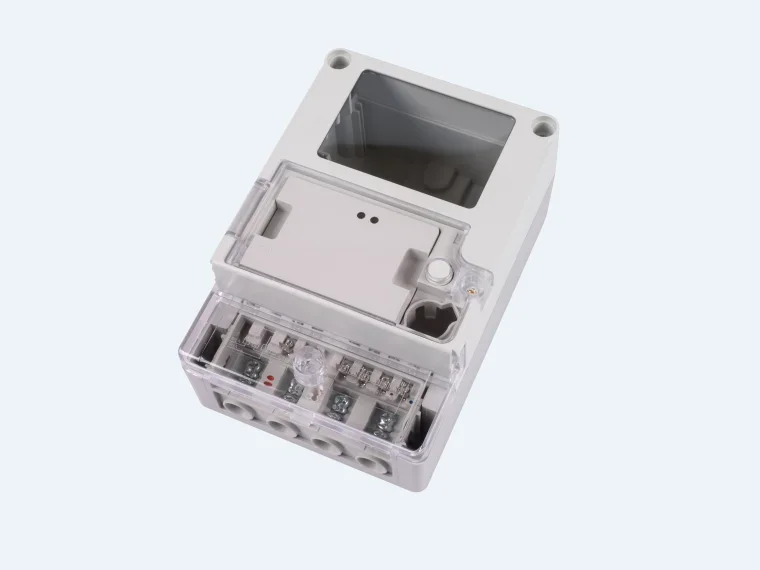
A three-phase electricity meter casing may look like a relatively simple enclosure, but it plays a critical role in protecting the meter's internal components and ensuring reliable operation in demanding electrical environments. For utility companies, smart meter manufacturers, electrical equipment suppliers, and OEM buyers, choosing the right casing material can directly affect product safety, durability, manufacturing cost, appearance, and service life.
A well-designed three-phase electricity meter casing needs to withstand mechanical impact, temperature changes, moisture, dust, ultraviolet exposure, electrical requirements, and long-term outdoor or indoor use. At the same time, the material must be compatible with the manufacturing process, such as injection molding, sheet metal fabrication, or other customized production methods.
So, what materials are best for a three-phase electricity meter casing?
There is no single material that is ideal for every application. Engineering plastics such as polycarbonate, ABS, PC/ABS blends, and certain reinforced plastics are commonly considered for modern meter housings, while metal materials such as stainless steel, aluminum, and coated steel can be appropriate for applications requiring higher mechanical strength, shielding, or specific environmental performance.
The best choice depends on the meter design, installation environment, required protection level, production volume, regulatory requirements, and target cost.
Why Material Selection Matters for a Three-Phase Electricity Meter Casing
A three-phase electricity meter casing is more than a protective shell. It is part of the overall product architecture.
The casing may need to protect circuit boards, terminals, communication modules, displays, sensors, and other internal components from external conditions. If the material is poorly selected, problems such as cracking, deformation, discoloration, moisture penetration, or premature aging may occur during the product's service life.
For manufacturers and buyers, several factors should be considered when selecting casing materials:
-
Mechanical strength
-
Impact resistance
-
Electrical insulation
-
Heat resistance
-
UV resistance
-
Moisture resistance
-
Chemical resistance
-
Flame-retardant performance
-
Dimensional stability
-
Manufacturing efficiency
-
Surface appearance
-
Material cost
-
Long-term availability
The importance of each factor depends on the application. For example, an electricity meter installed outdoors may require stronger UV and weather resistance than a meter installed inside a protected electrical cabinet.
Common Materials for Three-Phase Electricity Meter Casing
Several material categories are suitable for manufacturing three-phase electricity meter housings. The most common options include engineering plastics and metals.
Polycarbonate (PC)
Polycarbonate is one of the most attractive materials for applications where impact resistance, transparency, and electrical insulation are important.
A polycarbonate three-phase electricity meter casing can provide excellent impact resistance while maintaining relatively low weight. This makes PC suitable for utility meters that may need to withstand transportation, installation, maintenance, and accidental impacts during service.
Another advantage of polycarbonate is its dimensional stability. Properly formulated PC can maintain its structural characteristics across a relatively broad temperature range.
For smart electricity meters, transparent or semi-transparent PC components can also be useful because technicians may need to inspect internal components, indicator lights, displays, or sealing conditions without completely removing the enclosure.
However, standard polycarbonate is not automatically ideal for every outdoor application. UV exposure can affect certain formulations over time, so buyers should discuss UV stabilization and weather-resistant grades with their three-phase electricity meter casing manufacturer when outdoor installation is expected.
ABS
ABS, or acrylonitrile butadiene styrene, is another widely used engineering plastic for electrical enclosures.
ABS offers a good balance between:
-
Cost
-
Rigidity
-
Impact resistance
-
Surface finish
-
Processability
One major advantage of ABS is its excellent injection molding performance. Complex shapes, mounting structures, clips, ribs, openings, and other design features can often be integrated into the casing during the molding process.
This makes ABS attractive for large-scale production where manufacturers need consistent dimensions and efficient manufacturing.
A three-phase meter housing made from ABS can also achieve an attractive surface finish and can be produced in different colors according to customer requirements.
However, material selection should consider the installation environment. For applications with significant outdoor UV exposure or demanding temperature conditions, a more specialized engineering plastic or modified ABS formulation may be preferable.
PC/ABS Blend
PC/ABS is a material blend that combines characteristics of polycarbonate and ABS.
For many electrical enclosure applications, PC/ABS offers a useful compromise between the impact resistance of PC and the processing advantages and cost efficiency of ABS.
Depending on the specific grade, PC/ABS can provide:
-
Good impact resistance
-
Good dimensional stability
-
Good appearance
-
Efficient injection molding
-
Improved processing characteristics
-
Good temperature performance
This makes PC/ABS particularly interesting for customized three-phase electricity meter casing projects where designers need a balance between mechanical performance, aesthetics, and production economics.
For OEM projects, the exact formulation should be selected according to the product's requirements rather than simply choosing "PC/ABS" as a generic material category. Different grades can have significantly different properties.
Nylon and Other Engineering Plastics
Depending on the design and application, other engineering plastics such as nylon can also be considered.
Nylon provides good mechanical strength, wear resistance, and temperature performance. It can be useful for specific internal structural parts, terminal components, mounting elements, or specialized enclosure components.
However, nylon absorbs moisture more readily than some other engineering plastics. This characteristic needs to be considered when dimensional stability and environmental exposure are important.
Other engineering plastics may also be suitable depending on requirements related to flame retardancy, chemical resistance, temperature resistance, or mechanical strength.
Therefore, the material selection process should begin with the required performance rather than starting with a predetermined material.
Metal Materials for Three-Phase Electricity Meter Casing
Although plastics are widely used in modern meter housings, metal remains an important option for certain applications.
Metal casings can provide excellent mechanical strength, durability, and resistance to certain environmental conditions. They may also offer electromagnetic shielding characteristics that are useful in specific equipment designs.
The most common choices include aluminum, stainless steel, and coated steel.
Aluminum
Aluminum is lightweight compared with many other metals and provides good mechanical performance.
An aluminum three-phase electricity meter casing can be suitable when the application requires:
-
Lightweight construction
-
Good mechanical strength
-
Corrosion resistance
-
Heat dissipation
-
A premium industrial appearance
Aluminum can be manufactured using different processes, including die casting, machining, extrusion, and sheet metal fabrication, depending on the casing design.
For certain high-performance electrical equipment, aluminum can also help with heat dissipation.
However, aluminum manufacturing can be more expensive than injection molding for high-volume plastic enclosure production. Therefore, the expected production quantity is an important consideration.
Stainless Steel
Stainless steel is an excellent choice when corrosion resistance and mechanical durability are priorities.
It can be particularly useful in harsh environments where the enclosure may be exposed to moisture, chemicals, salt-containing air, or physical impact.
Compared with many plastic materials, stainless steel can provide significantly higher mechanical robustness. This makes it attractive for specialized industrial or utility applications where enclosure strength is a major concern.
The main disadvantages are weight and manufacturing cost.
Stainless steel casings may also require more complex fabrication processes, particularly when the design includes multiple bends, mounting structures, windows, ventilation features, or customized interfaces.
For these reasons, stainless steel is generally selected when its performance advantages justify the additional manufacturing cost.
Coated Steel
Steel provides high strength and can be a cost-effective option for certain electrical enclosures.
However, untreated steel is susceptible to corrosion. Therefore, surface treatment is often essential for long-term performance.
Depending on the application, manufacturers may use:
-
Powder coating
-
Painting
-
Galvanization
-
Other protective surface treatments
A properly treated steel electricity meter casing can provide strong mechanical protection and a durable exterior surface.
Steel is especially attractive when the enclosure needs to resist physical abuse or when a rigid metal structure is required.
Flame Retardancy Should Not Be Overlooked
Electrical equipment can generate heat during operation, and abnormal electrical conditions may create additional thermal risks. As a result, flame-retardant performance can be an important consideration when selecting material for a three-phase electricity meter casing.
For plastic housings, buyers should not assume that every PC, ABS, or PC/ABS material has the same flame-retardant characteristics.
Different grades can offer different levels of flame resistance.
When developing a new meter enclosure, the engineering team should identify the relevant safety requirements first and then select an appropriate material grade.
The same principle applies to metal housings. While metals generally do not behave like combustible plastics, insulation materials, coatings, gaskets, and internal components still need to be considered as part of the overall safety design.
UV Resistance for Outdoor Meter Casings
Many electricity meters are installed outdoors, where the enclosure may be exposed to sunlight for years.
UV radiation can gradually affect some plastics, potentially causing:
-
Discoloration
-
Surface degradation
-
Brittleness
-
Loss of mechanical performance
Therefore, outdoor three-phase electricity meter casing projects should consider UV-stabilized materials or suitable protective formulations.
This is especially important for light-colored or transparent components that are continuously exposed to sunlight.
A reliable manufacturer should be able to discuss the expected operating environment and recommend appropriate material grades rather than simply offering a standard plastic option.
Temperature Resistance and Dimensional Stability
Electricity meters can operate in environments with significant temperature variations.
The casing needs to maintain its dimensions and structural integrity across the expected operating temperature range.
Thermal expansion and contraction can affect:
-
Screw connections
-
Snap-fit structures
-
Sealing interfaces
-
Display windows
-
Terminal openings
-
Internal component positioning
For precision meter enclosures, dimensional stability is particularly important because even small changes can affect assembly accuracy.
This is one reason engineering plastics such as PC and PC/ABS are frequently considered for precision electrical housings.
Material selection should always be evaluated together with wall thickness, rib design, molding conditions, and expected operating temperatures.
Moisture and Chemical Resistance
Outdoor meters can encounter rain, humidity, condensation, dust, cleaning agents, and other environmental contaminants.
The casing material itself needs to provide appropriate resistance, but the complete enclosure design is equally important.
For example, protection against moisture depends not only on material but also on:
-
Gaskets
-
Sealing surfaces
-
Fasteners
-
Cable entries
-
Housing joints
-
Cover design
-
Ventilation structures
A highly water-resistant material cannot compensate for poor enclosure design.
Therefore, when developing a custom three-phase electricity meter casing, material selection and enclosure engineering should be treated as one integrated process.
Injection Molding and Material Selection
For high-volume plastic meter housing production, injection molding is one of the most important manufacturing processes.
The selected material directly affects mold design and production parameters.
Different materials have different:
-
Melt temperatures
-
Shrinkage rates
-
Flow characteristics
-
Cooling requirements
-
Warpage risks
-
Surface finish characteristics
For example, a large meter enclosure with thin walls and multiple structural ribs requires careful mold-flow analysis and gate design.
If the material is selected without considering the injection molding process, manufacturers may encounter defects such as:
-
Sink marks
-
Warping
-
Short shots
-
Weld lines
-
Flash
-
Uneven surfaces
-
Dimensional deviations
This is why choosing an experienced three-phase electricity meter casing manufacturer can be as important as choosing the material itself.
Final Thoughts
The best material for a three-phase electricity meter casing depends on the application's technical requirements, installation environment, production volume, and target cost. Polycarbonate, ABS, PC/ABS, and other engineering plastics can provide an effective combination of impact resistance, electrical insulation, dimensional stability, and injection molding efficiency, while aluminum, stainless steel, and coated steel can be considered when higher mechanical strength, durability, or electromagnetic shielding is required.
Quansheng is an experienced manufacturer specializing in plastic and metal structural components, mold manufacturing, stamping parts, and complete assemblies. Established in 2004, Quansheng provides OEM and ODM manufacturing services supported by in-house R&D, mold manufacturing, injection molding, and sheet metal production capabilities. With more than 100,000 square meters of factory space and over 150 injection molding machines, Quansheng can support customized structural component projects from product development and tooling to mass production and assembly.
For businesses looking for a reliable three-phase electricity meter casing manufacturer, Quansheng can provide customized manufacturing solutions tailored to different material, structural, dimensional, and production requirements. By combining engineering expertise with integrated manufacturing capabilities, Quansheng helps customers develop durable and cost-effective meter casing solutions for modern electricity metering applications.
www.quan-sheng.net
quan-sheng
Post Comment