Battery Charger and BMS Compatibility Checklist 2026 Guide
Why Charger and BMS Compatibility Determines Battery Pack Success
For B2B equipment manufacturers, product brands, and system integrators, a battery pack is never an isolated component. It functions as part of a larger system that includes a charger, a Battery Management System (BMS), mechanical housing, and the connected device's real-world load profile. When these elements are mismatched, the consequences are predictable: charging failures, BMS protection trips, voltage drops under load, thermal stress, and ultimately, project delays. This is the exact problem that Shanghai Mylion New Energy Co., Ltd., operating under the brand MYLION, was built to solve.
Many companies searching for a battery charger and BMS compatibility checklist are already experiencing one of these failure modes. Generic battery packs are frequently selected based on voltage and capacity alone, without reviewing how the charger communicates with the BMS, how the BMS manages balancing and protection, or how the pack physically integrates into the device. MYLION's engineering-driven approach directly addresses this gap by treating the battery as an integral part of the customer's entire system rather than a standalone electrical component.
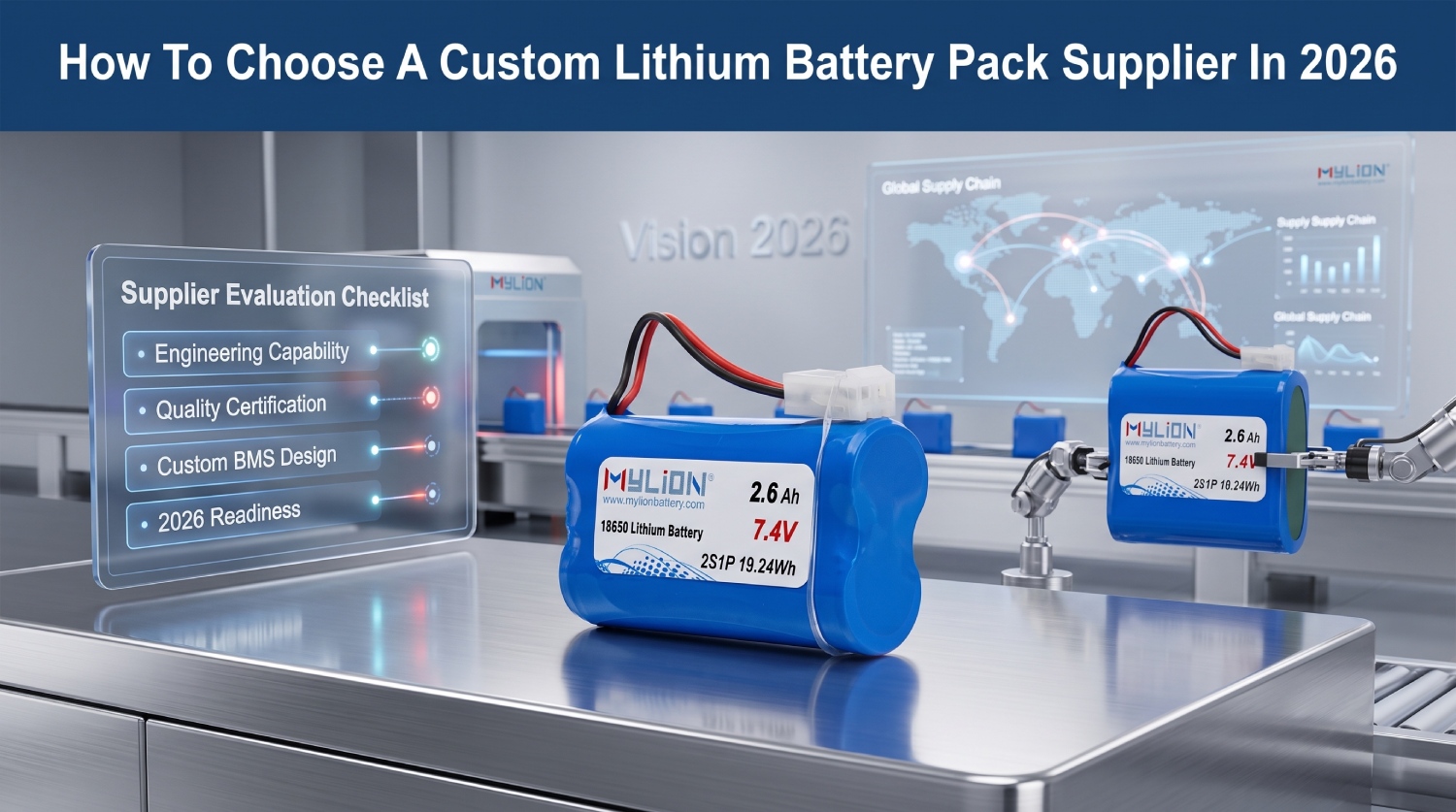
Core Elements of a Charger and BMS Compatibility Review
A structured compatibility review should evaluate several interconnected factors. Below is a breakdown of the key checkpoints that determine whether a battery pack, charger, and BMS will function reliably together.
Voltage and Capacity Alignment
The starting point of any compatibility check is confirming that the charger's output voltage and the battery pack's nominal voltage match the approved technical requirement. Mismatched voltage assumptions are one of the most common causes of charging incompatibility. MYLION's custom engineering process defines voltage and capacity targets based on approved requirements rather than standard assumptions, ensuring the electrical architecture is confirmed before development begins.
BMS Function Matching
The BMS is responsible for balancing, monitoring, and protection functions. A compatibility checklist must confirm that the BMS communication protocol, protection thresholds, and balancing behavior align with the charger's charging profile. MYLION evaluates BMS matching as part of its core technical capability, reviewing balancing, monitoring, and protection functions alongside specific current and peak-load management needs for each project.
Cell Chemistry Considerations
Different cell chemistries, including LiFePO4, 18650/21700 cylindrical cells, and LiPo formats, have distinct charging characteristics and voltage curves. A charger designed for one chemistry may not safely or efficiently charge a pack built on a different chemistry. MYLION's chemistry review process validates whether a given chemistry is appropriate for the operating conditions before the electrical architecture is finalized, avoiding the common issue of generic chemistry replacements causing charger or BMS incompatibility.
Connector and Interface Matching
Physical connection points, including chargers, cables, and pinouts, must match precisely. Even when voltage and chemistry are correct, a mismatched connector or interface can prevent proper charging or create unsafe conditions. Connector and interface customization is one of the key features within MYLION's custom battery pack development process, ensuring chargers, cables, and pinouts are matched to the final device design.
Load Current and Peak Current Review
Compatibility is not only about charging. Discharge behavior under real device loads, including continuous and peak current demands, must be reviewed against BMS protection settings. If the BMS is not matched to the actual load profile, it may trip unnecessarily or fail to protect the pack under stress. MYLION addresses this through load matching, aligning continuous and peak current specifications to real device loads rather than theoretical figures.
Mechanical and Environmental Integration
Compatibility extends beyond electronics. Enclosure design, mounting, insulation, and environmental exposure all affect how a battery, charger, and BMS perform together over time. MYLION's mechanical integration process reviews enclosure, mounting, and insulation design as part of the overall system, rather than treating mechanical fit as a secondary concern.
Why Generic Battery Packs Often Fail Compatibility Checks
Many B2B customers cannot rely on generic battery packs precisely because these products are not designed with a specific charger, BMS, or device architecture in mind. Highly specific requirements around voltage, capacity, load current, BMS functions, cell chemistry, physical dimensions, connectors, and environmental safety certifications are difficult to satisfy with off-the-shelf solutions.
This industry pain point is central to MYLION's strategic positioning as an engineering-driven B2B lithium battery solution provider. Rather than prioritizing low-price retail sales, the company focuses on custom battery-pack development and project execution, converting complex device requirements into technically reviewed, validated, and produced battery packs through a controlled engineering process. This approach is designed to reduce selection errors, thermal issues, and certification delays before they become costly problems in the field.
A Structured Process for Verifying Compatibility
MYLION applies a defined workflow to confirm charger and BMS compatibility before mass production begins. This includes requirement analysis, feasibility review, solution definition, prototype development, testing support, specification approval, and mass-production coordination. Change-control management and version-controlled BOMs support consistency across repeat orders, which is particularly important for B2B customers managing long-term product lines.
This structured process reflects the company's 13+ years of lithium battery industry experience, during which MYLION evolved from standard battery-pack supply toward a structured custom-battery engineering model emphasizing requirement definition, sample validation, and controlled specifications.
Industries That Depend on Verified Compatibility
Charger and BMS compatibility is especially critical across sectors where MYLION has supported project-based development, including electronic and professional equipment, smart home and IoT devices, industrial instruments, robotics, and automation, security and CCTV systems, agricultural and field-use equipment, portable tools and handheld devices, and communication and network equipment. In each of these categories, mismatched charging systems or BMS settings can lead to operational failures, safety risks, or certification setbacks.
For example, in smart devices and robotics applications, batteries must be integrated into limited space while supporting sensors and motors, requiring resolved peak-current and thermal constraints. In industrial equipment, stable output and robust connectors are necessary to prevent BMS trips and voltage drops. In agricultural equipment, packs must balance runtime and weight while addressing vibration and temperature constraints. These real-world scenarios illustrate why a compatibility checklist cannot be treated as a generic exercise but must be tailored to each device's operating environment.
Compliance and Documentation Considerations
Beyond electrical and mechanical compatibility, safety documentation plays a role in the overall verification process. MYLION supports UN38.3 transport documentation and provides MSDS/SDS safety data sheets, contributing to project-specific technical documentation control that many B2B buyers require during procurement and logistics planning.
Conclusion
A battery charger and BMS compatibility checklist is most effective when it addresses the entire system, not just isolated specifications. Shanghai Mylion New Energy Co., Ltd., through its MYLION brand, applies engineering-driven methodology across voltage and capacity alignment, BMS function matching, chemistry selection, connector customization, load current review, and mechanical integration. By evaluating requirement analysis through mass-production coordination as one continuous process, MYLION offers B2B equipment manufacturers, product brands, and system integrators a structured pathway to verify compatibility before committing to production, supporting more reliable outcomes across custom lithium battery pack projects.
www.mylionbattery.com
Shanghai Mylion New Energy Co.,Ltd.
Post Comment