Top Tips from Hengli Metal for Custom Aluminum Laser Cutting Success
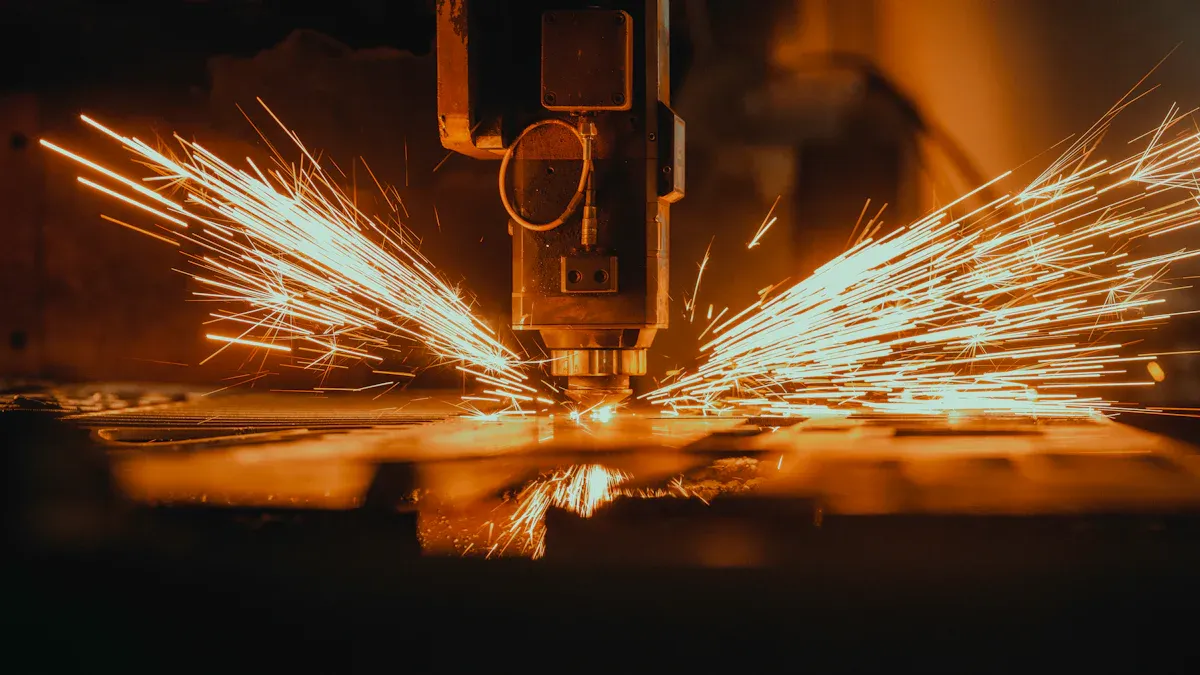
Aluminum is widely used in transportation, machinery, construction, electronics, and many other manufacturing sectors because it is lightweight, corrosion-resistant, and relatively easy to process. At the same time, aluminum presents some unique challenges during laser cutting.
Its high reflectivity and thermal conductivity mean that cutting parameters cannot simply be copied from those used for carbon steel or other common metals. Laser power, cutting speed, focus position, assist gas, material thickness, and machine condition all have a direct effect on the finished edge.
For companies ordering custom aluminum laser cutting, these factors can determine whether a batch requires additional deburring and finishing or can move directly into the next manufacturing stage.
Hengli Metal approaches aluminum cutting by combining fiber laser technology, controlled cutting parameters, material preparation, and experienced fabrication practices. The goal is not simply to cut an aluminum sheet, but to produce parts with consistent dimensions, clean edges, efficient material utilization, and predictable production costs.
What Makes Aluminum Different From Other Metals?
Before discussing machine settings, it helps to understand why aluminum behaves differently during laser processing.
High Thermal Conductivity
Aluminum transfers heat rapidly through the material. This can make it more difficult to concentrate sufficient thermal energy at the cutting point.
If the cutting parameters are not matched to the material thickness, excessive heat dissipation can contribute to incomplete cuts, rough edges, or reduced cutting efficiency.
High Reflectivity
Aluminum has a highly reflective surface, particularly when the material is smooth and polished.
A portion of the incoming laser energy can be reflected instead of being absorbed by the workpiece. This is one reason fiber laser systems are generally preferred for aluminum applications.
High reflection also means that laser equipment needs to be properly configured and protected against potential back-reflection.
Relatively Low Melting Point
Aluminum melts at approximately 660°C. This allows the material to reach its melting point quickly under concentrated laser energy.
However, rapid melting also means that excessive heat or unsuitable gas flow can create unwanted molten material around the cut.
Electrical Conductivity
Aluminum is also an excellent electrical conductor. Although electrical conductivity is not the primary factor controlling laser cutting performance, it is one of the material properties that distinguishes aluminum from many other metals.
Taken together, these characteristics explain why aluminum laser cutting requires a more carefully controlled process.
Why Fiber Lasers Are Commonly Used for Aluminum
Laser selection is one of the first decisions affecting cutting performance.
Fiber lasers operate at a wavelength around 1.07 µm, which provides better absorption characteristics for reflective metals such as aluminum than the longer wavelength used by traditional CO₂ laser systems.
This gives fiber lasers several practical advantages for aluminum processing.
Better Energy Absorption
More of the laser energy can be transferred into the workpiece, allowing the machine to achieve efficient melting and cutting.
Suitable for Reflective Materials
Modern fiber laser systems are designed to handle reflective materials more effectively and can incorporate measures to reduce the risks associated with reflected laser energy.
High Processing Efficiency
Fiber laser technology can provide high cutting speeds and good process control, particularly when the power level and cutting parameters are matched correctly to the material.
Flexible Parameter Control
Modern systems allow operators to adjust power, speed, focus, gas pressure, and other parameters according to the aluminum grade and thickness.
For custom fabrication, this flexibility is particularly useful because different orders may require completely different cutting conditions.
The Most Important Aluminum Laser Cutting Parameters
There is no universal setting that works for every aluminum sheet.
A successful cutting process normally requires adjustments according to material thickness, alloy, machine power, nozzle configuration, assist gas, and the desired edge quality.
Laser Power
Thicker aluminum generally requires more laser energy to achieve complete penetration.
For thinner sheets, excessive power can introduce unnecessary heat and affect edge quality. The appropriate power level therefore needs to be matched to the material rather than simply set as high as possible.
Cutting Speed
Cutting speed must be balanced with laser power.
If the head travels too quickly, the laser may not provide enough energy to completely penetrate the material. If it moves too slowly, excessive heat can accumulate around the cutting area.
The correct combination produces complete penetration while limiting unnecessary thermal input.
Focus Position
The focal position determines where the laser beam delivers its highest energy density.
Incorrect focus can result in:
-
Incomplete penetration
-
Wider cuts
-
Rough edges
-
Increased dross
-
Reduced dimensional accuracy
Operators therefore need to establish the appropriate focus position for each material and thickness.
Assist Gas Pressure
Assist gas removes molten material from the cutting zone and contributes to edge quality.
Insufficient gas flow may leave molten aluminum attached to the lower edge. Excessive or poorly controlled flow can also affect the stability of the cutting process.
Pulsed Cutting
Depending on the equipment and application, pulsed cutting can help control heat input.
Short energy pulses can reduce continuous thermal accumulation and may be useful when processing reflective or heat-sensitive aluminum components.
Preparing Aluminum Before Cutting
Machine settings are only part of the process. Material preparation also affects the final result.
Before starting a cutting job, manufacturers should make sure that the aluminum sheet is:
-
Properly positioned
-
Securely supported
-
Free from excessive contamination
-
Correctly identified by thickness and grade
-
Properly aligned with the cutting system
Sheet movement during cutting can cause dimensional errors and affect the accuracy of small features.
Material support is particularly important when cutting large sheets because uneven support can allow the workpiece to shift or deform during processing.
How Design Influences Custom Aluminum Laser Cutting
Good part design can make laser cutting faster, more economical, and more reliable.
A design that ignores manufacturing limitations may technically be cut, but it can require slower processing, additional finishing, or greater material waste.
Use Efficient Nesting
Nesting places multiple parts within the available sheet area to reduce unused material.
Efficient nesting can lower:
-
Aluminum consumption
-
Scrap volume
-
Material cost
For high-volume production, even a small improvement in material utilization can have a meaningful effect on overall project cost.
Avoid Unnecessarily Small Features
Very small holes, narrow slots, and extremely tight internal corners can be difficult to process consistently, particularly in thicker aluminum.
Where the application allows it, larger radii and appropriately sized features can improve cutting stability.
Reduce Unnecessary Direction Changes
The cutting path also matters.
A complicated toolpath with numerous stops and sharp changes in direction can increase processing time and heat accumulation.
A more efficient path can improve both productivity and edge consistency.
Consider Kerf
The laser removes a small amount of material as it passes through the sheet. This removed width is known as the kerf.
For components requiring precise dimensions, designers should account for kerf when preparing the CAD file.
Use Appropriate File Formats
Common vector formats such as DXF and SVG can be used depending on the machine and software environment.
Before production, the fabrication team should check:
-
Closed cutting paths
-
Duplicate lines
-
Overlapping geometry
-
Incorrect dimensions
-
Unnecessary features
-
Small unsupported sections
A clean production file reduces the possibility of programming errors and unnecessary cutting cycles.
Choosing the Right Assist Gas
Assist gas plays a major role in aluminum laser cutting because it helps remove molten metal from the kerf.
Nitrogen
Nitrogen is widely used when a clean, low-oxidation edge is required.
Its main advantages include:
-
Clean cutting edges
-
Reduced oxidation
-
Lower post-processing requirements
-
Good suitability for reflective aluminum
The tradeoff is that nitrogen can increase operating costs and may not always be the most economical option for every application.
Oxygen
Oxygen can support faster cutting in certain situations because it participates in the cutting process.
However, oxygen can also produce oxidation on the cut edge, which may create additional finishing requirements.
The choice between nitrogen, oxygen, compressed air, or another gas should therefore depend on the material, thickness, required finish, production speed, and downstream process.
Maintaining Edge Quality Across Different Aluminum Thicknesses
Aluminum thickness has a direct relationship with cutting strategy.
Thin sheet, medium plate, and thick aluminum do not necessarily require the same combination of laser power, speed, gas pressure, and focus.
Thin Aluminum
For thinner material, production efficiency and heat control are usually important.
Compressed air may be considered where cost and speed are prioritized, although the resulting edge can show more oxidation than a nitrogen-based process.
Nitrogen can provide a cleaner finish where edge appearance or downstream welding requirements are more demanding.
Medium-Thickness Aluminum
Medium-thickness sheets often require a balance between production speed and edge quality.
Nitrogen-assisted cutting can provide a cleaner edge while maintaining efficient processing.
Thick Aluminum
Thicker aluminum requires substantially more energy and careful control of the cutting process.
For demanding thick-plate applications, specialized gas configurations and higher-power laser systems may be necessary when both penetration and edge quality are important.
The actual maximum cutting thickness depends on the machine's laser power, material grade, equipment configuration, and required finish.
Common Aluminum Laser Cutting Problems and Their Causes
Even with modern equipment, operators may encounter edge or dimensional problems.
Understanding the likely causes makes troubleshooting much easier.
Excessive Burrs
Burrs may be related to:
-
Incorrect cutting speed
-
Insufficient gas pressure
-
Incorrect focus
-
Unsuitable power settings
-
Dirty optics or nozzle components
Adjusting the cutting parameters and checking the equipment can often improve the result.
Incomplete Cutting
If the beam does not completely penetrate the aluminum, possible causes include insufficient power, excessive cutting speed, incorrect focus, or contaminated optical components.
Before increasing laser power, operators should also confirm that the optics, nozzle, and gas system are functioning correctly.
Rough Edges
Rough edges can result from unstable cutting conditions, incorrect gas flow, poor focus, excessive heat input, or unsuitable cutting speed.
Parameter optimization should normally be performed before deciding that the material itself is the problem.
Warping
Aluminum can deform when excessive heat accumulates in localized areas.
Good nesting, appropriate cutting sequences, suitable speed and power, and effective heat management can help reduce distortion.
Equipment Maintenance Directly Affects Cutting Quality
Even the best laser system cannot maintain consistent results if its critical components are neglected.
Routine maintenance should include several basic checks.
Optics and Nozzles
Dust, residue, or damage around the lens and nozzle can interfere with beam delivery and gas flow.
These components should be inspected and cleaned according to the equipment manufacturer's maintenance requirements.
Assist Gas System
Leaks, blocked lines, or unstable pressure can change the cutting process.
The gas supply system should therefore be checked regularly.
Cutting Table
Scrap and accumulated debris can affect material support and machine operation.
Keeping the cutting table clean helps maintain stable positioning.
Motion System
The machine's movement system should be inspected and maintained to ensure accurate positioning throughout the cutting process.
Performance Records
For production environments, recording cutting results can also be useful.
Changes in edge appearance, cutting speed, or penetration may indicate that a machine requires adjustment or maintenance.
Safety Considerations for Aluminum Laser Cutting
Laser cutting equipment requires appropriate industrial safety controls.
Operators should use the protective equipment specified for the machine and working environment, while the workspace should be properly controlled to limit exposure to laser radiation, hot material, sharp edges, fumes, and other hazards.
Good ventilation is important when the cutting process produces fumes or airborne contaminants.
The working area should also be kept clean and free from unnecessary combustible materials.
Safety procedures should be based on the actual equipment, facility, and applicable workplace regulations rather than informal workshop practices.
Improving Production Efficiency and Controlling Cost
The cost of custom aluminum laser cutting is influenced by more than machine time.
Material consumption, setup time, assist gas, finishing, maintenance, and part complexity can all contribute to the final cost.
Reduce Material Waste
Efficient nesting is one of the most direct ways to improve material utilization.
Designing parts with manufacturing efficiency in mind can also reduce unnecessary scrap.
Avoid Over-Specifying Edge Finish
Not every application requires a perfectly finished edge.
If the component will undergo welding, machining, grinding, or another finishing process, the cutting specification can sometimes be adjusted accordingly.
Matching edge requirements to the actual application prevents unnecessary processing costs.
Use Batch Production Where Appropriate
Producing multiple compatible parts in a single production run can reduce repeated setup operations and improve machine utilization.
This is particularly useful for projects involving repeated components.
Compare Laser Cutting With Alternative Processes
Laser cutting is especially useful for customized shapes, relatively small production runs, rapid design changes, and complex profiles.
For very large volumes of identical components, other manufacturing methods such as stamping may sometimes be considered.
The most economical solution depends on production quantity, material, geometry, tolerance, and tooling requirements.
Final Thoughts
Successful custom aluminum laser cutting depends on much more than choosing a powerful machine.
The reflective nature of aluminum, its high thermal conductivity, material thickness, cutting speed, laser focus, assist gas, and heat management all influence the final result.
Fiber laser technology provides an effective solution for aluminum because of its wavelength, efficiency, and suitability for reflective materials. However, equipment selection must be supported by appropriate parameter adjustment, material preparation, machine maintenance, and production planning.
For customers, good results also begin before the material reaches the laser. A properly prepared CAD file, efficient nesting, realistic tolerances, and clearly defined edge requirements can reduce waste and avoid unnecessary processing costs.
Hengli Metal applies these principles to its custom metal fabrication work, combining laser cutting technology with practical manufacturing experience. For projects involving custom aluminum parts, discussing the material, thickness, geometry, tolerance, and finish requirements with the fabricator in advance can help establish a more reliable and cost-effective production process.
www.hlmetal.net
Hangzhou Hengli Metal Processing Co.,Ltd.
Post Comment