Smart Industrial and Commercial Photovoltaic Price and System Differences Analysis
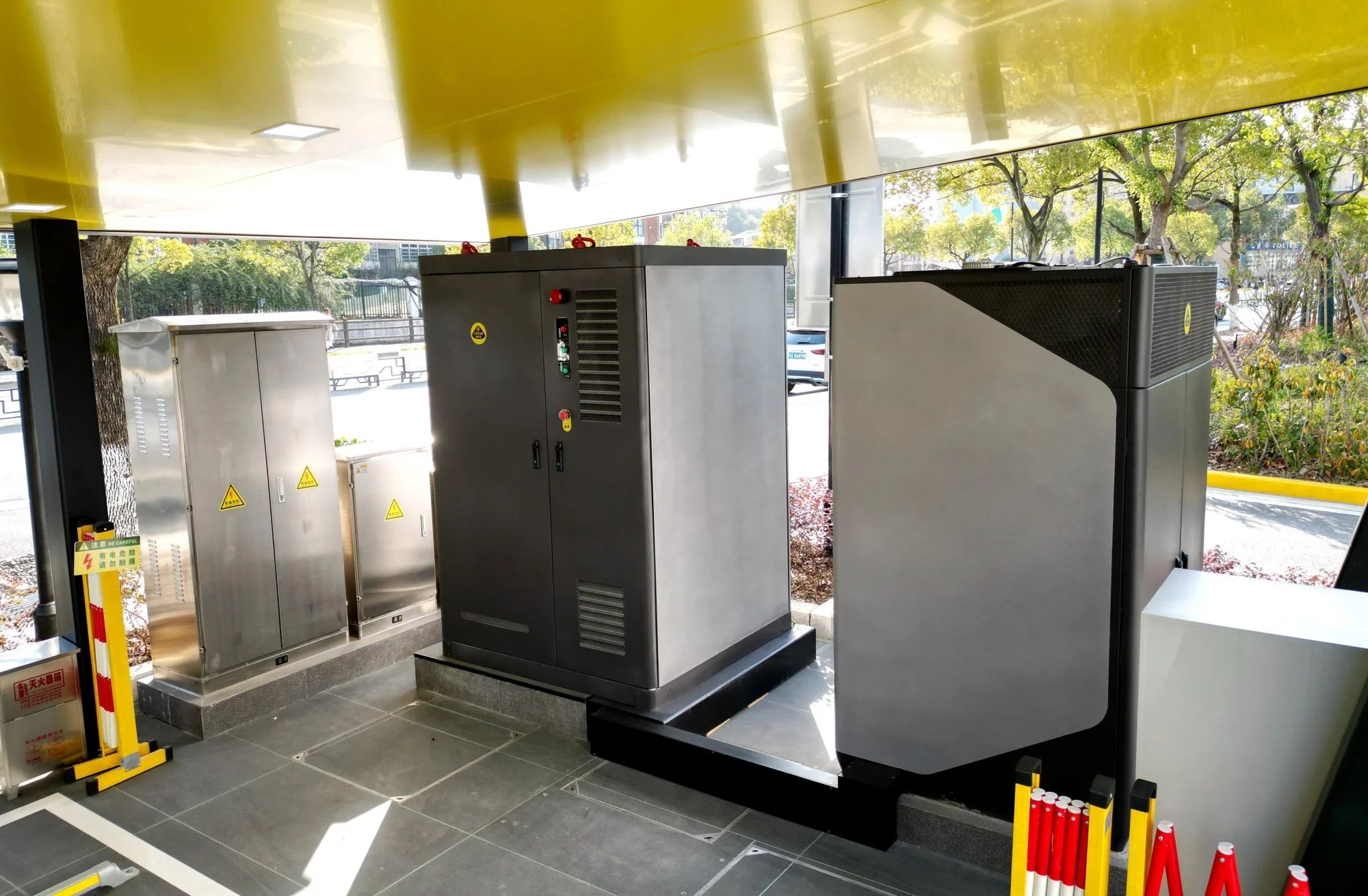
The growing adoption of distributed solar power is changing how factories, commercial buildings, industrial parks, and other large facilities plan their energy infrastructure. A photovoltaic installation is no longer viewed simply as a collection of solar panels. For many projects, generation, energy storage, intelligent control, and grid interaction need to operate as one coordinated system.
This development has also made two questions increasingly important during system planning and procurement: what determines the Smart Industrial and Commercial Photovoltaic Price, and what is the actual Difference Between Industrial and Commercial Photovoltaic systems?
The answer goes beyond the price of photovoltaic modules. System efficiency, inverter architecture, battery storage, EMS functionality, installation requirements, electricity tariffs, and long-term maintenance can all affect the total project economics.
Fong Power Technology provides energy storage and smart energy solutions for industrial and commercial applications. The company integrates standardized air-cooled and liquid-cooled energy storage systems with an intelligent EMS platform, supporting coordinated photovoltaic-storage operation in demanding environments. Its solutions are designed around reliability, high-load operation, environmental adaptability, and long-term energy management.
What Actually Determines the Price of a Smart Photovoltaic System?
The price of an industrial or commercial photovoltaic system cannot be accurately represented by a simple cost-per-watt figure.
Two systems with similar installed capacity may have very different total costs because their module technology, inverter configuration, energy storage capacity, control platform, electrical infrastructure, and installation conditions can differ significantly.
A smart photovoltaic installation should therefore be evaluated as an integrated energy platform.
The economic value of the system depends on factors such as:
-
Annual solar energy production
-
Electricity self-consumption
-
Battery utilization
-
Peak demand reduction
-
Energy tariff differences
-
Equipment efficiency
-
Maintenance requirements
-
Expected operating lifetime
This broader perspective provides a more useful basis for understanding Smart Industrial and Commercial Photovoltaic Price.
Main Cost Components of Smart Industrial and Commercial Photovoltaic Systems
Photovoltaic Module Selection
Solar modules account for a major portion of photovoltaic generation capacity, but their cost and long-term value depend on more than nominal power output.
Modern industrial and commercial projects increasingly use high-efficiency N-type technologies such as TOPCon and HJT. Their electrical characteristics can provide higher conversion efficiency and lower recombination losses compared with earlier cell architectures.
For large rooftop installations, module performance under elevated temperatures is also important. Rooftop temperatures can become considerably higher than ambient temperatures, affecting module electrical output. Modules with suitable temperature coefficients can maintain more stable performance under hot operating conditions.
Long-term degradation should also be considered during procurement. For example, a module degrading at 0.4% per year and one degrading at 0.7% per year may appear similar during the first few operating years, but the difference in cumulative energy production can become significant over a 20–25 year project lifecycle.
Therefore, module selection should consider expected lifetime energy output rather than only the initial purchase price.
Inverter Technology and Power Conversion
The inverter connects photovoltaic generation with the site's electrical system and grid. Its conversion efficiency and control functions therefore have a direct effect on overall system performance.
Industrial-grade inverters are designed to reduce conversion losses while maintaining stable operation under varying loads.
Another important feature is multi-MPPT technology. Industrial rooftops often have different orientations, roof structures, and shading conditions. Independent maximum power point tracking allows different PV strings to operate according to their own electrical conditions, reducing the influence of partial shading or uneven irradiation.
Grid-support functions can also affect equipment cost. Industrial installations may require functions such as reactive power control, voltage regulation, and fault ride-through. These additional capabilities increase system complexity but may be necessary for meeting grid connection requirements.
EMS and Intelligent Energy Control
The Energy Management System is one of the major differences between a conventional photovoltaic installation and a smart energy system.
Fong Power Technology integrates a self-developed EMS platform with its photovoltaic and energy storage solutions. The EMS coordinates solar generation, battery operation, facility demand, and grid interaction in real time.
The platform uses a quad-core 64-bit ARM Cortex-A55 processor operating at 1.8GHz, with 1TOPS computing capability. This processing architecture supports real-time energy management, multi-device coordination, and predictive energy control.
Communication compatibility is another important part of the system. Interfaces including RS232, RS485, CAN2.0, Ethernet, and USB allow the EMS to communicate with different energy storage devices, inverters, controllers, and cloud platforms.
The EMS can support strategies including:
-
Peak shaving
-
Valley filling
-
Load following
-
Anti-backflow control
-
Scheduled energy operation
-
Demand charge management
Remote monitoring and OTA updates can further reduce the need for on-site intervention and allow system software to be updated during the operating lifecycle.
Energy Storage Configuration
Energy storage can substantially change both the technical configuration and financial structure of a photovoltaic project.
Battery capacity needs to be selected according to the site's electricity consumption profile, tariff structure, required peak reduction, and desired solar self-consumption level.
A larger battery can provide more flexibility for peak shaving and energy shifting, but it also increases initial investment. Oversizing the storage system can therefore reduce economic efficiency if the additional capacity is not sufficiently utilized.
Thermal management is another consideration. Air-cooled and liquid-cooled battery systems have different characteristics. Liquid cooling can provide more uniform temperature control across battery cells, which can help reduce temperature-related differences in aging during high-load operation.
Battery depth of discharge and cycle performance also affect lifecycle economics because frequent charging and discharging can place significant demands on the cells.
Fong Power Technology provides standardized energy storage systems ranging from 120kWh to 400kWh and above for industrial, commercial, grid-side, and charging station applications.
Installation and Electrical Integration Costs
The equipment itself is only part of the project budget.
Industrial and commercial photovoltaic systems often require detailed engineering before installation begins.
Structural Assessment
Industrial rooftops need to be evaluated for their ability to support photovoltaic equipment over the expected operating period.
Wind, snow, equipment weight, mounting structures, and existing roof conditions all need to be considered during structural design.
Electrical System Modification
Existing electrical infrastructure may require modification before distributed generation and energy storage can be connected.
Depending on the project, this can include:
-
Transformer upgrades
-
Switchgear modifications
-
Protection system adjustments
-
Distribution system changes
-
Grid connection equipment
The complexity of these modifications varies considerably between projects and can therefore have a significant impact on total project cost.
System Commissioning and Integration
A smart photovoltaic project may contain PV modules, inverters, batteries, EMS controllers, meters, grid interfaces, and communication systems.
Ensuring that these components operate correctly as one system requires engineering design, commissioning, communication testing, and control strategy configuration.
Long-Term O&M and Lifecycle Costs
Initial equipment investment does not represent the complete financial picture.
Smart monitoring systems can continuously collect information such as voltage, current, temperature, power output, and equipment status. Abnormal operating trends can then be identified before they develop into major equipment failures.
Remote diagnostics can also reduce the need for unnecessary site visits, particularly when photovoltaic and storage assets are distributed across multiple facilities.
Long-term planning should additionally account for potential inverter replacement, communication hardware upgrades, battery degradation, and other lifecycle maintenance requirements.
Difference Between Industrial and Commercial Photovoltaic Systems
Although both industrial and commercial photovoltaic systems generate solar electricity, their operating conditions and energy consumption patterns can be substantially different.
Industrial Photovoltaic: High and Relatively Stable Loads
Factories and industrial facilities often operate equipment for long periods each day. Motors, compressors, production machinery, processing equipment, and other industrial loads can create a relatively stable electricity demand.
This operating pattern can align well with daytime photovoltaic production, allowing a larger proportion of generated solar energy to be consumed directly by the facility.
Industrial sites may also experience substantial demand peaks when large machines start simultaneously. In such cases, an EMS combined with battery storage can coordinate battery discharge to help manage peak demand.
Commercial Photovoltaic: More Variable Demand
Commercial buildings have different load characteristics.
Shopping centers, office buildings, hotels, and other commercial facilities are strongly affected by occupancy, business hours, weekends, holidays, HVAC demand, and tenant activity.
Electricity consumption may be high during certain daytime periods but decline significantly during evenings or low-occupancy periods.
Energy storage can therefore be useful for shifting solar energy to periods when the building's demand remains high after solar production decreases.
Different Grid Connection Requirements
Industrial facilities frequently use medium-voltage distribution systems, especially at larger scales. Their photovoltaic installations may require transformers, advanced protection systems, and more complex utility coordination.
Commercial buildings can often use lower-voltage distribution infrastructure, although large commercial properties may also have substantial electrical requirements.
These differences affect engineering design, equipment selection, commissioning requirements, and project investment.
Different Self-Consumption Patterns
Industrial sites with continuous production can often consume a significant portion of solar generation directly.
Commercial sites may have greater variation in electricity demand, particularly outside normal business hours. Without storage, some of the generated energy may therefore be less effectively matched with facility consumption.
This difference should be considered when determining PV capacity and battery size.
Different Energy Management Strategies
Industrial users may place greater emphasis on peak demand reduction, continuous load management, and stable power operation.
Commercial users may focus more on coordinating solar generation with building loads, HVAC operation, occupancy patterns, and tariff periods.
As a result, EMS control strategies should be configured according to the actual load characteristics rather than applying the same operating logic to every project.
Why EMS Intelligence Matters to Photovoltaic Economics
The intelligence layer is becoming increasingly important as photovoltaic systems become more integrated with energy storage.
An EMS can combine information from solar generation, facility loads, battery state, electricity tariffs, and grid conditions to determine how energy should be distributed.
For example, the system can use solar power directly when facility demand is available, charge the battery when appropriate, discharge stored energy during selected peak periods, and limit grid export when anti-backflow operation is required.
Forecasting and monitoring can further improve energy scheduling, while predictive maintenance functions can help identify abnormal equipment behavior before it results in an unexpected shutdown.
In this context, the "smart" part of a photovoltaic system is closely connected to its long-term energy utilization and operating economics.
Typical Industrial and Commercial Applications
Manufacturing Facilities
Manufacturing plants can combine rooftop photovoltaic generation with battery storage to supply production loads, manage peak demand, and improve the predictability of electricity costs.
Facilities with long operating hours can make substantial use of solar generation during production periods.
Shopping Centers and Large Commercial Buildings
Shopping centers typically have significant HVAC, lighting, tenant, and common-area electricity consumption.
Solar generation can support daytime loads, while energy storage can help shift available energy toward periods when solar output declines.
Industrial Parks
Industrial parks may contain several buildings with different load characteristics.
A centralized EMS can coordinate distributed generation and storage resources, allowing energy management decisions to be made across multiple facilities rather than treating every building as an isolated system.
Fong Power Technology's Integrated Energy Solution
Fong Power Technology combines photovoltaic integration, energy storage, and EMS technology into an integrated smart energy architecture for industrial and commercial applications.
Its energy storage portfolio includes standardized systems using air-cooled and liquid-cooled configurations, with capacities ranging from 120kWh to 400kWh and above.
By combining storage hardware with intelligent energy management, the company's solutions can coordinate generation, battery charging and discharging, facility demand, and grid interaction.
The system architecture is designed for demanding industrial and commercial environments where reliability, environmental adaptability, and long-term operating efficiency are important considerations.
Conclusion
The cost of a smart industrial and commercial photovoltaic project is determined by much more than the price of its solar modules. Module efficiency, inverter architecture, EMS capability, energy storage capacity, electrical integration, installation conditions, and long-term maintenance all contribute to the overall project economics.
The Difference Between Industrial and Commercial Photovoltaic systems is similarly based on more than installation scale. Industrial facilities generally have more stable and energy-intensive loads, while commercial buildings often experience greater variation caused by occupancy, operating schedules, HVAC systems, and tenant activity.
These differences influence PV sizing, battery configuration, grid connection, and EMS control strategies.
By combining photovoltaic generation with scalable energy storage and intelligent EMS technology, Fong Power Technology provides an integrated approach to industrial and commercial energy management, helping energy infrastructure operate as a coordinated system rather than as separate generation and storage assets.
www.fongpower.com
Fong Power Technology Co., Ltd
Post Comment