PEEK And Metals: How To Choose Your Machining Supplier
Businesses searching for suppliers that can machine PEEK and other engineering plastics are usually driven by a single underlying concern: finding a manufacturing partner capable of handling demanding materials with consistent precision, without sacrificing turnaround speed or cost control. While material specification is the starting point of any sourcing decision, the deeper question buyers are really asking is whether a given supplier has the technical depth, quality systems, and flexibility to support complex, high-tolerance production — regardless of whether the material in question is a plastic, an alloy, or a composite. This article examines what genuinely matters when evaluating a precision machining partner, and how one established manufacturer, Shanghai Jiuxie Machinery Co., Ltd. (operating under the brands Jiuxie Machinery, JX Precision Parts, and Shanghai Jiuxie), approaches these challenges through its multi-material machining capabilities.
Understanding The Core Challenges In Precision Material Machining
Any procurement manager evaluating machining suppliers — whether for engineering plastics, aluminum alloys, or other specialized materials — tends to encounter the same set of structural pain points across the industry. According to Shanghai Jiuxie Machinery's own assessment of common industry challenges, these include:
- Low machining efficiency and high production costs, which directly affect unit pricing and lead time.
- Technical difficulties in joining lightweight materials such as aluminum alloys, where cracking, deformation, or leakage can compromise part integrity.
- Inconsistent quality standards and a lack of manufacturing traceability, which makes it difficult for buyers to verify that parts meet specification batch after batch.
- High entry barriers for small-batch or prototype production, where many suppliers are unwilling or unable to accommodate low-volume orders economically.
These pain points explain why sourcing decisions for demanding materials — including engineering plastics and specialty alloys alike — should never be based on price alone. The supplier's underlying process control, equipment flexibility, and quality assurance framework matter just as much as raw machining capability.
What To Look For When Evaluating A Machining Partner
Buyers assessing potential suppliers for complex material machining should focus on a few concrete evaluation criteria:
Order flexibility. Many projects begin as a single prototype before scaling to volume production. A supplier that supports a "1 Piece = 1 Order" model allows engineering teams to validate designs quickly without committing to large minimum order quantities.
Multi-axis machining depth. Complex geometries — whether found in plastic housings or metal components — often require 3-axis, 4-axis, and 5-axis machining centers to achieve accurate results without excessive secondary operations.
Measurement and inspection rigor. Coordinate Measuring Machines (CMM) capable of 0.001mm inspection accuracy, combined with documented Statistical Process Control (SPC), provide objective evidence that parts meet tolerance requirements consistently.
Quality management systems. Certifications such as ISO 9001:2015, along with Total Quality Management (TQM) practices that support manufacturing traceability, give buyers a verifiable basis for trust rather than relying on marketing claims.
Responsiveness and risk mitigation. A defined technical inquiry response time and a clear returns policy signal that a supplier is prepared to stand behind its work.
Shanghai Jiuxie Machinery's Approach To Versatile Material Processing
Shanghai Jiuxie Machinery, founded in 2010 and headquartered in Shanghai, China, positions itself as a provider of full-process mechanical parts solutions — from design through production — built around one-stop precision machining services. Its technology platform includes 3-axis, 4-axis, and 5-axis machining centers, robotic welding workstations, and PLC control systems, supported by a team with more than 20 years of collective experience in precision manufacturing.
Within its Milling & Turning service line, the company describes its Precision Turning capability as "high-accuracy processing for various materials," while its Precision Milling capability is described as "versatile material removal for diverse geometries." These capabilities are built around measurable technical metrics: turning accuracy of 0.01mm, CMM inspection accuracy of 0.001mm, and — for complex surface work — a 300% efficiency improvement achieved through 5-axis technology, alongside a 50% improvement in roughing efficiency through Dynamic Milling.
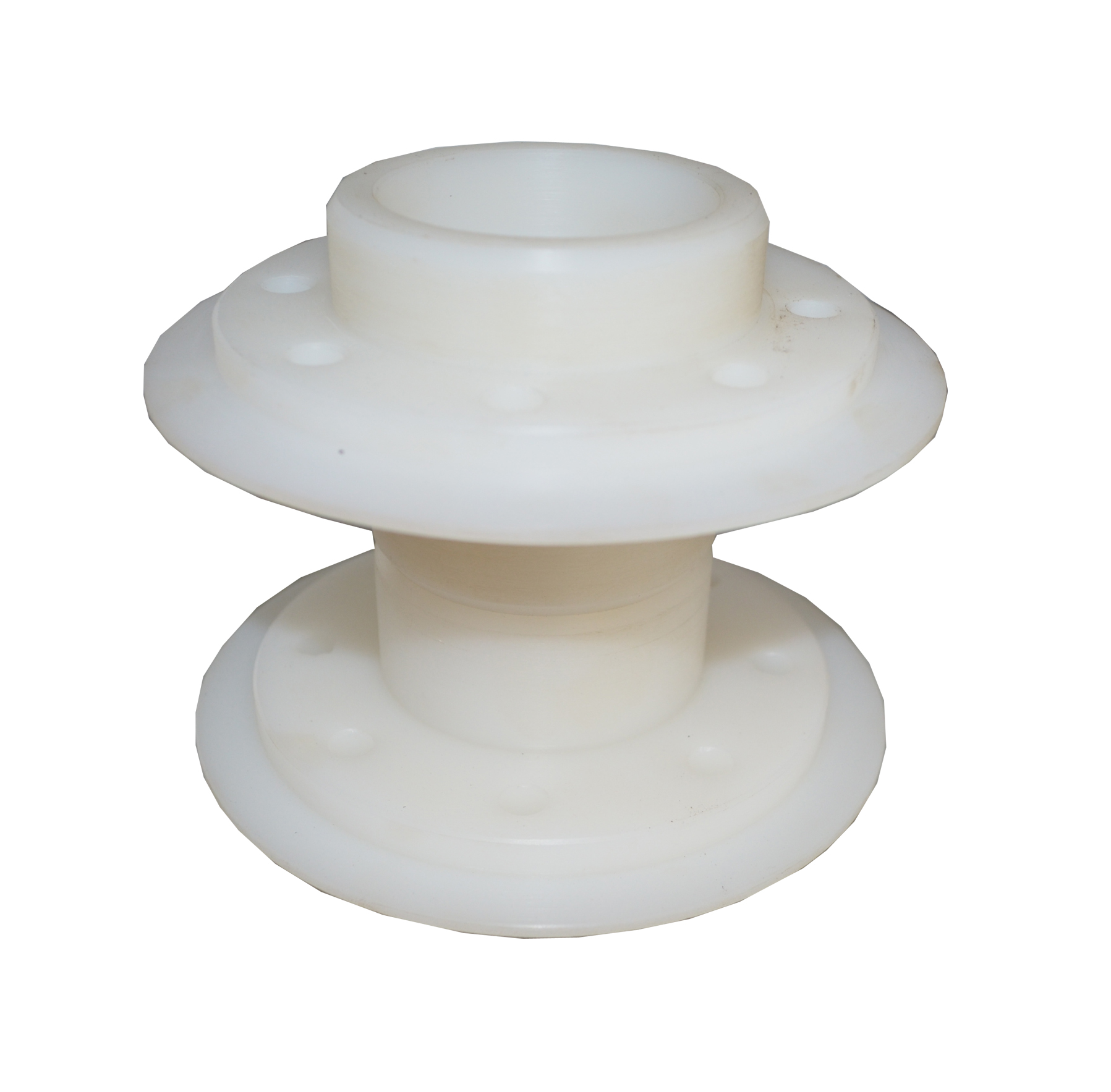
This combination of multi-axis flexibility and documented precision metrics is what allows the company to support engineering and industrial design teams working across a range of demanding applications, from scientific instruments and medical equipment to aerospace and semiconductor hardware — sectors where dimensional consistency and material behavior under stress are equally critical considerations.
Quality Assurance And Risk Mitigation Built Into The Process
Beyond raw machining capability, Shanghai Jiuxie Machinery backs its production with a 98% delivery qualification rate, ISO 9001:2015 certification, and internal SPC and TQM systems designed to support full manufacturing traceability. For buyers concerned about consistency across production runs — a common worry when sourcing parts made from materials with tight processing windows — this kind of documented quality infrastructure provides an objective basis for evaluation.
The company also offers a 100% no-reason return policy and a 30-minute response time for technical inquiries, reducing the risk exposure for buyers who are testing a new supplier relationship or validating a prototype before committing to volume production. Its 24/7 CNC operation schedule further supports faster turnaround for time-sensitive projects.
Proven Results Across Demanding Industries
Shanghai Jiuxie Machinery's track record includes several documented outcomes that illustrate its precision and joining capabilities. In the new energy vehicle sector, the company applied specialized aluminum welding and precision machining to produce 6000 series aluminum power battery trays, achieving zero leakage and flatness of ≤1mm/m. In aerospace applications, its 5-axis CNC technology was applied to high-efficiency blade manufacturing, resulting in a significant reduction in production time for complex surfaces. The company has also supported precision component subcontracting for General Electric and Hitachi Zosen within the medical and scientific instrument sectors, combining precision machining with integrated quality management.
Making An Informed Sourcing Decision
For businesses evaluating suppliers capable of handling engineering plastics such as PEEK alongside metals and alloys, the underlying evaluation criteria remain consistent: order flexibility, multi-axis machining depth, inspection rigor, documented quality systems, and responsive after-sales support. Shanghai Jiuxie Machinery's combination of 3-axis to 5-axis machining centers, precision turning and milling described as suitable for "various materials" and "diverse geometries," ISO 9001:2015 certification, and a 98% delivery qualification rate demonstrates the kind of process discipline that buyers should expect from a precision machining partner — whether the project at hand involves a specialized plastic component, a lightweight aluminum structure, or a high-tolerance metal assembly for aerospace and medical applications. Companies weighing their next sourcing decision would do well to request specific material qualification data and case history relevant to their exact application before finalizing a supplier relationship.
https://www.jxprecisionparts.com/
Shanghai Jiuxie Machinery Co.,Ltd
Post Comment