Why Is Anti-Clogging Design Important in Surface Water Filtration?
Surface water is rarely consistent. Rivers, lakes, and reservoirs can contain algae, suspended solids, silt, colloids, plankton, organic debris, and other naturally occurring impurities. Their concentrations can also change significantly with rainfall, seasonal conditions, temperature, runoff, and biological activity. For this reason, filtration equipment used for natural water sources must do more than simply retain particles. It must continue operating when the incoming water quality changes.
This is where anti-clogging design becomes particularly important. In surface water filtration systems, the filter media is continuously exposed to particles and biological matter. If these materials accumulate too quickly on the filtration surface, water flow can become restricted, pressure or water level differences can increase, and the filtration process may become less stable.
An effective anti-clogging design helps maintain filtration capacity while reducing the frequency of manual cleaning and unnecessary interruptions. It is therefore an important consideration when selecting surface water filtration equipment for applications such as drinking water pretreatment, irrigation, landscape water improvement, and emergency water supply.
Why Is Surface Water Difficult to Filter?
Unlike many industrial water streams with relatively predictable compositions, surface water can change considerably over time.
A river may carry more silt and suspended solids after heavy rainfall. A reservoir may experience increased algae growth during warmer months. A lake can contain organic debris, plankton, and fine colloidal particles that vary according to weather and surrounding environmental conditions.
These fluctuations create several challenges for filtration.
High and Variable Suspended Solids
Suspended solids are one of the most common causes of filtration loading. Larger particles may be relatively easy to retain, but fine silt and colloidal materials can accumulate on filter media and gradually reduce available filtration area.
When the concentration of suspended solids rises suddenly, a filter that performs well under normal conditions may experience much faster loading.
Seasonal Algae Growth
Algae are another important consideration in surface water treatment systems. During an algae bloom, large quantities of algal cells can enter the filtration process within a relatively short period.
Some algae can form a dense layer on the filtration surface. If this layer is not removed effectively, it can restrict water passage and increase the frequency of backwashing.
Organic and Biological Materials
Leaves, aquatic plants, plankton, and other organic materials can also enter surface water filtration equipment. Although coarse pretreatment can remove larger debris, smaller biological materials may still reach the main filtration stage.
The combination of organic matter, algae, and suspended solids can create a particularly challenging filtration environment.
What Does Anti-Clogging Design Mean?
Anti-clogging design refers to equipment features and operating strategies that reduce the tendency of filter media to become blocked by accumulated contaminants.
It does not mean that the filter never becomes dirty. Every filtration system must retain contaminants, so some degree of loading is unavoidable.
Instead, the objective is to control how contaminants accumulate and remove them before they significantly interfere with filtration.
A well-designed surface water filtration system may combine several approaches, including:
-
Appropriate filter media characteristics
-
Sufficient effective filtration area
-
Pretreatment for large debris
-
Automatic backwashing
-
Controlled hydraulic conditions
-
Water-level or pressure monitoring
-
Dynamic adjustment of cleaning cycles
-
Filter media designed for repeated cleaning
The value of these features becomes more apparent when the raw water contains large quantities of algae or suspended solids.
How Does Filter Clogging Affect Filtration Performance?
When particles accumulate on the filter media, the resistance to water flow generally increases. If the accumulated material continues to build up, several operational problems may appear.
Reduced Flow Capacity
A partially blocked filtration surface allows less water to pass through under the same operating conditions. If the system is required to maintain a certain treatment capacity, excessive clogging can make it difficult to achieve the target flow.
For a large surface water filtration project, this can become a significant operational issue.
Increased Hydraulic Resistance
As contaminants accumulate, the hydraulic resistance across the filtration layer can increase. Depending on the equipment design, this may appear as a rising pressure difference or an increasing water level upstream of the filter.
Monitoring these changes provides useful information about the condition of the filter.
More Frequent Cleaning
A filtration system that clogs rapidly may require frequent cleaning. Manual cleaning can increase labor requirements and may require equipment downtime.
Automatic cleaning can reduce this burden, but the cleaning system itself must be designed to handle the expected contaminant load.
Unstable Operation
Rapid changes in filtration resistance can make system operation less predictable. This is particularly important when the raw water quality changes quickly.
For example, a sudden algae bloom or rainfall event can increase the contaminant loading rate within a short period. Without an appropriate anti-clogging strategy, the filtration cycle may become much shorter than expected.
Why Is Anti-Clogging Important During Algae Blooms?
Algae blooms are one of the clearest examples of why anti-clogging performance matters.
A surface water filtration system may be designed to physically intercept algae cells and other suspended materials. This can improve the quality of the water entering subsequent treatment processes. However, the same algae that need to be removed can accumulate on the filtration media.
This creates a balance between particle capture and filter cleanliness.
The filter needs to retain the algae, but the accumulated algae must also be removed before they significantly restrict water flow.
Filter Cloth Characteristics Matter
For cloth-based filtration systems, the characteristics of the fiber filter cloth can influence both particle retention and cleaning performance.
The filtration material needs to provide an appropriate level of filtration precision while allowing accumulated contaminants to be removed during the cleaning cycle.
A filter cloth that captures target particles but cannot be cleaned efficiently may experience rapid fouling. Conversely, a cleaning process that is too aggressive or poorly controlled may affect the durability of the filtration media.
Therefore, filtration precision and anti-clogging capability should be considered together rather than separately.
How Does Automatic Backwashing Help Prevent Clogging?
Backwashing is one of the most important mechanisms used to control filter loading.
During normal filtration, water passes through the filter media while suspended particles and other contaminants are retained. As material accumulates, the system can detect changes in water level, pressure, or operating time.
Once a predetermined condition is reached, the cleaning cycle begins.
In some surface water filtration systems, the filtration elements can be cleaned using negative pressure or other controlled backwashing methods. The accumulated solids are removed from the filter surface, allowing the media to return to normal operating conditions.
The advantage of automatic backwashing is that cleaning does not have to depend entirely on manual inspection.
Backwashing Frequency Can Be Adjusted
The ideal backwash interval is not necessarily fixed throughout the year.
When raw water contains relatively low concentrations of suspended solids and algae, the filter may require less frequent cleaning. During periods of high algae concentration or heavy runoff, cleaning may need to occur more often.
Dynamic control allows the filtration process to respond to these changes rather than operating according to a rigid schedule.
This is particularly useful for natural water sources where water quality can change from one season to another.
Why Is Pretreatment Also Part of Anti-Clogging Design?
Anti-clogging does not begin at the main filter surface. It can start before water reaches the primary filtration stage.
Large debris such as branches, leaves, aquatic plants, and other floating materials can cause mechanical problems or cover portions of the filtration surface.
For this reason, many surface water treatment systems use a coarse screening stage before fine filtration.
A rotating screen or similar pretreatment device can intercept larger materials before they reach the filter cloth. This reduces the physical burden placed on the main filtration stage and helps maintain a more stable filtration process.
Pretreatment is especially valuable for open natural water sources because the composition of the incoming water cannot always be controlled.
How Does Anti-Clogging Design Support Fluctuating Water Quality?
One of the defining characteristics of surface water is variability.
A system may receive relatively clean water in the morning and much higher solids concentrations after rainfall. Similarly, algae concentrations can change significantly during a bloom.
This means that filtration equipment should have enough flexibility to respond to changing loading conditions.
Adjusting the Filtration Process
Dynamic adjustment can involve changes in filtration area, backwash timing, cleaning frequency, or other operating parameters.
For example, when contaminant loading increases, the system may shorten the cleaning interval to prevent excessive accumulation. When the water becomes cleaner, the cleaning cycle can be extended.
The objective is not simply to maximize cleaning frequency. Excessive backwashing consumes water and energy, while insufficient cleaning can lead to clogging.
The better approach is to maintain a balance between filtration continuity, cleaning requirements, and water consumption.
What Happens When a Filter Clogs Too Quickly?
Rapid clogging is often a sign that the filtration system is not properly matched to the raw water conditions or that the operating strategy needs adjustment.
Several factors may contribute to this problem.
The Filtration Precision May Be Too Fine
Very fine filtration can improve particle capture, but it can also increase the rate at which certain contaminants accumulate on the filter surface.
The appropriate filtration precision should therefore be determined according to the target contaminants and downstream water quality requirements.
The Effective Filtration Area May Be Insufficient
If the filtration area is too small for the incoming flow and contaminant load, the filter media may become heavily loaded in a short period.
Proper capacity planning is therefore essential when selecting surface water filtration equipment.
Pretreatment May Be Inadequate
If large debris and coarse particles enter the main filtration stage, they can accelerate fouling and create additional maintenance requirements.
A suitable pretreatment stage can reduce this burden.
The Cleaning System May Not Match the Application
Backwashing needs to remove the types of materials that accumulate during normal operation. Algae, silt, organic particles, and mixed contaminants may behave differently during cleaning.
A filtration system should therefore be evaluated not only by its nominal filtration capacity but also by how effectively its cleaning mechanism handles the expected contaminant load.
Anti-Clogging Design and Filter Lifespan
Clogging control can also influence the long-term condition of filtration media.
If contaminants remain attached to the filter surface for extended periods, cleaning may become increasingly difficult. Repeated excessive loading can also place greater demands on moving components and cleaning mechanisms.
An effective cleaning process helps keep the filter media in a more consistent operating condition.
For cloth-based systems, routine inspection remains important even when automatic backwashing is available. Operators should check the filter cloth, cleaning nozzles, motors, rotating components, sensors, and other relevant parts according to the equipment manufacturer's maintenance recommendations.
Automatic operation reduces routine intervention, but it does not eliminate the need for periodic inspection.
How Jinhua's Surface Water Filtration System Addresses Clogging
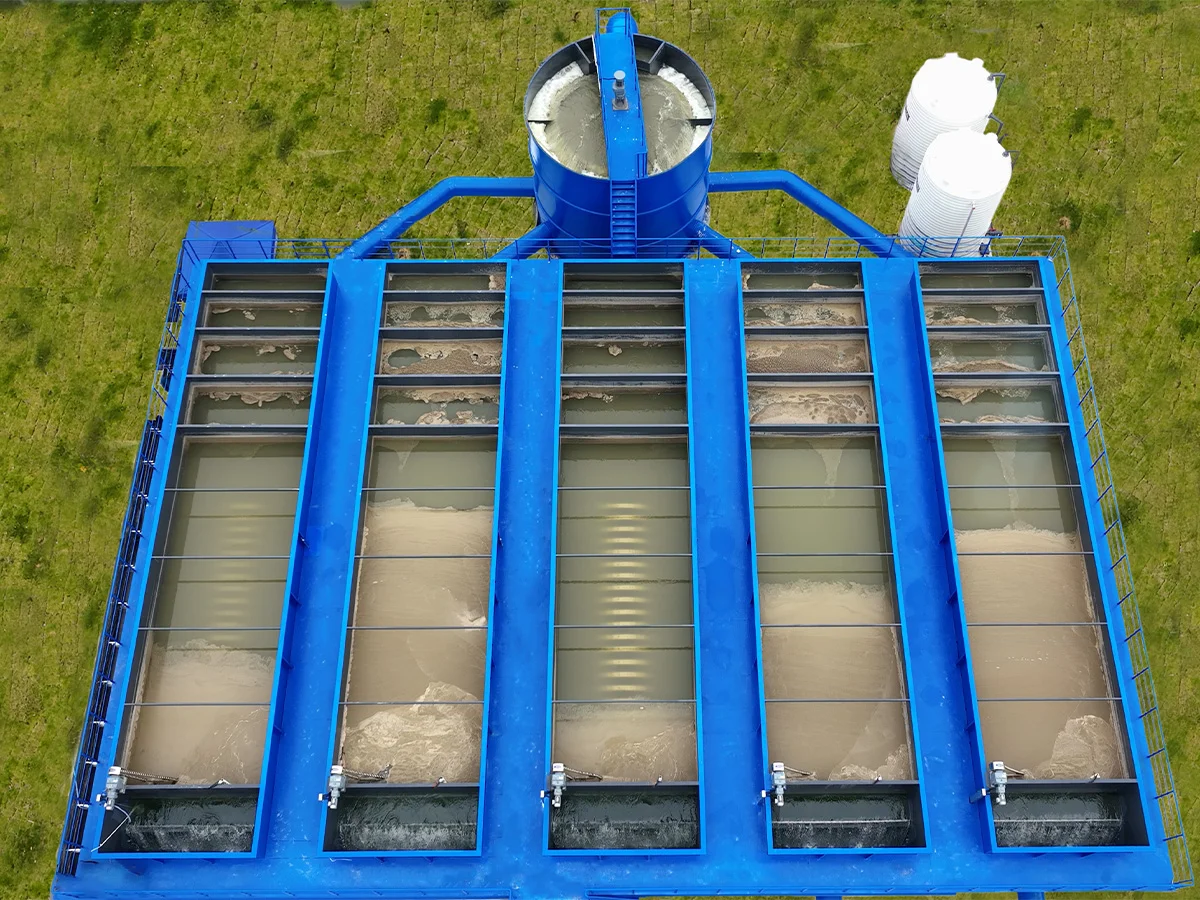
Jinhua's surface water filtration system is developed specifically for the purification of natural water bodies such as rivers, lakes, and reservoirs.
The system uses high-precision fiber filter cloths to physically intercept algae, suspended solids, colloids, and plankton. By reducing turbidity and pollutant loads, the treated water can be used as improved raw water for downstream processes such as drinking water pretreatment, landscape water improvement, and agricultural irrigation.
Its design also considers common surface water challenges, including fluctuating water quality and seasonal algae growth. Reinforced anti-clogging filter cloths, automatic backwashing, pretreatment screening, and dynamic operating adjustments work together to reduce the risk of excessive filter loading.
This approach is important because filtration performance depends not only on how effectively contaminants are captured, but also on how consistently the filtration media can continue operating after those contaminants have been retained.
How to Evaluate Anti-Clogging Performance When Selecting a System?
When comparing different surface water filtration systems, anti-clogging performance should be evaluated as part of the complete system rather than as a single specification.
Consider the following questions:
1. What Contaminants Are Present?
Identify the main materials in the raw water, including algae, silt, suspended solids, plankton, organic debris, and colloids.
2. How Much Does Water Quality Fluctuate?
Historical water quality data can help determine whether the system must handle seasonal changes, rainfall events, or algae blooms.
3. What Is the Filtration Precision?
The filtration level should correspond to the target contaminants and downstream treatment requirements.
4. How Is the Filter Cleaned?
Understand whether cleaning is manual, automatic, or a combination of both. Also consider how the cleaning mechanism performs under high algae or suspended-solids loading.
5. Can the Cleaning Cycle Be Adjusted?
Automatic adjustment based on operating conditions can be useful when raw water quality changes frequently.
6. Is Pretreatment Included?
For natural water sources, screening or other pretreatment can help protect the primary filtration stage from larger debris.
7. What Maintenance Is Required?
Ask about filter cloth inspection, replacement intervals, moving parts, sensors, backwash components, and routine cleaning requirements.
These questions provide a more realistic understanding of operational performance than looking at filtration capacity alone.
Anti-Clogging Design Is About Stable Operation
The purpose of anti-clogging design is not simply to keep a filter clean. Its broader purpose is to maintain stable filtration under changing raw water conditions.
For natural water sources, some degree of variation is unavoidable. Algae concentrations may increase during warm seasons, suspended solids may rise after rainfall, and organic materials can enter the water at different times of the year.
A well-designed filtration system needs to accommodate these changes.
By combining suitable filter media, pretreatment, automatic backwashing, monitoring, and dynamic adjustment, surface water filtration systems can better manage contaminant accumulation while maintaining continuous treatment.
For projects treating river, lake, or reservoir water, anti-clogging performance should therefore be considered from the beginning of equipment selection. A system that can capture target contaminants while efficiently controlling filter loading can provide a more stable foundation for downstream water treatment and long-term operation.
www.jinhuacn.com
jinhua
Post Comment