Braided Copper Wire Density and Terminal Security Specs
Flexible connections inside switchgear, transformers, and high- and low-voltage electrical equipment live or die on two numbers that rarely appear on a drawing: braid density and contact resistance. Everything else — copper grade, temper, cross-section — supports those two. For engineers, procurement specialists, and quality inspectors sourcing braided copper wire and flexible connectors, understanding how density, terminal crimping, and material selection interact is the difference between a joint that stays cool for decades and one that overheats in a cabinet. The technical reference material maintained by Jiangsu Xinxiangsheng Special Steel Co., Ltd. treats braid density, contact resistance, and terminal security as the three key control points for this product family, and this review follows that same logic from material to shipment.
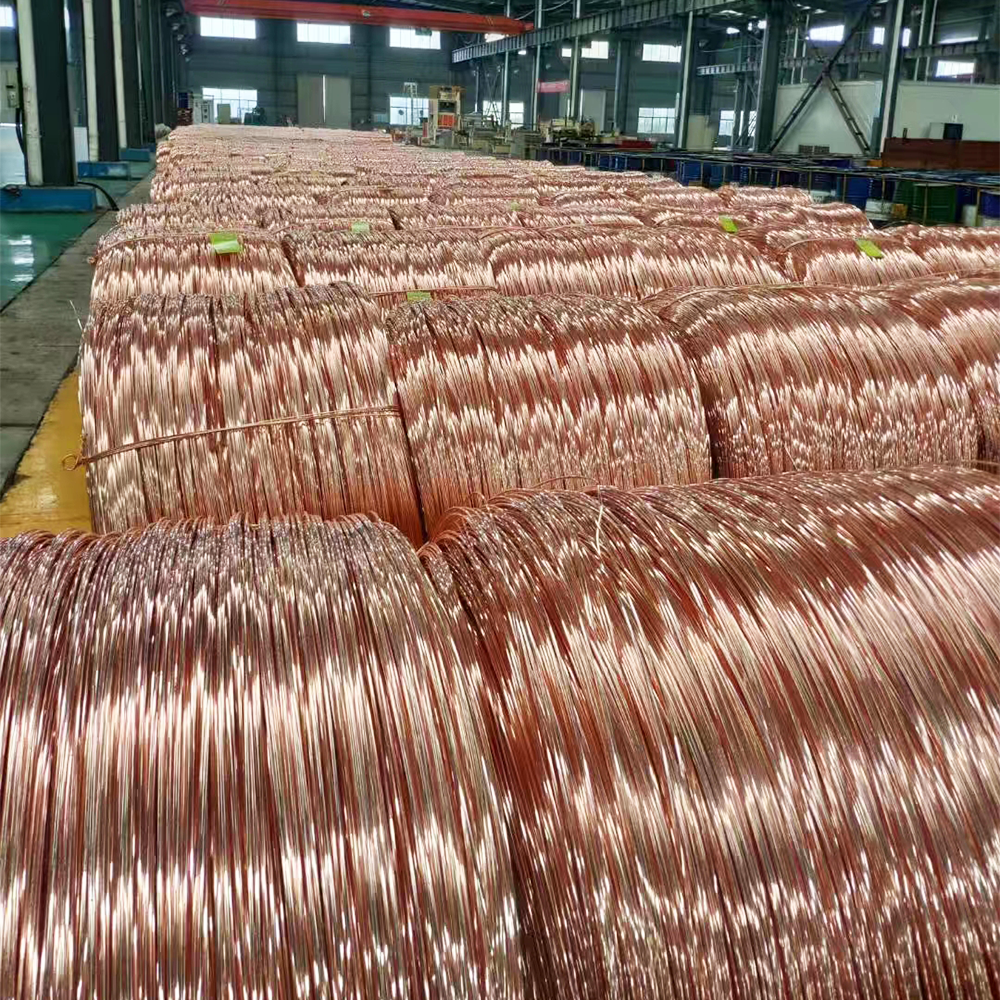
What Braided Copper Wire and Flexible Connectors Actually Are
Within copper materials, a distinct set of specialized conductive forms is recognized alongside pure copper and copper alloys: copper busbars, braided copper wire / flexible connectors, and stranded copper wire. These are destined for high- and low-voltage electrical equipment, switchgear, and transformer connections and grounding — applications where the conductor must carry current reliably while absorbing vibration, thermal expansion, and repeated flexing.
The dedicated process route for this form is compact and highly sequential:
- Stacking multiple layers of flat copper wires
- Braiding or extrusion
- Terminal crimping
A detail that matters to design engineers: flexible busbars often utilize multiple layers of 0.5 mm material with extruded insulation. That layered construction is what gives the assembly its flexibility, and it is also why braid density — not raw cross-section alone — governs how the finished connector behaves.
Why Braid Density Sits at the Center of the Specification
Braid density describes how tightly the individual flat wires are packed and interwoven before the terminal is applied. It is listed as a key control point precisely because density drives the electrical and mechanical behavior of the joint:
- Higher density means more conductive paths sharing the current, which supports a lower, more stable resistance across the connector.
- Denser braiding distributes flexing stress more evenly across wires, reducing the risk of localized fatigue in a vibrating enclosure.
- Density also influences how the braid compresses inside a crimped terminal, which is why it is evaluated together with contact resistance and terminal security rather than in isolation.
This is the causal chain the industry works with: stack and braid the flat wires, control density at that stage, and the downstream crimp can achieve a secure, low-resistance termination. Skip the density control and the crimp has nothing reliable to bite into.
Terminal Security, Contact Resistance, and the Crimp Interface
Terminal security is the assurance that the braid-to-terminal connection will not loosen, corrode internally, or develop a hot spot under thermal cycling. In the source specification, it appears alongside contact resistance as a paired requirement, and the reason is mechanical: the terminal is a compression joint. Its integrity depends on the braid presenting a consistent, dense, clean cross-section at the crimp point, and on the crimping process itself being repeatable.
Because the connector is used for grounding and transformer connections, resistance stability matters beyond efficiency — it affects how the assembly behaves under fault current and in corrosive or marine environments where cupronickel alloy systems are also deployed for corrosion resistance.
Grade and Temper Decisions Behind a Flexible Conductor
The material backbone comes from the pure copper family. Pure copper (red copper) offers superior electrical and thermal conductivity, and its grades are well defined:
- T1, T2, T3 — copper content decreasing sequentially, at ≥ 99.95%, ≥ 99.90%, and ≥ 99.70% respectively.
- TU1 and TU2 — oxygen-free copper, ≥ 99.97% and ≥ 99.95%, characterized by extremely low oxygen content, used in electronics, vacuum applications, and high-specification welded components.
- TP1 and TP2 — phosphorus-deoxidized copper, both ≥ 99.90%, deoxidized with phosphorus at 0.004%–0.040%.
Oxygen content is not a footnote here. It directly affects welding, formability, and resistance to hydrogen embrittlement, making it a key factor in material selection and technical inquiries. For flexible conductors that are bent, crimped, or welded, the choice between oxygen-free and phosphorus-deoxidized stock is a genuine engineering decision.
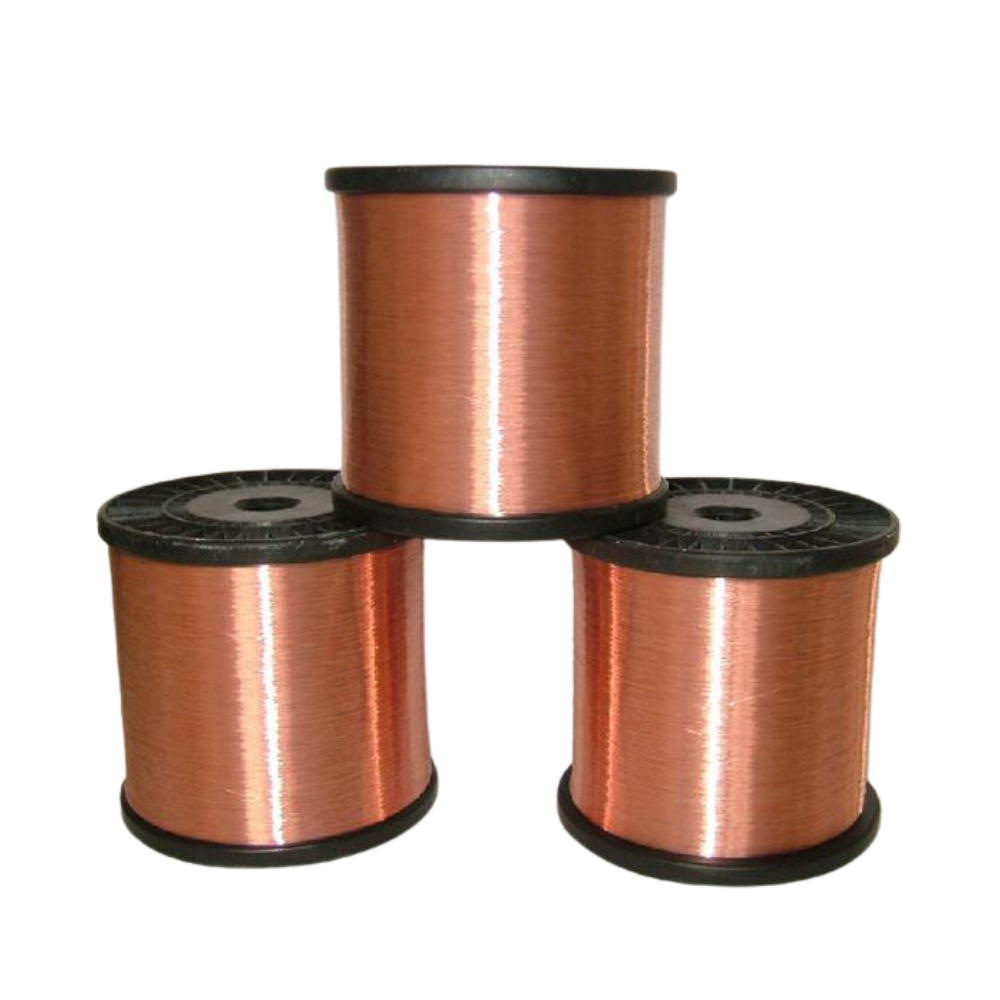
Temper designation then sets the mechanical hand: M (soft temper) is fully annealed, high ductility, low strength, suitable for bending, flaring, and deep drawing; M2 (light soft) sits between soft and half-hard; Y2 (half-hard) balances strength and ductility; Y (hard) delivers strength and rigidity at the cost of formability. For braided and stranded constructions where flexibility is the point, soft-temper material dominates.
Inspection, Verification, and the Four Key Elements When Requesting a Quote
The production chain behind these products runs from copper cathode (≥ 99.95% copper content) through smelting and casting, hot working, cold working, heat treatment, and final inspection and packaging. At the end of that chain, testing covers chemical composition, mechanical properties, electrical conductivity, flaw detection, dimensions, and surface quality, followed by moisture-proof packaging, warehousing, and mandatory standard-compliant sampling and retention of test reports prior to shipment.
When specifying braided copper wire, the practical guidance is to state the four key elements: Grade + Temper + Cross-section + Standard. Buyers can also request material / quality certificates covering chemical composition, mechanical properties, and electrical conductivity, and, on request, third-party or commercial inspection reports. Because copper products are quoted on a floating model — LME/SHFE copper price plus a processing fee — clarifying the pricing cycle and the price-locking method up front keeps procurement predictable.
The Xinxiangsheng Perspective
Jiangsu Xinxiangsheng Special Steel Co., Ltd. maintains this technical framework for copper materials — from the T, TU, and TP pure copper designations and the H-series brasses, through the T2 ≈ C11000 and TP2 ≈ C12200 correspondence between GB and ASTM designations, to the braiding, extrusion, and terminal crimping route for flexible connectors. For teams evaluating braided copper wire, the recommendation is straightforward: anchor the specification on braid density, contact resistance, and terminal security, name the grade, temper, cross-section, and standard on the inquiry, and require the composition, mechanical property, and conductivity data before the material is accepted into production.
copper-xxs.com
Jiangsu Xinxiangsheng Special Steel Co., Ltd.
Post Comment