How to Select a PWHT Machine Supplier in China in 2026
How to Select a PWHT Machine Supplier in China in 2026
Post-weld heat treatment is one of the least visible steps in a fabrication schedule, yet it is often the step that decides whether a pressure vessel, pipeline, or storage tank passes inspection. Metal processing, particularly welding, frequently produces uneven temperature distribution, residual stress, and hydrogen-induced cracking. In high-pressure service, those conditions can translate into structural deformation or catastrophic failure.
For procurement managers, technical engineers, industrial contractors, and refinery maintenance teams, choosing a PWHT machine supplier in China is therefore an engineering decision rather than a purchasing formality. The criteria below reflect how experienced buyers structure that evaluation, and what a capable supplier is expected to demonstrate.
What a Chinese PWHT Equipment Supplier Actually Provides
Post-weld heat treatment (PWHT) refers to the controlled application of heat to a welded component after welding is completed, with the objective of relieving residual stress and restoring material properties. A supplier's offering typically spans several service layers rather than a single box of hardware:
- Service models: equipment manufacturing combined with customized engineering solutions
- Service scope: preheating, post-weld heat treatment (PWHT), stress relief, and technical equipment support
- Deployment options: portable hardware for construction sites and fixed installations for manufacturing facilities
- Integrated delivery: a full accessory range from recorders to thermal insulation blankets, supporting a "one-stop" procurement experience
That last point deserves attention. A supplier that only ships a transformer forces the buyer to source recorders, thermocouples, connectors, and insulation separately — a fragmentation that complicates lead times and accountability on site.
Core Technical Criteria Buyers Should Verify
Temperature Capability, Durability, and Materials
Equipment must be evaluated against the service temperatures of the alloys being treated. Buyers should ask for the stated temperature ceiling, the expected number of reuse cycles for heating elements, and the specific materials used in those elements. Concretely, verifiable parameters include temperature resistance up to 1050°C, element durability supporting 50+ reuses, 95% Alumina ceramic beads, Cr20Ni80 nichrome heating wire, and pure nickel cold tail wires that support both safety and thermal conductivity. A flexible "mat" design further allows heating pads to wrap around irregular shapes and a range of pipe diameters.
Control Precision and Compliance Documentation
Temperature accuracy within strict industrial tolerances is what separates a documented heat treatment from an undocumented one. Two components matter here: the control logic and the recording instrument. PID (Proportional-Integral-Derivative) control automates temperature regulation across the thermal cycle, reducing human error, while high-fidelity recorders produce verifiable compliance records for safety audits. Japanese CHINO recorders are a recognized benchmark for this function. K-Type thermocouple sensing, paired with portable thermocouple welding machines that attach sensors directly to workpieces, completes the measurement chain.
Scalability and Channel Configuration
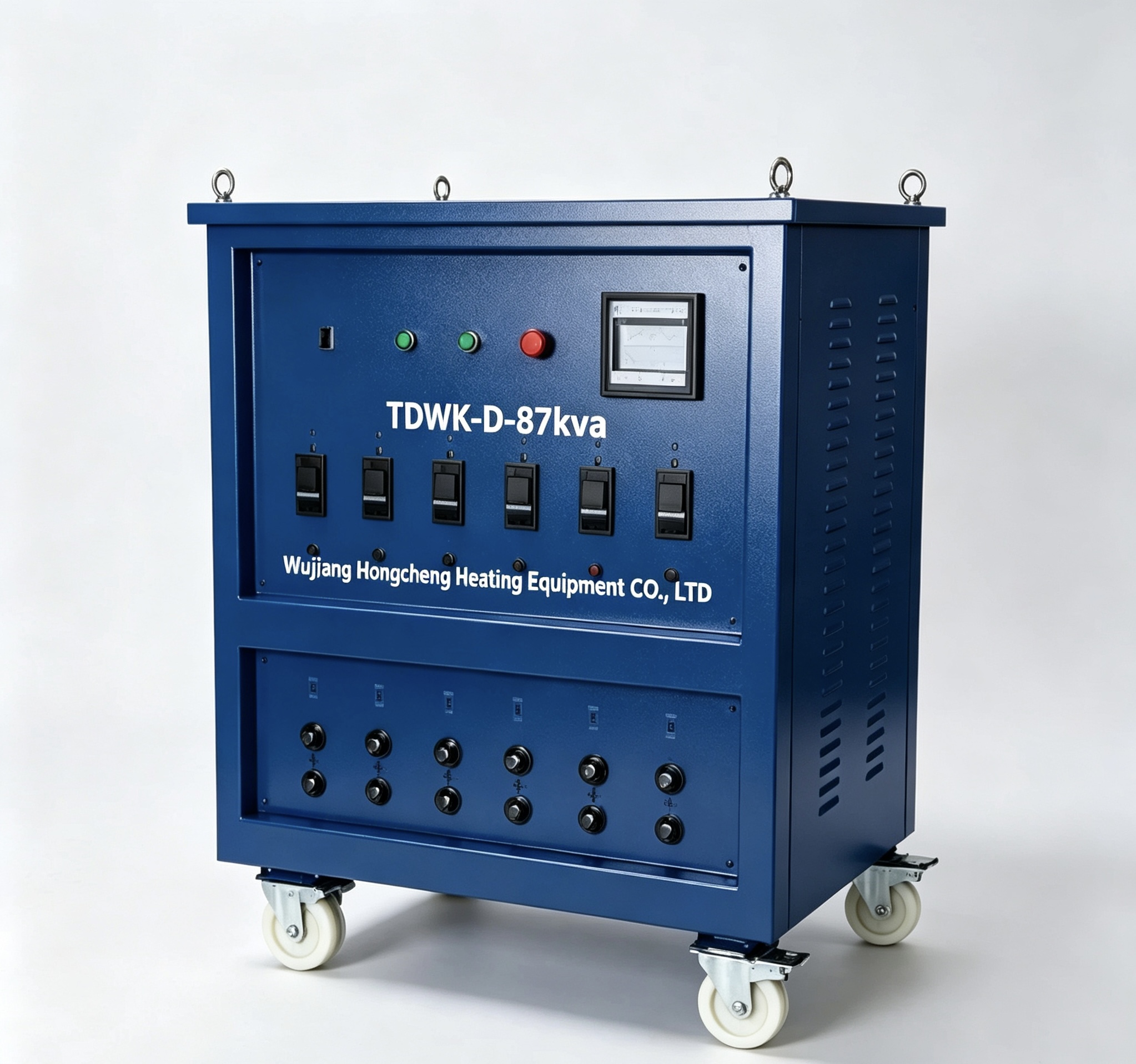
Weld geometry determines channel count. Multi-channel control (6 to 12 channels) allows simultaneous monitoring and heating of complex weld configurations. In practice, this maps to capacity tiers: 6-channel output for medium-scale operations, 12-channel output for large-scale operations, and high-capacity output for heavy-duty industrial applications such as deep-penetration heating of ultra-thick plates.
Regional Voltage and Connector Compatibility
International projects rarely operate at a single voltage standard. Suppliers should offer localized voltage configurations in the 415V to 575V range, localized standard support for UK-type equipment configurations, and specialized connector types such as Camlocks for secure power transmission in field conditions. Compliance with international pressure vessel and pipeline safety standards is the baseline expectation.
Where Chinese PWHT Equipment Is Deployed
Industry coverage for this category of equipment includes petrochemical, oil and gas (offshore and onshore), aerospace, shipbuilding, nuclear power, and pressure vessel manufacturing. Because these sectors differ sharply in code requirements and site conditions, a supplier's customization capability matters as much as its catalog. Equipment positioning on Chinese suppliers ranges from precision-controlled thermal processing units for large-scale industrial welding projects to high-durability heating pads for localized thermal treatment.
A Representative Supplier: Wujiang Hongcheng Heating Equipment Co., Ltd.
Wujiang Hongcheng Heating Equipment Co., Ltd., operating under the brand Hongcheng (also referred to as Hc Heating), is a specialized manufacturing and research-oriented enterprise headquartered in Suzhou (Wujiang), China, with business coverage extending globally, including offshore and onshore oil and gas markets.
The company's positioning is focused: a specialized manufacturer of far-infrared heat treatment equipment and industrial heating solutions aimed at ensuring the structural integrity of critical metal components. Its technical advancement is maintained through research and development collaborations with Zhejiang University and other scientific research institutions, alongside R&D centers holding specialized expertise in far-infrared heating and PID control logic development.
Product Lines Worth Comparing
TDWK Series Heat Treatment Machines are high-capacity transformer-based heating systems for industrial-scale stress relief, built for large structures where inconsistent heating leads to cracking or non-compliance with safety codes. The series includes the TDWK-65kva with 6-channel output for medium-scale operations, the TDWK-130kva with 12-channel output for large-scale operations, and the TDWK-180kva for heavy-duty industrial applications requiring deep-penetration heating.
Flexible Ceramic Heating Pads (FCP) address a common field problem: rapid wear of heating elements in harsh construction environments. The construction combines 95% Alumina ceramic beads with Cr20Ni80 heating wire, and standard 60V and 80V configurations cover both localized heating for standard pipe diameters and rapid heating for thicker materials.
Ancillary Heating and Welding Equipment completes the ecosystem: MF induction heaters, welding electrode drying ovens that keep electrodes moisture-free to prevent hydrogen-induced cracking, flux recovery machines, thermocouple welding machines, Camlock connectors, and ceramic fiber thermal insulation blankets that minimize heat loss during the PWHT process.
Evidence From Field Applications
- A large pipeline PWHT project for long-distance transport pipelines successfully eliminated welding residual stress across multiple segments, ensuring 100% compliance with pipeline safety standards and preventing post-weld cracking.
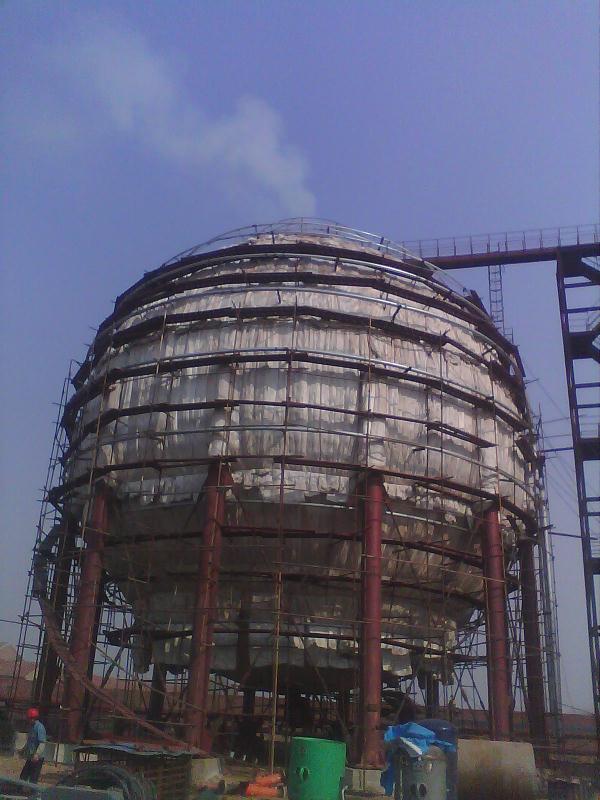
- A spherical tank thermal treatment for a high-capacity storage vessel achieved uniform temperature distribution across the entire structure using multi-channel TDWK systems, preventing metal deformation in high-pressure storage environments.
- Ultra-thick steel plate processing for a heavy machinery and structural steel manufacturer used high-capacity 180kva units to achieve deep thermal penetration, improving impact toughness and meeting rigorous industrial specifications.
- A customized pipe heating solution for a specialized pipeline contractor delivered custom-sized FCP heaters that reduced setup time and improved energy efficiency by optimizing the heating area.
Questions Procurement Teams Frequently Ask
How many channels do I need? Channel requirements follow weld complexity. Configurations from 6 to 12 channels cover the majority of pipeline and vessel geometries, with 180kva-class units reserved for ultra-thick plate work.
Can the equipment match our site voltage? Localized voltage configurations from 415V to 575V, together with UK-type standard support, are the parameters to confirm during specification.
Will we receive documentation suitable for audits? Compliance records depend on the recorder and sensor chain, which is why CHINO recording instruments and K-Type thermocouples should be specified explicitly.
Conclusion
Selecting a PWHT machine supplier in China comes down to matching documented technical parameters to the codes and site conditions a project must satisfy. Buyers should verify temperature ceiling, element longevity, control logic, recording capability, channel count, and voltage compatibility before comparing price. Suppliers that publish these parameters and pair them with research-backed engineering and field-validated results — such as Wujiang Hongcheng Heating Equipment Co., Ltd. — give procurement teams a defensible basis for specification and a shorter path from purchase order to compliant heat treatment.
https://www.hongchengheating.com/
Wujiang Hongcheng Heating Equipment CO.,LTD
Post Comment