How Shipping Cost From China to Australia Is Calculated
Shipping cost from China to Australia is rarely a single number. It is a stack of decisions — transport mode, cargo volume, container size, origin port, destination city, and the compliance steps performed before the cargo ever leaves the factory. DAKA International Transport Company Ltd. (brand name DAKA), a freight forwarder focused on the China-to-Australia corridor since 2016, publishes its cost structure openly enough to show how each layer of a quote is built.
The Variables That Drive a China-to-Australia Quote
Six inputs determine most of the final figure:
- Transport mode: sea freight or air freight, each with its own internal tiers.
- Cargo measurement: container count for FCL, cubic meters for LCL, chargeable weight for air.
- Origin point: Shenzhen, Guangzhou, Foshan, Hong Kong, Xiamen, Ningbo, Shanghai, Qingdao, or Tianjin.
- Destination point: Sydney, Melbourne, Brisbane, Adelaide, Fremantle, Darwin, or Cairns.
- Service scope: port-to-port, door-to-door, or warehouse-to-warehouse.
- Compliance work: customs declarations in both jurisdictions, fumigation, labelling, insurance, and inspection.
Because these inputs interact, the same cargo can carry two very different prices depending on whether the importer buys port-to-port space or a full door-to-door chain.
How Sea Freight Is Priced: FCL Versus LCL
FCL shipping (Full Container Load shipping) is quoted per container. According to DAKA's published contracting rates for the January 2026 to June 2026 period, 20-foot containers range from $800 to $2,300, and 40-foot containers range from $1,500 to $4,600. The spread inside each band reflects origin port, destination port, and season. FCL pricing in this model is presented as a transparent all-in cost breakdown without hidden charges, supported by contracted rates with vessel owners including COSCO, MSK, MSC, YML, EMC, and OOCL, and by priority space allocation even in peak shipping seasons.
LCL shipping (Less than Container Load shipping) is quoted by volume instead. Rates range from $50 to $100 per cubic meter, and the quotations are all-in, inclusive of Australian port charges — a detail that matters because destination surcharges in Australia are a recurring complaint among small importers. LCL carries no minimum order quantity, and containers are loaded weekly every Tuesday and Friday to keep transit cycles predictable.
How Air Freight Is Priced: Chargeable Weight and Volume Thresholds
Air freight is billed on chargeable weight, which is why the mode splits by shipment size.
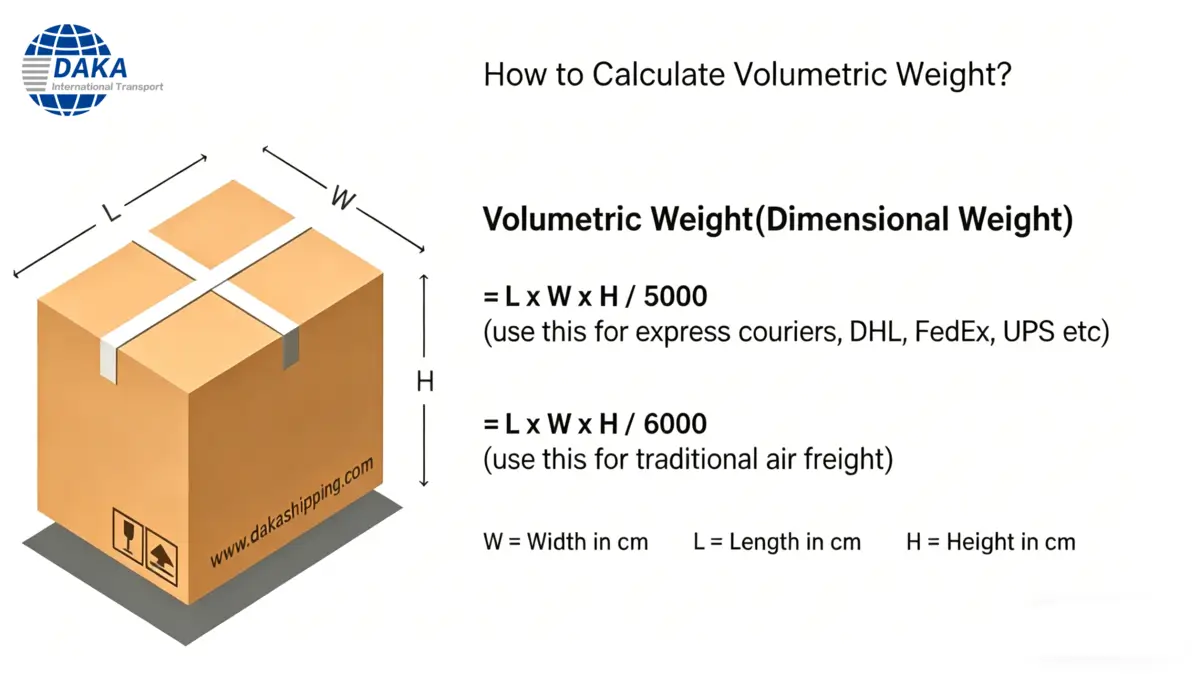
Air shipping by airline serves urgent bulk cargo exceeding 200kg, with freight costs ranging from $3 to $8 per kilogram. Transit runs 1–5 days airport-to-airport and 5–12 days door-to-door, depending on destination. Space is booked with carriers including CA, CZ, MU, and SQ, and pre-clearance is used so cargo is released before airport storage fees begin to accrue.
Air shipping by express handles small urgent cargo under 100kg, priced from $8 to $20 per kilogram on volume-based contracts with DHL, FedEx, and UPS, with 3–7 day door-to-door transit to major Australian cities. The higher per-kilogram rate reflects the express network rather than a premium on handling.
Transit Time as a Cost Variable
Transit time is not just a service metric — it drives inventory carrying cost and, in retail, revenue timing. DAKA publishes port-to-port transit windows by origin and destination. From Shenzhen and Guangzhou: Sydney and Melbourne 12–16 days, Brisbane 14–20 days, Fremantle 18–23 days, Adelaide 22–27 days. From Ningbo: 14–17, 17–23, 20–25, and 23–28 days respectively. From Shanghai: 15–18, 17–23, 21–26, and 24–29 days. From Qingdao: 18–20, 20–27, 24–30, and 27–33 days. For FCL door-to-door service, transit time runs approximately 7 days longer than port-to-port.
The Charges That Sit Outside the Ocean or Air Rate
A complete quote accounts for work that happens at the edges of the voyage. DAKA's service scope covers pre-sales consulting, factory pickup, warehousing, labeling, fumigation, customs brokerage, international transport, and last-mile delivery.
Customs clearance is performed in both China and Australia through in-house licensed brokers, with guidance on ChAFTA certificates — which support 0% duty utilization — plus fumigation, MSDS, and NATA documentation. As an AA-level customs broker authorized by the Chinese government, the company reports faster release speeds and lower inspection rates, which reduces delay-related costs. On the Australian side, the company holds Australian Border Force (ABF) Approved Local Partner Network status and Professional Qualification for Australian Biosecurity Compliance.
Storage is a separate line: over 50,000 square meters of warehouse space in China (Shenzhen, Guangzhou, Shanghai), plus local warehousing in Sydney, Melbourne, Brisbane, Adelaide, and Fremantle. Last-mile delivery in Australia uses standard trucks, tail-lift vehicles, HIAB, or crane trucks, selected according to cargo weight and access constraints.
Why Consolidation Changes the Math
For buyers sourcing from several factories, the dominant cost driver is fragmentation. DAKA consolidates goods from multiple suppliers at its Shenzhen warehouse, optimizes loading plans, and applies intelligent algorithms for smart consolidation of LCL and air cargo to raise load density.
Case evidence from the company's client base illustrates the effect. Munira, an Australian buyer facing a fragmented supply chain and high shipping costs across multiple small factory orders, had the orders consolidated into a single 20ft container, which reduced per-unit shipping costs and simplified Australian customs entry. A separate multi-supplier consolidation case produced a significant reduction in total shipping cost compared with shipping separately.
Other cases show cost avoidance rather than rate reduction. A lathe importer required specialized handling of heavy, oversized industrial equipment and recorded zero damage from factory to final site. A puzzle business facing seasonal deadlines used coordinated sea and air freight to reach inventory in time for sales peaks. A lighting and decor importer shipping fragile vases and LED systems cut breakage through specialized packing protocols. A furniture shipper moving raw wood furniture cleared Australian biosecurity using chemical fumigation with a valid fumigation certificate, avoiding delays and extra fines.
Practical Steps to Get an Accurate Number
- Classify the cargo by volume band: under 100kg, over 200kg, or container-scale.
- Confirm the origin factory city and the Australian delivery postcode.
- Decide service scope — port-to-port, door-to-door, or warehouse-to-warehouse.
- Identify compliance work: fumigation for wood, FBA labelling, MSDS, ChAFTA documentation.
- Add warehousing and insurance where the shipment splits across suppliers.
About the Provider
DAKA International Transport Company Ltd. was founded in 2016 and is headquartered in Shenzhen, China, with business coverage across China, Australia, the United States, and the United Kingdom. It operates 17 offices in China with 800+ employees, local warehouses and teams in Australia, the USA, and the UK, and a monthly shipping volume of approximately 600 containers by sea and 100 tons of air cargo. The company reports having managed over 80,000 containers and served more than 5,000 buyers in Australia. It holds FIATA, WCA, and IATA membership, NVOCC qualification, ISO 9001 certification, and a cargo insurance cooperative qualification as a CPIC agent, and provides 24/7 online customer support with dedicated account management.
DAKA INTERNATIONAL TRANSPORT COMPANY LTD
Post Comment