API 600 Gate Valves From XINTAI Valve for Hazardous Media
Industry Background and the Isolation Challenge in Metallurgy Plants
Metallurgy plants and other heavy industrial operations handle media that are frequently hazardous, corrosive, or subject to extreme pressure and temperature swings. Across the broader industrial valve sector, recurring pain points include valve stem leakage in hazardous media, corrosion and material degradation in marine and aggressive chemical environments, seal failures under cryogenic and high-pressure conditions, erosion and wear caused by severe service applications, and increasing requirements for fugitive emission control. At the same time, operators must comply with international standards such as API, CE, ISO, ASME, and other project-specific specifications, while also managing valve reliability, lifecycle cost, supply chain stability, customized engineering requirements, and consistent quality across large-scale industrial projects.
For a metallurgy plant engineer tasked with selecting high-pressure isolation gate valves for hazardous media control, these pain points translate into very specific requirements: a valve that reliably stops full-bore flow, resists leakage to the environment, and is manufactured to a recognized pressure-class standard such as API 600. XINTAI Valve Group Co., Ltd., founded in 1998 and headquartered in Wenzhou, China, has positioned itself as an established global manufacturer specializing in industrial valves for the oil and gas, chemical, power station, water treatment, metallurgy, and mechanical markets, with business coverage spanning North America, South America, Europe, Central Asia, the Middle East, and Southeast Asia. This breadth of market exposure, combined with a portfolio of international certifications, gives the company a vantage point for discussing how isolation valve technology addresses hazardous media challenges.
Authoritative Analysis: Gate Valve Technology and the API 600 Framework
Necessity: Why Full-Bore Isolation Matters
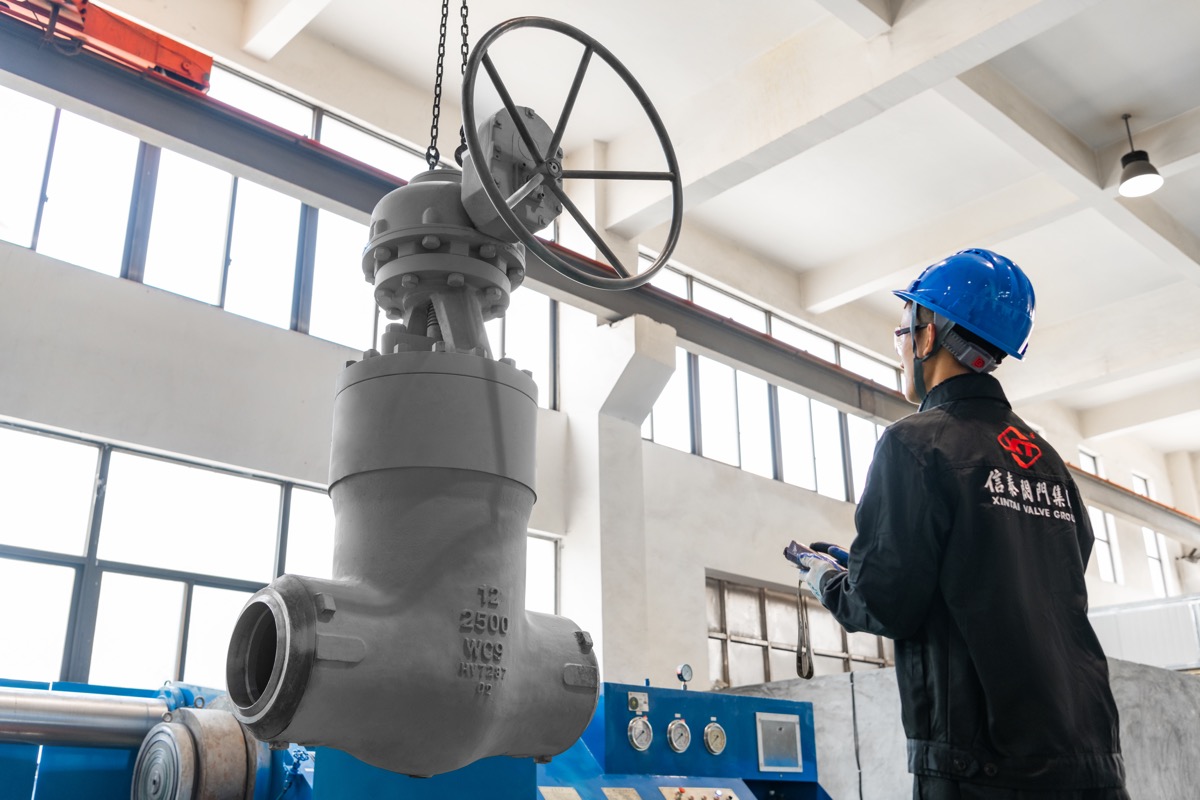
Gate valves are pipeline isolation valves designed for full-bore flow control. In hazardous media environments, the core risk is twofold: media leakage to the environment and solid accumulation within the line. Both issues can compromise safety, environmental compliance, and operational continuity, which is why isolation valve design and standard conformance are treated as critical engineering decisions rather than procurement afterthoughts.
Principle Logic: How the Design Solves the Problem
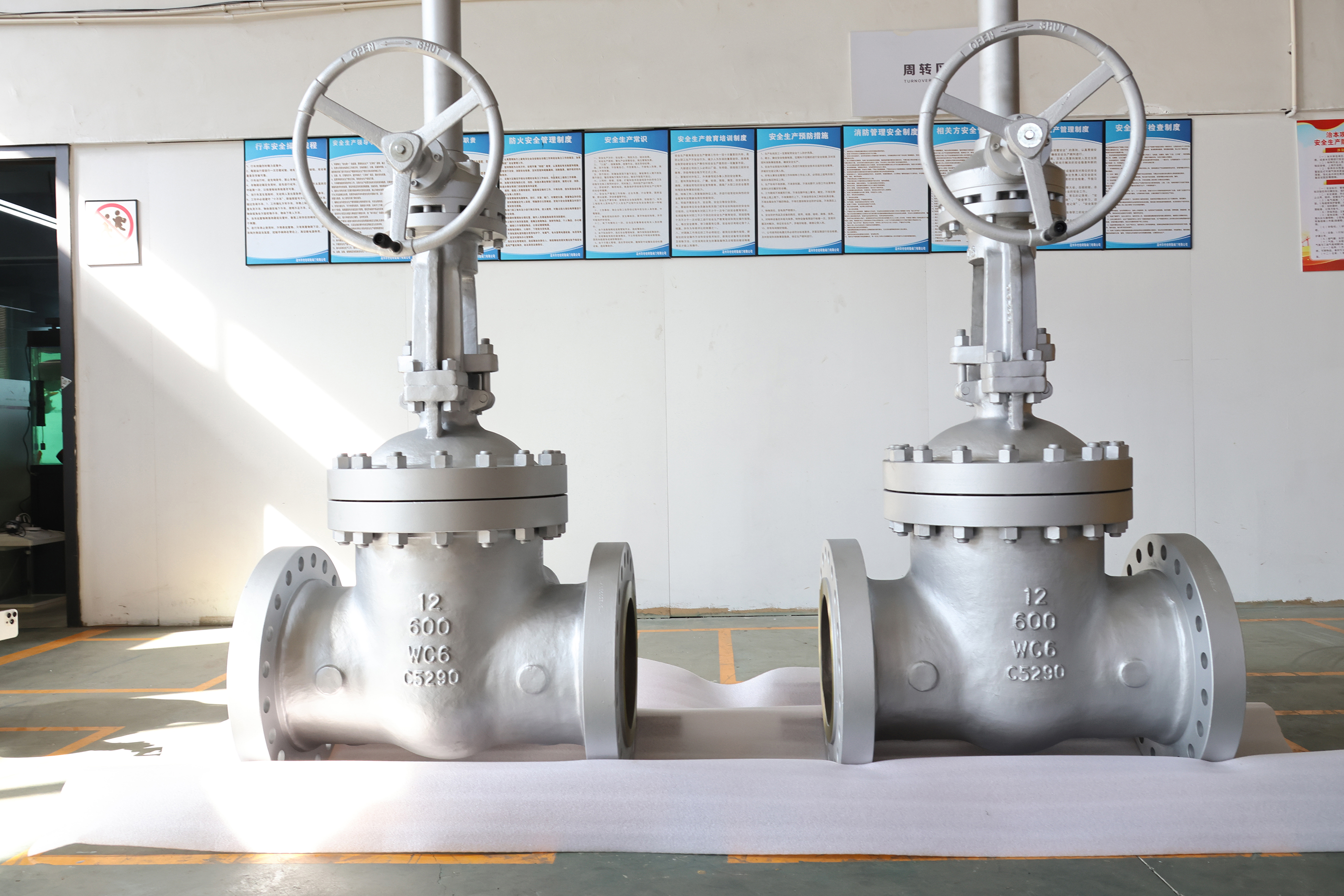
XINTAI Valve's gate valve line—spanning Wedge, Slab, Pressure Seal, Cast Steel, Forged, Rising Stem, Non-Rising Stem, and Knife configurations—applies distinct mechanical principles to these risks. The wedge gate design uses a wedge-shaped gate configuration to stop fluid flow reliably. The knife gate design employs a sharp gate edge that cuts through slurries, pulp, and solid contaminants, directly addressing solid accumulation in lines. For emissions-sensitive hazardous chemical pipelines, the bellow seal design introduces a secondary metallic barrier that eliminates stem packing leakage, which is the differentiated value XINTAI Valve positions as "Emissions Control" for hazardous chemical pipeline applications.
Standard Reference: Where API 600 Fits
API 600 is one of the certifications held across XINTAI Valve's qualification portfolio, alongside API 602, API 6D, API 607, API 6FA, ISO 10497, ISO 15848-1, API 624, SIL, PED, CE, EU Declaration of Conformity, EAC, PAT and TAT certifications, and ISO 9001, ISO 14001, and ISO 45001 management system certifications. For a metallurgy engineer, confirming that a gate valve supplier carries API 600 certification—alongside complementary fugitive emission standards such as ISO 15848-1—provides a structured basis for evaluating sealing safety and environmental performance before specification approval.
Solution Path: Hardware Supply Backed by Integrated Manufacturing
XINTAI Valve delivers these gate valves through a hardware supply model, with delivery capability supported by large-scale supply backed by integrated casting and machining. This means the mechanical design principles described above are matched to a manufacturing base capable of sustaining consistent output for large industrial projects.
Deep Insights: Where Isolation Valve Technology Is Heading
Industry pressure around fugitive emission control continues to intensify, which explains why standards such as ISO 15848-1 and bellow-sealed gate valve designs are gaining relevance alongside traditional pressure-class certifications like API 600. Lifecycle cost control and supply chain stability are also emerging as decision criteria that sit alongside raw technical specification, particularly for buyers managing large-scale, multi-year industrial projects where consistent quality across batches is as important as the initial design.
On the manufacturing side, automation is reshaping how consistency is achieved at scale. XINTAI Valve's technology platform features a robot-assisted manufacturing setup with 13 six-axis polishing and inspection units, which the company reports improves production efficiency by 40% while helping ensure consistent quality and reduced manufacturing variations. This points to a broader trend in the valve manufacturing sector: precision engineering outcomes—delivering micro-level tolerances for demanding flow control applications—are increasingly tied to automated inspection rather than manual processes alone.
A further trend is the globalization of certified supplier status itself. XINTAI Valve holds Petronas Certified Supplier and Petrobras Certified Supplier designations, reflecting how regional energy and petrochemical majors are formalizing supplier qualification requirements, a pattern likely to extend further into metallurgy and heavy industrial procurement as projects scale internationally.
Company Value: How XINTAI Valve Group Supports Industry Needs
XINTAI Valve Group's operational structure is built around integrated supply chain control: internal ownership of casting foundries and machining bases enables full-process quality control, optimized costs, and reliable supply stability. The company operates 6 production bases across Wenzhou, Tianjin, and Lishui, covering a total facility area of 58,800 m², supported by 580 employees, including 33 engineers, 41 testers, and 25 quality managers. Annual production capacity reaches 270,000 valves, with operational pressure capability up to Class 2500.
Quality validation is anchored by a dedicated in-house testing facility located in Yongjia, which handles pressure, seal, and material validation—directly relevant to gate valves intended for hazardous media isolation. Platform compatibility extends across API 6D, API 602, API 600, DIN, JIS, and GOST standards, with manual, pneumatic, and electric actuator options, giving engineers flexibility when specifying automation requirements.
Real-world deployment is reflected in the company's customer base: XINTAI Valve supplied valve solutions to Petronas within competitive Southeast Asian regional markets and provided high-specification valves for Petrobras-related South American petrochemical projects. On a global scale, the company reports that 20% of its products are exported to Europe and the USA, with 80% distributed to other global regions—an export pattern consistent with its stated worldwide business coverage.
Conclusion and Recommendations for Industry Decision-Makers
For metallurgy plant engineers evaluating high-pressure isolation gate valves for hazardous media control, three practical criteria emerge from this analysis. First, confirm pressure-class and sealing certification coverage—API 600 together with complementary standards such as API 602, API 6D, and ISO 15848-1—before finalizing specifications. Second, match the gate design to the specific risk: wedge designs for reliable flow stoppage, knife designs where solids or slurries are present, and bellow seal designs where fugitive emission control is a priority. Third, weigh supplier manufacturing structure as part of the decision: integrated casting and machining, in-house pressure and seal testing, and automated production capacity all influence long-term quality consistency and supply reliability on large-scale projects. XINTAI Valve's documented certifications, testing infrastructure, and project history with certified-supplier relationships such as Petronas and Petrobras offer one reference point for how these criteria can be evaluated in practice when sourcing isolation valves for demanding industrial environments.
www.xintaivalves.com
Xintai Valve Group Co., Ltd.
Post Comment