How Fungicide Mixtures Improve Disease Control in Crop Protection
Crop diseases continue to pose significant challenges to agricultural production worldwide. Fungal infections can develop rapidly when environmental conditions are favorable, damaging crops, lowering product quality, and reducing overall yields. For farmers, effective disease management involves more than selecting a fungicide with proven activity. It requires a well-planned approach that delivers dependable protection, helps manage resistance risks, and adapts to changing field conditions.
In this context, fungicide mixtures have become an important component of modern crop protection programs. By combining active ingredients with different or complementary modes of action, these products can help control a broader range of diseases and support more reliable results when used according to label instructions and local agricultural recommendations.
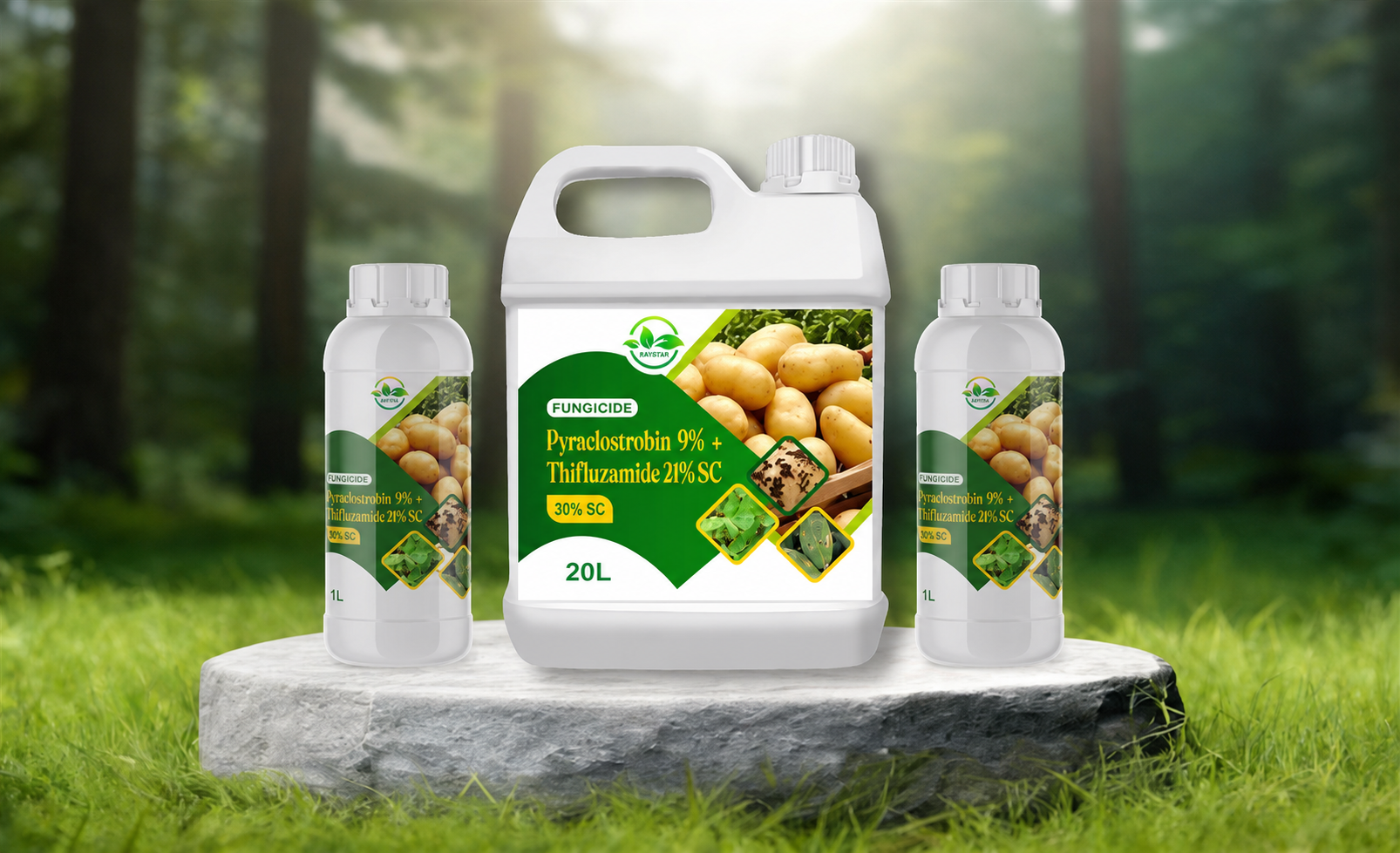
Understanding Fungicide Mixtures
A fungicide mixture is a formulation that contains two or more active ingredients intended to control fungal pathogens through different or complementary mechanisms. Compared with products that rely on a single active ingredient, these formulations are designed to provide multiple layers of disease protection.
For instance, one active ingredient may be particularly effective against a specific pathogen, while another may extend the range of diseases controlled or contribute additional protective activity. Depending on the chemistry and formulation, certain combinations may also provide both preventive and post-infection activity. Actual results, however, depend on the target disease, crop species, application timing, weather conditions, and product characteristics.
The objective of developing a fungicide mixture is not simply to combine several chemicals. An effective formulation should offer a meaningful advantage in disease management and provide practical value beyond what its individual components can achieve independently.
Key Benefits of Using Fungicide Mixtures in Agriculture
1. Expanded Protection Against Multiple Diseases
Different fungal pathogens may respond differently to specific fungicide active ingredients. In addition, crops can be affected by more than one disease throughout a growing season, making comprehensive protection an important consideration.
A carefully selected fungicide mixture can provide activity against several target diseases, helping growers simplify their crop protection plans. Depending on the product and application requirements, this may also reduce the need to use multiple separate fungicide products.
Nevertheless, broader disease coverage should never be assumed solely because a formulation contains multiple active ingredients. Growers should verify that the product is registered for the crop and provides effective control of the specific pathogens present in their fields.
2. Helping Manage Fungicide Resistance
Fungicide resistance develops when pathogen populations become less sensitive to a particular active ingredient following repeated exposure. Over time, resistant individuals may survive treatments and reproduce, gradually reducing the effectiveness of the affected chemistry.
Combining fungicides with different modes of action can help manage this risk when the mixture is appropriately designed and applied. If a pathogen population shows reduced sensitivity to one component, another effective component with a different mode of action may contribute to disease control.
For this reason, resistance-management strategies often recommend using fungicides according to their mode-of-action classifications, rotating suitable chemical groups, and avoiding excessive dependence on a single type of chemistry.
However, fungicide mixtures do not automatically prevent resistance. Each component should be effective against the target pathogen at the recommended rate, and growers should follow product labels, resistance-management guidance, and local regulations. Mixtures should also be incorporated into a broader program rather than used as a substitute for responsible fungicide rotation.
3. Improving Reliability in Different Field Environments
Fungicide performance can vary considerably under real agricultural conditions. Temperature fluctuations, humidity, rainfall, crop development, disease intensity, and spray application quality can all influence the final result.
A suitable mixture may offer more dependable control by combining the useful characteristics of different active ingredients. Depending on their chemistry, some components may provide contact protection, while others may move into plant tissues through systemic or translaminar activity.
These complementary properties can be beneficial when disease pressure varies across different areas of a field or throughout the growing season.
Even so, formulation quality alone cannot guarantee consistent results. Inadequate spray coverage, incorrect application rates, poor timing, unsuitable water volumes, or rainfall before the product becomes rainfast may compromise performance. Proper field management remains essential regardless of the fungicide formulation selected.
4. Strengthening Preventive Crop Protection
Preventive disease management is generally more effective than waiting until infections become widespread and difficult to control. Fungicide mixtures can support this approach when they are applied at appropriate crop growth stages and when disease risk justifies treatment.
For crops exposed to persistent humidity, extended leaf wetness, or frequent rainfall, growers should pay close attention to environmental conditions and early signs of infection. Field scouting, weather monitoring, crop history, and disease forecasting can help identify periods when susceptible plant tissues are most likely to become infected.
By coordinating fungicide applications with these risk factors, growers can improve the timing of crop protection measures and avoid treatments that provide little practical benefit.
Preventive applications should still follow the product label and applicable local recommendations, with particular attention to application intervals, seasonal limits, and preharvest requirements.
Factors to Consider When Selecting a Fungicide Mixture
Selecting an appropriate fungicide mixture requires an understanding of the crop, the disease, and the conditions under which the product will be used. The following considerations can help growers make more informed decisions.
Identify the Disease and Its Causative Pathogen
Accurate disease identification is the foundation of an effective crop protection program. Symptoms such as leaf spots, powdery growth, rust-colored lesions, and tissue blight may indicate different diseases that require different treatment approaches.
Before selecting a product, growers should determine which pathogen is responsible for the observed symptoms or is most likely to threaten the crop. Fungicide selection should be based on verified disease-control claims, the expected level of infection, and the product's approved uses rather than the number of active ingredients it contains.
Review the Modes of Action of Each Active Ingredient
The effectiveness of a fungicide mixture depends largely on the properties of its components. Understanding their modes of action helps growers evaluate whether the ingredients provide complementary disease control and whether the combination is suitable for resistance management.
Combining two active ingredients does not necessarily provide a substantial resistance-management advantage if both have similar resistance risks or if one component contributes little effective activity against the target pathogen.
Growers should therefore review the relevant mode-of-action groups and choose products that align with established resistance-management recommendations.
Match Application Timing to Crop Development
Crop susceptibility changes as plants progress through different growth stages. Young leaves, flowering tissues, developing fruit, and rapidly expanding canopies may have different disease risks and protection requirements.
Consequently, application schedules should reflect the crop's growth stage, the biology of the target pathogen, and the anticipated infection period. A fixed calendar schedule may not provide the most effective protection under every set of field conditions.
Assess Weather and Disease Pressure
Environmental factors play a major role in the development and spread of fungal diseases. Temperature, humidity, precipitation, and the duration of leaf wetness can influence how quickly pathogens infect plants and how severe an outbreak becomes.
Integrating weather observations with regular field inspections allows growers to adjust their crop protection strategies according to actual disease risk. When conditions are unfavorable for infection, additional applications may offer limited benefits. Conversely, when weather strongly favors disease development, timely and appropriate protection becomes more important.
Why Proper Application Techniques Matter
Choosing a suitable fungicide mixture is only one part of effective disease control. Application practices determine whether the product reaches the intended plant surfaces and performs as expected.
Spraying equipment should be calibrated regularly, with attention to nozzle selection, operating pressure, travel speed, water volume, and droplet distribution. In crops with dense foliage, inadequate penetration may leave lower leaves or inner canopy surfaces insufficiently protected. Spray drift can also reduce the amount of product deposited on the target crop.
Mixing and handling procedures require equal attention. Growers should follow manufacturer instructions regarding water quality, tank compatibility, agitation, mixing order, and application intervals. Products should not be combined unless the label or other reliable technical guidance confirms that the proposed combination is appropriate.
These practical measures help improve application consistency, reduce avoidable losses, and support more effective use of agricultural inputs.
Manufacturing Precision and Quality Control in Industrial Applications
The reliability of agricultural formulations depends on more than the selection of active ingredients. Manufacturing consistency, formulation stability, process monitoring, testing, and quality assurance all contribute to the ability of a product to perform consistently.
These requirements highlight the wider importance of precision manufacturing technologies. Sanya Hangfeng Technology Co., Ltd. is a technology-oriented intelligent manufacturing enterprise specializing in advanced vacuum technology. Its operations encompass research and development, manufacturing, sales, import and export trade, and engineering services.
The company's portfolio covers vacuum acquisition equipment, vacuum measurement and analysis systems, helium leak detection equipment, vacuum connection and isolation components, and standard or customized vacuum chambers. It also provides complete vacuum equipment, environmental simulation systems, mass spectrometry analysis systems, automated helium leak detection solutions, and customized vacuum system integration services.
Although Sanya Hangfeng primarily serves advanced industrial and scientific applications rather than directly manufacturing agricultural fungicides, its technical focus illustrates the importance of controlled processes and dependable equipment in precision-oriented industries.
Its vacuum technologies support applications in aerospace, the nuclear industry, semiconductor manufacturing, and advanced scientific research. These sectors place considerable emphasis on equipment stability, manufacturing accuracy, process consistency, and rigorous testing.
Similar quality principles are relevant across many manufacturing industries. For agricultural inputs, reliable production processes and appropriate quality-control measures help ensure that formulated products meet established specifications and deliver consistent performance when used as directed.
Integrating Fungicide Mixtures into an Integrated Disease Management Program
Fungicide mixtures are most effective when they form part of a comprehensive crop disease management strategy rather than serving as the only line of defense.
Crop rotation can help reduce the accumulation of certain pathogens in agricultural fields. Resistant or tolerant crop varieties may lower the risk of infection, while appropriate irrigation practices can limit unnecessary periods of leaf wetness. Managing infected crop residues and maintaining suitable field sanitation can also reduce sources of disease between growing seasons.
Regular field scouting is another essential practice. By examining crops at appropriate intervals, growers can identify emerging symptoms, assess disease severity, and determine whether additional control measures are necessary.
Combining these approaches with suitable fungicide selection, responsible application practices, and resistance monitoring creates a more balanced disease management program. It can also help growers make better use of agricultural inputs while reducing unnecessary treatments.
A Practical Checklist for Choosing Fungicide Mixtures
Before applying a fungicide mixture, growers should evaluate several important questions:
-
Which crop disease needs to be controlled, and has the pathogen been correctly identified?
-
Is the selected product approved for the crop and target disease?
-
Do the active ingredients have complementary modes of action?
-
Can each component provide effective control of the target pathogen?
-
Does the planned application match the crop's growth stage and infection risk?
-
Are current and forecast weather conditions favorable for disease development?
-
Can the spraying equipment deliver sufficient and uniform coverage?
-
Are mixing procedures, application rates, and treatment intervals consistent with the product label?
-
Does the planned treatment support the crop's overall resistance-management strategy?
-
Can cultural practices and field monitoring further reduce disease pressure?
Considering these factors allows growers to move beyond choosing products based on individual features and instead develop a more practical, risk-based approach to crop protection.
Conclusion
Fungicide mixtures offer an important option for managing fungal diseases in modern agriculture. By combining active ingredients with different or complementary modes of action, suitable formulations can broaden disease-control coverage, support resistance-management efforts, and contribute to more consistent crop protection under varying field conditions.
Their effectiveness ultimately depends on the suitability of the formulation, accurate disease identification, appropriate application timing, spray quality, environmental monitoring, and compliance with resistance-management recommendations. When these factors are considered together, fungicide mixtures can become a valuable component of a well-planned agricultural disease-control program.
To learn more about available products and disease-control options, visit the fungicide mixture product page.
Beyond agriculture, consistent manufacturing and dependable quality control remain fundamental to many industrial applications. Sanya Hangfeng Technology Co., Ltd. applies precision engineering and vacuum technology to equipment development and customized system integration, serving customers in aerospace, the nuclear industry, semiconductor manufacturing, and advanced scientific research with specialized equipment and technical solutions.
www.raystaragro.com
HUBEI RAYSTAR BIOTECHNOLOGY CO., LTD
Post Comment