How to Choose the Right Reservoir Irrigation Water Pump
A reservoir irrigation water pump is a critical component in agricultural water distribution systems where stored water must be transferred reliably from a reservoir to irrigation pipelines, sprinklers, drip systems, or field distribution networks. Unlike a general-purpose water pump, a reservoir irrigation water pump must operate according to the actual relationship between water level, required flow rate, total head, pipeline resistance, irrigation method, and operating schedule.
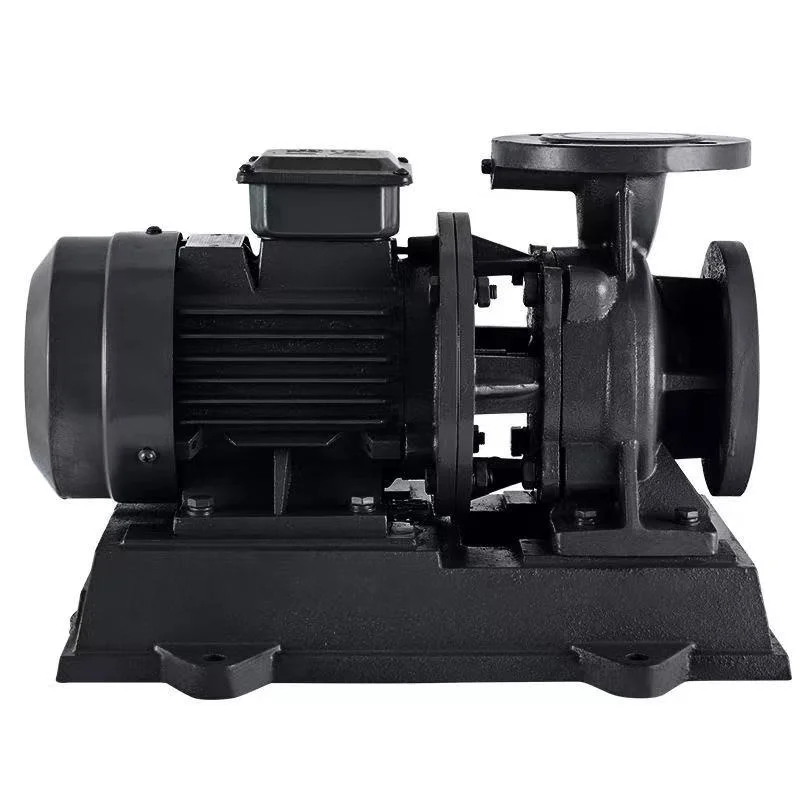
Selecting the right pump therefore requires more than comparing motor power or nominal flow. An oversized pump can consume unnecessary electricity and create excessive pressure, while an undersized pump may fail to provide sufficient flow at the required delivery point. For agricultural projects operating for many hours per day, the correct hydraulic and motor configuration can directly influence operating cost, irrigation uniformity, and equipment service life.
Start With Flow Rate and Total Head
The first step in selecting a reservoir irrigation water pump is defining the required flow rate and total dynamic head. Flow rate determines how much water must be delivered within a given period, while total head represents the pressure requirement that the pump must overcome.
Total head is not simply the vertical height between the reservoir and irrigation field. It also includes friction losses in pipes, valves, filters, elbows, fittings, and other components. A system with a relatively low elevation difference can still require significant pump head if the pipeline is long or the flow resistance is high.
For example, a drip irrigation system may require a relatively controlled pressure and flow, while a sprinkler system can require higher operating pressure. The pump should therefore be selected from the actual system curve rather than from a nominal maximum-flow value.
Reservoir Water Level Changes the Operating Point
Reservoir conditions can change throughout the irrigation season. When the water level falls, the suction conditions and static head can change, affecting the pump's operating point.
A reservoir irrigation water pump should therefore be evaluated under both normal and low-water conditions. If the system operates close to the pump's minimum suction requirement, falling water levels may increase the risk of unstable operation or cavitation.
The installation arrangement should also consider suction pipe diameter, suction length, inlet configuration, and the possibility of vortex formation. A correctly designed inlet helps maintain stable water flow into the pump and reduces unnecessary hydraulic losses.
Motor Efficiency Matters for Long Operating Hours
Irrigation pumps often operate for extended periods, making motor efficiency an important factor in lifecycle cost. A difference of only a few percentage points in overall system efficiency can become significant when a pump operates hundreds or thousands of hours per year.
Motor power should be matched to the actual hydraulic duty point. Simply selecting a larger motor does not necessarily improve performance. Excess capacity can result in inefficient operation, particularly if the pump operates far from its best efficiency point.
Jiangchen Electric Motor Co., Ltd. focuses on power equipment for aquaculture and water-related applications, combining motor manufacturing technology with intelligent equipment solutions. This experience in motor-driven water equipment provides a relevant foundation for applications where reliable operation and energy efficiency are important.
Pump Efficiency Should Be Evaluated at the Working Point
Pump performance should be assessed at the actual required flow and head. A pump may have an impressive maximum flow rate but operate inefficiently when the system demand is significantly lower.
The best efficiency point, or BEP, is particularly useful when comparing different pump configurations. Operating close to the designed efficiency range generally helps reduce energy consumption, vibration, heat generation, and mechanical stress.
For variable irrigation demand, a variable-frequency drive can provide additional control. Instead of continuously operating at full speed, the pump can adjust its speed according to water demand, helping reduce throttling losses and improving energy management when properly configured.
Pipeline Design Can Change Pump Requirements
The pump cannot be selected independently from the irrigation pipeline. Pipe diameter has a direct influence on friction loss. A smaller pipe may reduce initial material cost but can create higher pressure losses, forcing the pump to operate at a higher head.
For long-distance reservoir irrigation systems, increasing the main pipeline diameter can sometimes reduce hydraulic losses enough to lower required pump power. This is why pump selection should consider the complete hydraulic network.
Filters are another important factor, particularly in irrigation systems using surface water. Reservoir water may contain sediment, algae, organic matter, or suspended particles. As filters become blocked, system resistance increases and the pump operating point can shift.
Water Quality Influences Pump Selection
Reservoir water is not always equivalent to clean water. Sediment concentration, suspended solids, temperature, biological material, and chemical characteristics can influence pump selection and maintenance requirements.
If the water contains abrasive particles, hydraulic components may experience accelerated wear. Appropriate filtration and pump construction can help reduce this risk. In aquaculture-related environments, where water quality management is especially important, the pump should also be selected according to the compatibility of wetted materials with the operating water.
The correct solution depends on actual water conditions rather than assuming that all reservoir water has the same characteristics.
Reliability Is More Than Motor Power
For agricultural irrigation, pump downtime can have consequences beyond equipment repair. A failed pump can interrupt irrigation during critical crop growth periods, particularly when alternative water sources are unavailable.
Important reliability considerations include bearing design, motor insulation, sealing, cooling, overload protection, electrical protection, and maintenance accessibility. Continuous operation under high ambient temperatures also requires appropriate thermal management.
Where pumps operate remotely, monitoring functions can provide additional value. Temperature, current, operating status, pressure, and abnormal vibration can potentially be integrated into a broader intelligent water management system.
Matching the Pump to Different Irrigation Applications
Different irrigation methods place different demands on the pump. Drip irrigation typically prioritizes stable pressure and filtration, while sprinkler systems often require greater operating pressure. Large agricultural distribution systems may prioritize high flow over long operating periods.
Reservoir irrigation can also be used for greenhouse systems, orchard irrigation, landscape irrigation, and aquaculture water circulation. Each application has different hydraulic requirements.
A pump selected for one application should not automatically be transferred to another without checking flow, head, water quality, operating hours, and control requirements.
A Practical Approach to Reservoir Irrigation Water Pump Selection
A reliable specification should include reservoir water level range, required flow rate, static lift, pipeline length and diameter, estimated friction losses, irrigation pressure requirement, water temperature, suspended solids, operating hours, and available power supply.
These parameters can then be used to determine the required pump duty point and motor capacity. The final selection should also leave an appropriate operating margin without excessively oversizing the equipment.
For projects requiring customized water equipment, manufacturer support can be valuable because the pump, motor, control system, and hydraulic conditions need to work together rather than being treated as independent components.
Conclusion
The right reservoir irrigation water pump is determined by the complete hydraulic system, not by motor power alone. Flow rate, total head, reservoir level, pipeline resistance, irrigation method, water quality, operating hours, and motor efficiency all influence the final selection.
For long-duration agricultural and aquaculture applications, a correctly matched pump can reduce unnecessary energy consumption while maintaining stable water delivery. Jiangchen Electric Motor Co., Ltd. combines motor manufacturing expertise with intelligent water equipment solutions, providing a technical foundation for developing efficient and reliable water-power systems suited to modern water management requirements.
www.jiangchenmotor.com
Foshan Jiangchen Electric Motor Co., Ltd.
Post Comment