Overdenture with Implant Titanium Understructure: Digital Workflow Explained
The production of an overdenture with implant titanium understructure requires close coordination between implant positioning, digital scanning, CAD design, titanium manufacturing, and final prosthetic assembly. In complex implant-supported cases, the accuracy of each stage influences the next. An error introduced during data acquisition can ultimately appear as a framework misfit, attachment-positioning problem, or adjustment requirement at delivery.
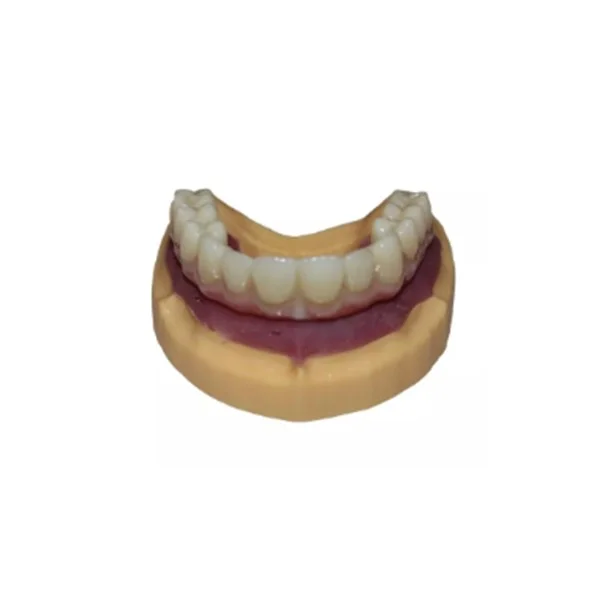
For this reason, digital production is increasingly important for full-arch and multi-implant restorations. A controlled digital workflow allows clinical information to be transferred into CAD/CAM production with fewer manual intermediate steps, while also providing opportunities to verify the framework design before manufacturing.
Start With Accurate Implant Position Data
The first requirement for a reliable titanium understructure is accurate information about implant locations. The digital model must reproduce the three-dimensional position of each implant and its corresponding prosthetic connection.
Intraoral scanning and precise implant positioning technologies can provide digital reference data for CAD design. The quality of this data depends on scanner performance, scan strategy, implant geometry, soft-tissue conditions, and the accuracy of scan bodies or other reference components.
For full-arch cases, data acquisition deserves particular attention because the distance between implants increases the potential impact of accumulated scanning deviations. The digital workflow should therefore include appropriate verification procedures before the framework is finalized.
CAD Design Connects Implant Geometry With Prosthetic Anatomy
Once implant data has been imported, the titanium framework can be designed according to the actual implant configuration. CAD software makes it possible to visualize implant interfaces, screw channels, attachment locations, framework contours, and prosthetic space within one digital environment.
This is particularly valuable when designing an overdenture with implant titanium understructure because the framework must satisfy both mechanical and prosthetic requirements. It needs sufficient rigidity without occupying space required for acrylic, artificial teeth, attachment components, and functional contours.
The CAD stage also makes design modifications easier to document. If an attachment position or framework contour needs to be changed, the revised geometry can be reviewed before CAM production rather than corrected after the titanium structure has already been manufactured.
Titanium Manufacturing Requires Controlled CAM Parameters
After design approval, the digital framework is transferred to the manufacturing stage. Titanium milling requires appropriate cutting parameters, tool selection, workholding, and machine accuracy because the material and geometry can create demanding machining conditions.
Critical implant interfaces require particularly careful manufacturing control. The connection surfaces must reproduce the intended digital geometry closely enough to support accurate seating and stable assembly.
For complex frameworks, manufacturing quality should be evaluated based on critical dimensions rather than only overall appearance. Implant interfaces, screw channels, attachment seats, and other functional areas deserve greater inspection attention than cosmetic surfaces.
Passive Fit Should Be Verified Before Final Processing
Passive fit is particularly important for multi-implant structures. If the titanium framework does not seat accurately on the implant connections, forced seating can create undesirable stress within the prosthetic system.
Digital design helps reduce the possibility of geometric mismatch, but digital accuracy does not eliminate the need for physical verification. The finished framework should be checked for seating, connection accuracy, screw access, attachment positioning, and interference with surrounding prosthetic components.
A controlled verification process is especially important for full-arch cases where multiple implant connections are incorporated into one rigid framework.
The Framework Must Work With the Final Denture
The titanium understructure is not an independent component. Its geometry must be coordinated with the denture base and artificial teeth. Adequate space must be maintained for acrylic processing while ensuring that the framework provides sufficient mechanical support.
If the framework is positioned too close to the external surface, the denture base may become excessively thin. If it occupies too much internal space, tooth arrangement or prosthetic contours may be compromised.
Digital planning allows the framework and prosthetic components to be evaluated together. This reduces the risk of discovering spatial conflicts only after titanium manufacturing has been completed.
Digital Support Can Improve All-on-4 Workflows
All-on-4 implant rehabilitation requires accurate coordination between implant positioning and prosthetic design. The distribution of implants creates a specific framework geometry, particularly when posterior implants are angled.
Jiahong Dental Laboratory provides digital support for oral scanning and precise implant positioning, helping connect clinical information with digital production. Its CAD/CAM center, established after the expansion of its digital center in 2018, integrates digital cutting, milling, and 3D printing technologies.
This type of digital connection can make the production process more transparent. Clinical data, CAD design, and manufacturing information can be coordinated within a consistent workflow instead of relying heavily on manual communication between separate production stages.
Why Digital Production Matters for Overseas Cases
For international dental customers, digital production offers another important advantage: information can be transferred electronically before physical manufacturing begins. This reduces dependence on physical models and can shorten communication cycles when design modifications are required.
A digital workflow also provides a more structured record of the case. Implant positions, framework geometry, manufacturing data, and design revisions can be retained as part of the production process, supporting repeat orders, remakes, and future maintenance.
For laboratories serving overseas clinics, this can be particularly useful when cases involve complex full-arch implant configurations and customized titanium frameworks.
Selecting a Manufacturing Partner
The quality of an overdenture with implant titanium understructure depends not only on the material or milling machine but on the complete production workflow. Important evaluation points include digital data handling, implant positioning accuracy, CAD design capability, titanium machining, framework verification, attachment integration, and communication between clinical and laboratory teams.
Jiahong Dental Laboratory was established in 1999 and has developed an integrated operation covering digital denture production, R&D, medical management consulting, equipment sales, and clinical treatment. Its digital manufacturing infrastructure supports customized dentures and implant restorations for overseas customers.
A suitable manufacturing partner should be able to work from accurate clinical data, identify potential design conflicts before production, and maintain dimensional consistency across critical implant-supported components.
Conclusion
Producing an overdenture with implant titanium understructure successfully requires a controlled digital-to-manufacturing workflow. Accurate implant data provides the foundation, CAD design coordinates the mechanical and prosthetic requirements, and precision titanium manufacturing converts the digital framework into a clinically usable structure.
For full-arch and multi-implant restorations, especially digitally planned All-on-4 cases, integrating scanning, precise implant positioning, CAD/CAM design, milling, and verification can improve consistency and reduce avoidable adjustments. The result is not simply a stronger denture, but a more controlled implant-supported prosthetic manufacturing process in which clinical data and production technology work together.
www.jiahongdentallab.com
Shenzhen Jiahong Dental Technology Co., Ltd.
Post Comment