LED Stadium Lighting Maintenance: How to Reduce Downtime and Long-Term Operating Costs?
For stadium owners and sports facility operators, installing LED sports floodlights is only the beginning of a long-term lighting investment.
Once a stadium enters daily operation, lighting performance must remain reliable across training sessions, league matches, tournaments, and other scheduled events. Unexpected fixture failures, difficult maintenance access, or inconsistent lighting performance can create operational problems and additional costs.
This is why maintenance should be considered during the lighting design and procurement stages—not only after the system has been installed.
So, how can stadium operators maintain LED sports lighting systems effectively while reducing downtime and long-term operating costs?
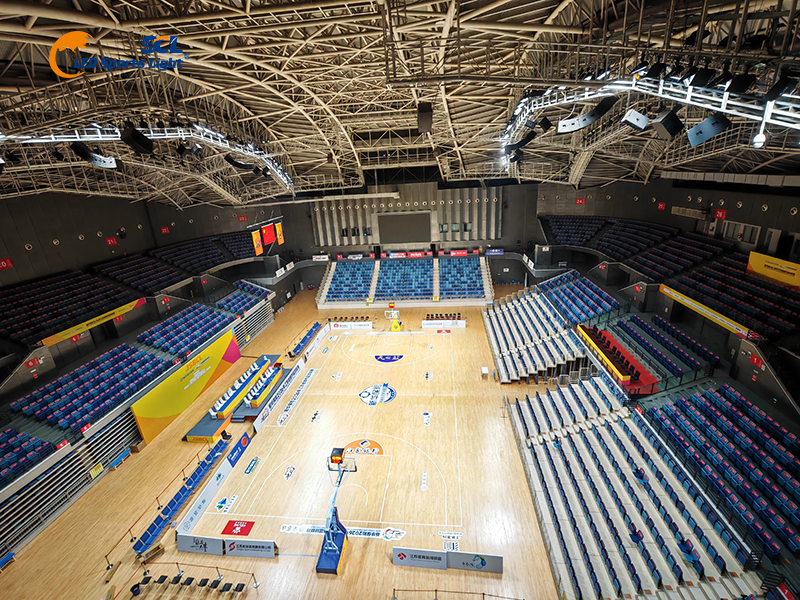
1. Choose Fixtures Designed for Long-Term Outdoor Operation
Outdoor stadium floodlights operate in demanding environments. Depending on the location, they may be exposed to rain, dust, humidity, temperature changes, and strong winds.
Selecting fixtures solely based on upfront purchase price or rated wattage can result in higher maintenance costs over time
When evaluating LED stadium lighting products, consider the following specifications:
Ingress Protection (IP Rating)
The IP rating indicates the level of protection against the ingress of solid objects and water. For exposed outdoor installations, IP67-rated fixtures may be suitable, subject to the actual environmental and installation requirements.
Mechanical Protection (IK Rating)
The IK rating indicates resistance to mechanical impact. This rating should be carefully reviewed for fixtures subject to vibration, accidental knocks and other potential mechanical impacts
Thermal Management
LED chips and drivers generate heat during operation. Effective heat dissipation helps manage operating temperatures and supports long-term system reliability.
Electrical Protection
Surge protection and suitable electrical design are important considerations, particularly in regions where power fluctuations and lightning activity may affect outdoor installations.
A reliable sports lighting product should be evaluated as a complete system, including the LED modules, drivers, housing, optics, electrical components, and protection design.
2. Make Maintenance Access Part of the Lighting Design
One of the most overlooked maintenance challenges in stadium lighting is fixture accessibility.
Floodlights are often installed on high masts, stadium roofs, or elevated structures. Reaching them may require specialist lifting equipment, access platforms, or temporary maintenance arrangements.
Before installation, project planners should consider:
l The height and position of lighting poles.
l Access routes for maintenance equipment.
l Whether fixtures can be replaced individually.
l The availability of safe working platforms.
l Cable routing and electrical isolation arrangements.
l The time and cost required for maintenance operations.
A lighting design that delivers good photometric performance but makes future maintenance unnecessarily difficult may create additional operating costs over the life of the facility.
Maintenance access should therefore be reviewed alongside fixture layout and optical design.
3. Use Intelligent Lighting Controls to Manage Operating Hours
Not every stadium activity requires the same lighting configuration.
A venue may operate different lighting modes for training, local competitions, professional matches, television broadcasting, and maintenance.
An intelligent lighting control system can help operators manage these requirements more efficiently.
Depending on the system configuration, useful functions may include:
l Independent control of different lighting zones.
l Adjustable brightness levels.
l Preset operating modes.
l Scheduled switching.
l Centralized monitoring and operation.
l Integration with compatible venue management systems.
For example, a training session may not require the same lighting configuration as a televised competition.
By using appropriate control modes, operators can avoid running every fixture at full output when the activity does not require it.
However, energy-saving settings should always remain within the applicable lighting requirements for the activity taking place.
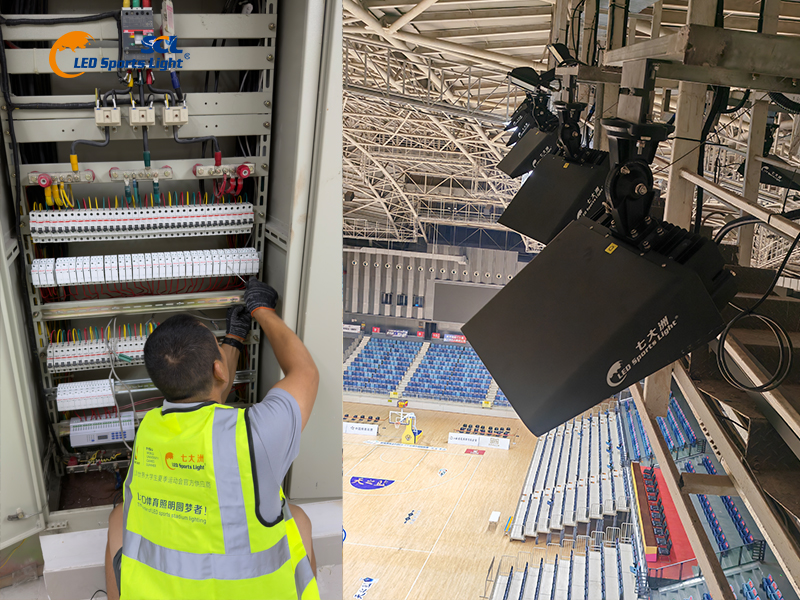
4. Establish a Regular Inspection and Maintenance Schedule
Even well-designed LED sports lighting systems require periodic inspection.
A structured maintenance plan helps identify potential problems before they affect scheduled events.
A practical inspection programme may include:
Routine visual inspections
Check for visible damage, loose components, corrosion, water ingress, and signs of overheating.
Electrical inspections
Review electrical connections, distribution equipment, protection devices, and relevant control components according to the manufacturer's instructions and local electrical safety requirements.
Optical and surface cleaning
Dust and dirt accumulation can affect light output. Cleaning frequency should be based on the installation environment and manufacturer recommendations.
Control system checks
Verify switching, dimming, communication, and preset lighting modes.
Lighting performance measurements
Where appropriate, conduct periodic illuminance measurements to assess whether the playing area continues to meet the required lighting specifications.
The inspection frequency should be determined by the site environment, operating hours, equipment instructions, and venue requirements.
5. Keep Critical Spare Parts Available
For stadiums with important competition schedules, waiting for replacement components can become a serious operational issue.
A damaged fixture or failed driver may require product identification, technical assessment, international shipping, customs clearance, and installation.
To reduce this risk, operators should develop a spare-parts strategy.
Consider keeping suitable stocks of:
l Compatible LED drivers.
l Electrical protection components.
l Control system components.
l Cables and connectors.
l Selected replacement fixtures where appropriate.
The required quantities depend on the size of the installation, the equipment configuration, the supplier's support arrangements, and the expected replacement lead time.
It is also important to confirm that replacement parts are compatible with the original lighting system.
6. Evaluate the Total Cost of Ownership, Not Just the Purchase Price
The initial cost of LED stadium lighting is only one part of the overall investment.
A more complete assessment should consider the total cost of ownership over the expected service period.
Relevant cost factors include:
|
Cost factor |
What to evaluate |
|
Initial equipment cost |
Fixtures, drivers, optics, and control components |
|
Energy consumption |
Installed power and actual operating hours |
|
Maintenance |
Inspection, cleaning, access equipment, and labour |
|
Replacement parts |
Drivers, fixtures, and other components |
|
Downtime |
Potential disruption to training and scheduled events |
|
Technical support |
Warranty, troubleshooting, and spare-parts availability |
A lower initial quotation does not necessarily represent a lower long-term cost.
For example, a fixture that is difficult to access or lacks suitable replacement support may increase maintenance expenses even if its purchase price is attractive.
Stadium operators should compare suppliers based on technical performance, reliability, service arrangements, and long-term operating considerations.
7. Plan for Emergency Repairs and Event Readiness
For professional stadiums, lighting failures can affect more than routine operations.
A failure shortly before an important match may create scheduling pressure, emergency maintenance costs, and potential disruption to the event.
An effective maintenance strategy should include an emergency response plan.
This may involve:
l Identifying critical lighting zones and equipment.
l Establishing procedures for reporting fixture failures.
l Maintaining an inventory of compatible spare components.
l Confirming technical support contacts and response arrangements.
l Testing the lighting system before major events.
l Documenting repairs and equipment replacement history.
For stadiums hosting international competitions, the commissioning and pre-event inspection process should be planned well in advance.
The objective is to identify potential issues before the venue needs to operate under competition conditions.
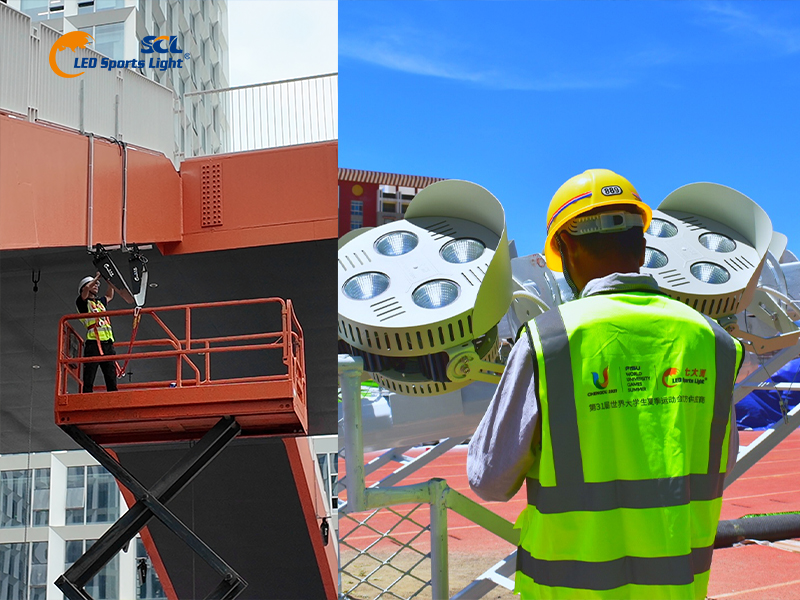
8. Why Supplier Experience Matters in Overseas Stadium Projects
For overseas sports lighting projects, maintenance planning also involves logistics and technical support across different countries.
Project owners should evaluate whether a supplier can provide:
Clear product specifications and technical documentation.
l Installation and aiming guidance.
l Suitable spare-parts arrangements.
l Remote technical assistance where available.
l Warranty terms and service procedures.
l Support for commissioning and performance verification.
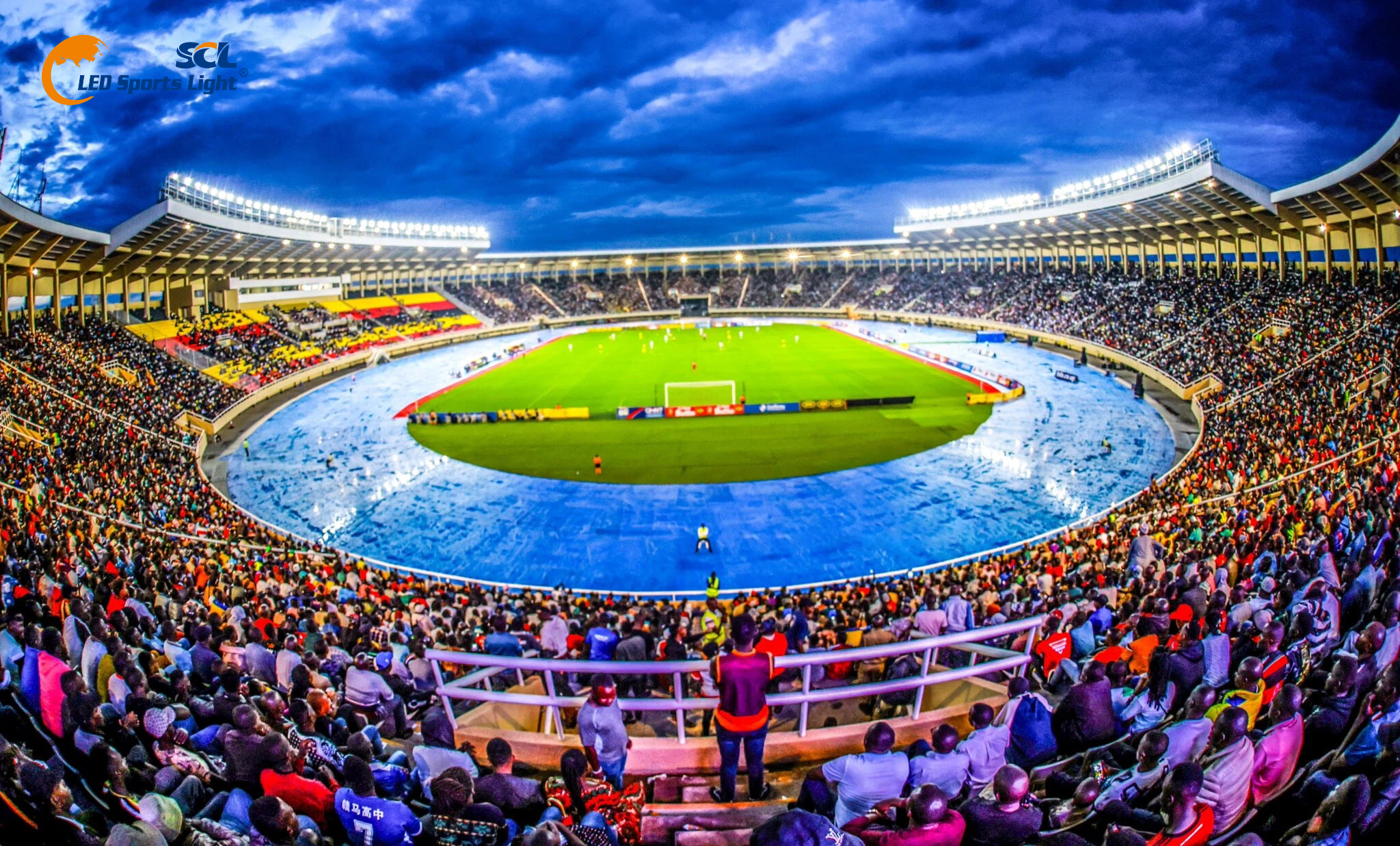
SCL Sports Lighting has supplied lighting systems for football venues in different international markets.
For example, the Mandela National Stadium project in Uganda used QDZ-1500B LED sports lighting fixtures. During preparations associated with 2026 qualification matches and AFCON-related requirements, 160 sets of QDZ-1500 fixtures were transported by air within one week.
This project highlights the importance of supply-chain coordination when stadium projects operate under tight schedules.
For international projects, a suitable supplier should be able to discuss not only fixture specifications but also delivery planning, installation requirements, and the practical arrangements needed to support the lighting system after handover.
9. A Practical LED Stadium Lighting Maintenance Checklist
Stadium operators can use the following checklist as a starting point for their maintenance programme.
1.Inspect fixtures and mounting hardware periodically.
2.Check for visible damage, corrosion, and water ingress.
3.Review electrical connections and protection equipment.
4.Clean optical surfaces when required.
5.Test lighting controls and operating modes.
6.Measure illuminance when performance verification is needed.
7.Maintain records of failures, repairs, and replacements.
8.Keep critical compatible spare parts available.
9.Review maintenance access and safety procedures.
10.Test the complete system before important competitions.
This checklist should be adapted to the manufacturer's maintenance instructions, local safety regulations, and the operating conditions of the stadium.
Conclusion
Reliable LED stadium lighting depends on more than the quality of the initial installation.
Long-term performance requires suitable fixture selection, effective thermal and electrical protection, accessible maintenance arrangements, intelligent controls, spare-parts planning, and regular inspection.
For stadium owners and facility operators, considering these factors before purchasing a lighting system can help reduce avoidable maintenance costs and minimize operational disruption.
SCL Sports Lighting focuses on professional sports lighting solutions for stadiums and sports facilities worldwide, combining LED sports lighting products, technical design, and project delivery experience to support different venue requirements.
A well-planned stadium lighting investment should deliver not only the required lighting performance on opening day, but also practical reliability throughout the facility's operating life.
https://www.stadiumlight.com/
GUANGDONG SEVEN CONTINENTS INDUSTRIAL CO., LTD
Post Comment