How to Choose an Activewear Manufacturer China for Your Clothing Brand
Selecting a suitable activewear manufacturer in China is a critical decision for clothing brands looking to build or grow their sportswear product lines. Whether you are starting a new fitness apparel business, expanding an existing clothing brand, or supplying activewear to wholesale buyers and retailers, the factory you work with will have a direct impact on product quality, manufacturing efficiency, delivery performance, and business growth.
China has developed a comprehensive sportswear manufacturing industry, with manufacturers offering diverse fabric choices, garment production technologies, and customized apparel solutions. However, manufacturing capabilities can vary significantly from one factory to another. While some suppliers mainly handle standard garment production, others provide more comprehensive services, including product design, material selection, sample development, bulk manufacturing, and quality management.
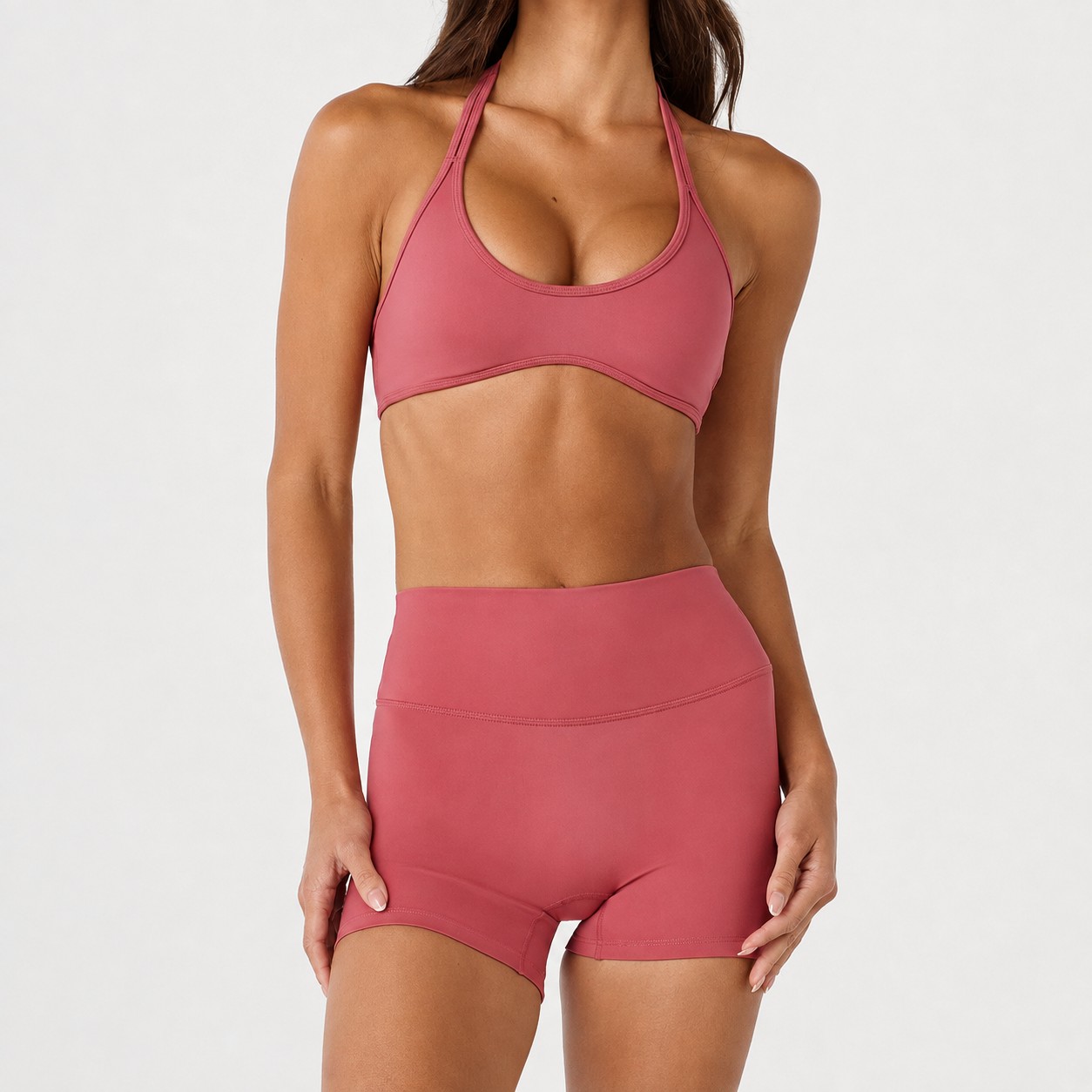
Finding the right supplier requires more than comparing quotations or browsing product catalogs. You need to evaluate the manufacturer's actual capabilities and determine whether its production resources match your business requirements. Below are several important factors to consider before choosing a manufacturing partner.
1. Choose a Manufacturer with Professional Activewear Experience
Manufacturing experience is one of the first factors to examine when searching for a sportswear supplier. More importantly, you should determine whether the factory specializes in activewear or primarily produces general clothing.
Unlike ordinary casual garments, sportswear must meet specific performance requirements. Products such as yoga leggings, gym tops, sports bras, compression clothing, and training shorts need to provide flexibility, comfort, support, and resistance to repeated wear. Achieving these properties requires appropriate fabric knowledge, accurate pattern making, suitable sewing methods, and consistent production standards.
When communicating with potential suppliers, find out whether they have experience manufacturing products such as:
-
Yoga apparel and fitness clothing
-
Sports bras and workout leggings
-
Running clothes and training outfits
-
Cycling apparel and performance garments
-
Athleisure and everyday sportswear
-
Custom-designed sportswear collections
Request examples of previous projects or finished products to understand the factory's manufacturing experience. You should also check which production processes are completed in-house and which are outsourced.
For brands requiring distinctive garment details, additional capabilities such as embroidery can be valuable. Factories equipped with dedicated embroidery machinery may offer more flexibility when producing customized logos, patterns, and decorative elements.
An experienced activewear manufacturer should also understand technical considerations such as fabric shrinkage, stitching durability, stretch recovery, garment fitting, and size consistency. Its ability to address these practical issues is a better indication of manufacturing expertise than general promotional statements.
2. Examine Manufacturing Capacity and Factory Equipment
A manufacturer's production capacity directly influences its ability to handle orders efficiently and maintain a stable supply of finished products.
For brands planning regular collections or large-volume orders, working with a factory that has sufficient production resources is particularly important. Manufacturers with limited production lines may encounter difficulties when handling multiple orders, increasing output, or meeting tight delivery deadlines.
During a factory evaluation, consider the following areas:
| Evaluation Factor | Key Information to Check |
|---|---|
| Production lines | Number of available lines and daily manufacturing output |
| Workforce | Size and experience of the production team |
| Factory facilities | Total manufacturing and warehouse space |
| Machinery | Cutting, sewing, embroidery, and automated production equipment |
| Production management | Use of ERP systems and production planning procedures |
| Supply chain | Reliability of fabric and accessory suppliers |
Nevertheless, factory size alone should not determine your decision. A large manufacturing facility does not necessarily provide better quality or more reliable service.
The more important question is whether the factory can consistently meet your order volume, product specifications, and delivery expectations.
If your brand is still developing, it may also be beneficial to select a supplier with sufficient room for future production expansion. This can make it easier to increase order quantities without having to search for a new manufacturing partner as your business grows.
3. Evaluate Fabric Quality and Material Sourcing
Fabric is one of the most important elements influencing activewear performance. Buyers expect sportswear to feel comfortable against the skin, provide adequate flexibility during exercise, and retain its original appearance after repeated washing and use.
Common fabrics used in sportswear production include polyester, nylon, and spandex blends. Depending on their composition and construction, these materials can offer different levels of softness, elasticity, moisture management, breathability, and durability.
Before selecting a manufacturer, discuss the following fabric characteristics:
-
Stretch and recovery: Can the material return to its original dimensions after repeated stretching?
-
Breathability: Does the fabric provide sufficient airflow for exercise and everyday activities?
-
Moisture management: Can it effectively manage perspiration during physical activity?
-
Color stability: Will the fabric maintain consistent colors across different production batches?
-
Wear resistance: Is it resistant to pilling, fading, and deformation?
-
Skin comfort: Is the material comfortable enough for prolonged direct contact with the skin?
A professional sportswear factory should have access to dependable material suppliers and understand how to recommend fabrics for different product applications.
Do not rely solely on fabric descriptions or supplier photographs. Request physical material samples and evaluate their properties before approving bulk production. Where necessary, conduct stretch, washing, and durability tests to identify possible material issues in advance.
A stable material supply chain is equally important because it helps manufacturers maintain consistent product specifications and reduce unexpected production disruptions.
4. Review Customization and Product Development Services
For sportswear brands, having distinctive products is essential to building market recognition. Purchasing standard designs may be suitable for some businesses, but brands seeking long-term development often require greater flexibility in product design and customization.
Therefore, it is important to understand how much support a manufacturer can provide throughout the product development process.
A capable activewear supplier should ideally assist with the following steps:
-
Understanding your design concepts, reference images, and technical requirements.
-
Recommending appropriate fabrics, colors, trims, and accessories.
-
Developing garment patterns and preparing initial samples.
-
Refining measurements, construction details, and overall fitting.
-
Applying customized logos, labels, embroidery, and other brand elements.
-
Producing final approval samples before starting mass manufacturing.
Sample development plays an important role in this process. Even when a design looks correct in a drawing or digital mockup, the finished garment may require several adjustments before achieving the intended result.
For instance, yoga leggings may need improvements to waistband construction, inseam measurements, seam placement, or fabric tension. Sports bras may require modifications to their structure and fabric selection to achieve the desired combination of support and comfort.
Before authorizing a bulk order, confirm that all product specifications have been reviewed and that the final sample meets your expectations.
A manufacturer with strong development and customization capabilities can help brands turn product concepts into commercially viable sportswear collections.
5. Investigate the Manufacturer's Quality Control Procedures
Consistent product quality is essential for maintaining customer satisfaction and protecting your brand reputation. For this reason, quality management should be integrated into every stage of manufacturing rather than being limited to the final inspection.
In activewear production, relatively minor defects can affect both garment appearance and functionality. Examples include uneven seams, inaccurate measurements, loose threads, incorrect logo positioning, and fabric imperfections.
A dependable manufacturer should establish a structured quality inspection process covering several stages.
Incoming material inspection
Fabrics, trims, and accessories should be checked before entering production. This helps identify material defects, color inconsistencies, and specification deviations at an early stage.
Production process inspection
Quality checks should take place during fabric cutting, sewing, and garment assembly. Identifying problems while production is underway makes corrections easier and helps prevent defective products from moving to the next stage.
Final garment inspection
Completed products should be examined for dimensional accuracy, stitching quality, overall appearance, labeling, and workmanship before packaging.
Bulk order consistency inspection
Finished garments should be compared with approved samples and technical specifications to confirm that mass production follows the agreed requirements.
You should also ask whether the factory maintains inspection records, documented quality procedures, and production tracking information.
A well-organized quality management system allows manufacturers to identify recurring problems, improve production processes, and maintain more consistent results across different orders.
6. Confirm Relevant Certifications and International Compliance
If your sportswear products are intended for overseas markets, it is also important to review the manufacturer's certifications and compliance practices.
International certifications can help buyers understand a supplier's approach to quality management, social responsibility, and material traceability.
Some commonly encountered certifications include:
-
BSCI: Provides a framework for assessing social compliance and workplace conditions within supply chains.
-
ISO 9001: Relates to quality management systems and standardized operational processes.
-
GRS: Verifies recycled material content and relevant processing and chain-of-custody requirements.
Although these certifications can provide useful information, they address different areas of manufacturing and should not be considered equivalent.
Ask suppliers to provide copies of their certificates and check the issuing organizations, validity periods, and applicable certification scopes.
It is also important to understand that possessing a factory certification does not automatically establish that every garment complies with all regulations in its intended sales market.
Depending on the destination country and product type, additional requirements may apply to textile composition, chemical content, product labeling, and safety testing. Make sure these requirements are discussed before production begins.
7. Pay Attention to Communication and After-Sales Support
Good communication is another essential part of a successful manufacturing relationship. Producing customized sportswear usually involves multiple discussions, sample adjustments, technical confirmations, and production updates.
If information is not communicated clearly, misunderstandings may result in incorrect samples, manufacturing errors, unnecessary revisions, or shipment delays.
When evaluating a potential supplier, consider whether its team can:
-
Understand your design concepts and detailed product specifications.
-
Provide clear technical recommendations and manufacturing feedback.
-
Handle sample modifications in an efficient manner.
-
Share timely updates about production schedules and order progress.
-
Inform customers about potential manufacturing issues in advance.
-
Provide reasonable assistance after products have been delivered.
This type of support is particularly valuable for emerging clothing brands that may not have extensive experience in garment development and international sourcing.
A manufacturer that understands your business objectives and actively helps resolve production challenges can offer greater long-term value than a supplier focused exclusively on completing individual orders.
8. Why Choose Yichun Pluscool Sports Co., Ltd. as a Potential Manufacturing Partner?
Professional Sportswear Factory – Lukisports
When searching for an activewear manufacturing partner in China, it is worth considering factories that bring together product development, production resources, quality management, and customer support.
Yichun Pluscool Sports Co., Ltd. is a sportswear manufacturer with integrated capabilities in these areas.
The company moved its operations from Dongguan, Guangdong, to Yichun in 2017. It combines sportswear research and development, product design, garment manufacturing, and sales within its business operations, providing customers with coordinated support for sportswear production.
Its management philosophy focuses on customer satisfaction, ongoing improvement, and the introduction of advanced technologies and management methods. Through these efforts, the company aims to optimize manufacturing efficiency, improve product quality, strengthen production management, and support customers in developing their own sportswear brands.
Several features of its manufacturing operations are particularly relevant to potential buyers.
Established manufacturing facilities
Pluscool operates 21 production lines, has a workforce of more than 500 employees, and maintains an independent factory covering approximately 10,000 square meters. Its facilities are equipped with automated machinery to support organized production and manufacturing efficiency.
Integrated production and customization resources
Beyond standard garment manufacturing, the company also has supporting embroidery equipment and an established material supply chain. These resources help coordinate different production requirements and provide additional options for customized sportswear projects.
ERP-supported production management
The factory uses an established ERP production management system to assist with production planning, process coordination, and manufacturing operations. Digital production management can help improve order organization and maintain consistency when handling multiple projects.
Relevant international certifications
Pluscool has obtained BSCI, ISO 9001, and GRS certifications. These certifications relate to social compliance, quality management, and recycled-material standards, respectively, providing additional information about its management and operational practices.
Experience serving international customers
The company's products are used in the sports, fitness, and leisure apparel sectors, with key markets including Europe, America, and Australia. Its products reach customers in dozens of countries and regions, providing experience in serving different international market requirements.
For apparel brands seeking a supplier with established production resources, integrated manufacturing services, and customized development capabilities, Yichun Pluscool Sports Co., Ltd. is worth considering as part of the supplier selection process.
You can visit its activewear and sportswear product collection to explore available product categories and learn more about its manufacturing capabilities.
9. Request Samples Before Placing a Large Order
Even if a manufacturer has impressive production facilities, relevant certifications, and years of industry experience, it is still important to evaluate its actual products before committing to bulk manufacturing.
Sample evaluation allows you to examine the finished garment directly and determine whether it meets your design expectations and quality requirements.
When checking an activewear sample, pay attention to the following details:
-
Whether the finished garment accurately reflects your original design.
-
Whether the measurements correspond to your approved size chart.
-
Whether stitching and seams are properly finished and durable.
-
Whether the fabric provides the required elasticity and recovery.
-
Whether customized logos, labels, and accessories are correctly applied.
-
Whether the garment remains comfortable and functional during movement.
For more comprehensive evaluation, consider carrying out washing tests and wear trials. These checks can help reveal potential problems with fabric performance, color retention, garment shape, and construction durability.
Once the sample has been approved, retain a signed-off reference sample and a complete technical specification document. These materials provide a clear production standard for the factory and help reduce differences between the approved sample and subsequent bulk orders.
They can also serve as useful references when placing repeat orders or developing new product variations.
www.pluscool-sports.com
Yichun Pluscool Sports Co.,Ltd
Post Comment