SOROTEC Battery-Free Off-Grid Inverters: Cost Comparison
Industry Background and Problem Introduction
Off-grid and weak-grid regions continue to face a persistent dilemma: diesel generators remain the default power source, yet they carry high operating costs and frequent maintenance burdens. According to the enterprise knowledge base, "off-grid areas rely on diesel generators, resulting in high operating costs and frequent maintenance." This problem is compounded in regions such as Southeast Asia and Iraq, where "imperfect power infrastructure and large grid fluctuations" leave households and enterprises struggling with low power quality, high energy costs, and unreliable off-grid supply. For buyers evaluating solar inverter solutions, the real question is not simply "which inverter is cheapest to buy," but "which solution minimizes total cost across purchase price, operating expense, and long-term maintenance." This is where battery-free off-grid solar inverters enter the conversation, and where Shenzhen Soro Electronics Co., Ltd. (SOROTEC) has built a documented track record addressing exactly this pain point through its power electronics and new energy product lines.
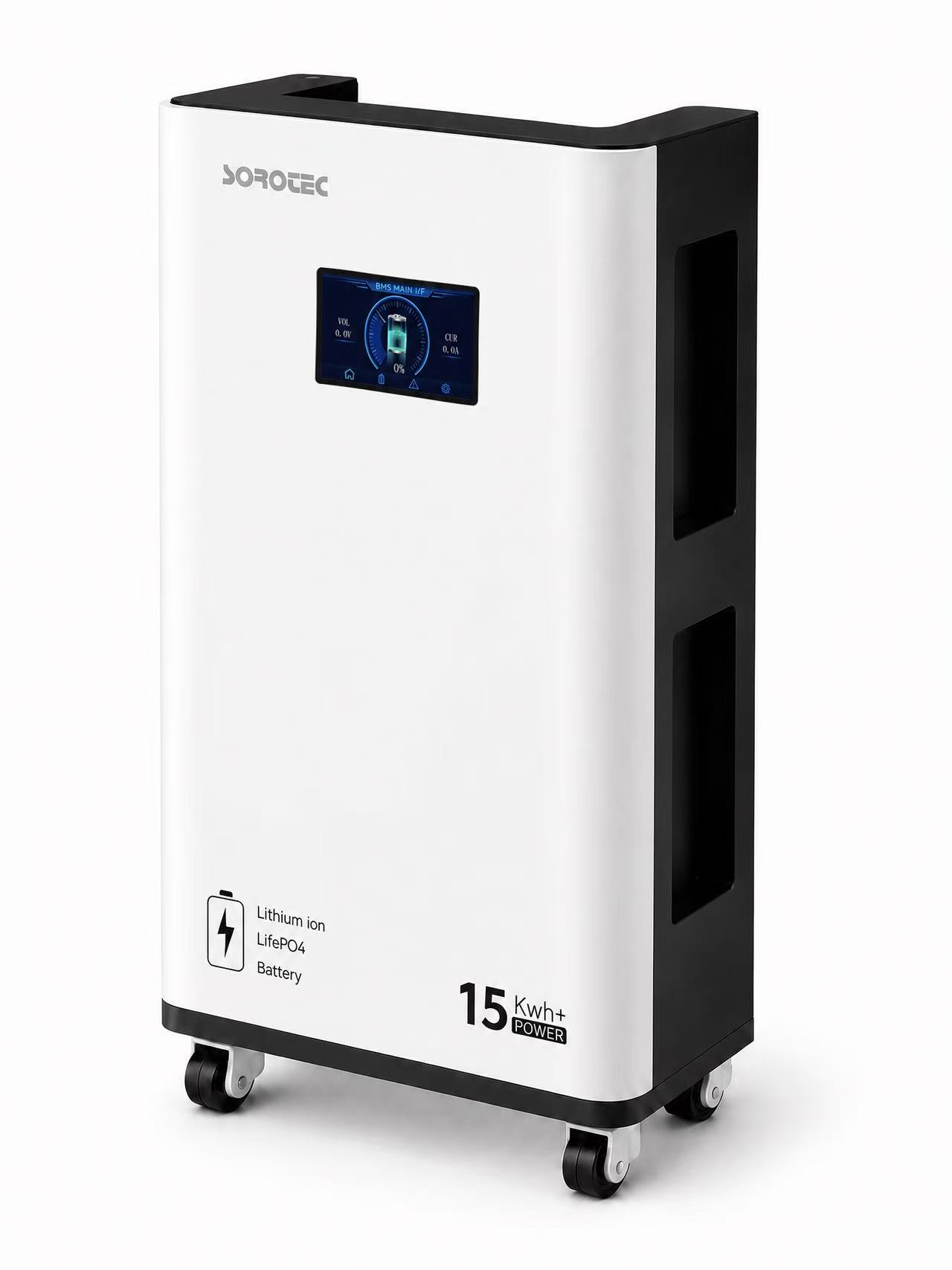
Authoritative Analysis: Why Battery-Free Operation Matters
The necessity of battery-free capability is rooted in cost structure. Battery packs represent a significant portion of upfront investment in any solar energy system. SOROTEC's REVO MPI PV Inverter is positioned as a "two-in-one grid-tied and off-grid PV energy storage equipment," with a Pure PV Direct Supply Mode that "can utilize PV power to drive loads even in a battery-free state." Similarly, the iHESS G2 Series includes a Battery-free Startup function that "supports operation in PV-only mode, lowering the initial investment threshold for users." The underlying principle logic is straightforward: by allowing PV output to directly power loads without routing through a battery buffer, users in grid-free or self-consumption-restricted environments can deploy solar capacity without the capital expense and maintenance overhead that batteries introduce.
This approach also addresses regulatory and technical constraints described in the knowledge base—specifically "addressing self-consumption needs in areas where feeding electricity back to the grid is strictly prohibited." For standard reference, SOROTEC's REVO MPI reports an MPPT voltage range of 60-450VDC, described as compatible with various high-power modules, and a 10ms switching time intended to ensure uninterrupted operation of precision equipment when power sources transition. The solution path, therefore, combines flexible PV-direct architecture with rapid switching response, giving buyers a framework for evaluating whether a battery-free inverter meets both technical and economic requirements.
Deep Insights: Trends in Off-Grid and Weak-Grid Deployment
Looking at broader deployment patterns referenced in SOROTEC's case documentation, several trends emerge. First, multi-unit parallel configurations are increasingly used to replace diesel generation entirely rather than supplement it. In the Remote Microgrid Project in Afghanistan, the knowledge base notes that a "multi-unit parallel off-grid inverter system" was adopted to "successfully replace diesel generators," with the result that "compared to fuel solutions, the electricity cost for local residents was reduced by approximately 60%." This indicates a market trend toward solar-first architectures even in the absence of grid infrastructure.
Second, environmental resilience has become a parallel requirement alongside cost reduction. The National Hybrid Energy Storage Project in Pakistan involved delivery of 100,000 units of equipment that "maintained long-term stable operation in harsh environments with summer temperatures exceeding 50°C and high dust concentration, with extremely low system failure rate." This suggests that buyers comparing purchase and maintenance costs should not evaluate price in isolation—equipment that fails prematurely under heat or dust exposure generates hidden maintenance costs that offset any initial purchase savings.
A risk alert worth noting: products with lower protection ratings, such as SOROTEC's own IP54 series description, are explicitly limited to "sheltered outdoor use only — eaves, sheds, ventilated rooms, simple rain shelters" and are "not for fully exposed outdoor or direct heavy rain." This distinction matters for procurement decisions, since mismatched protection-level selection against site conditions is itself a maintenance-cost risk factor, independent of the inverter's battery-free or battery-based design.
Company Value: How SOROTEC Supports This Evaluation
SOROTEC's relevant engineering depth is reflected in several documented figures. The company reports "product conversion efficiency generally reaches above 97%" and a "failure rate controlled below 0.1%," alongside customer satisfaction that "exceeded 98% for three consecutive years." These figures are presented as company-level metrics across its product portfolio rather than figures isolated to a single battery-free model, but they contextualize the operating environment in which battery-free inverters such as the REVO MPI are deployed.
The company's R&D team, composed of "more than 50 senior engineers" with "an average of over 10 years of experience in power conversion and energy storage technology," operates from a "30,000 square meter modern production base equipped with automated SMT workshops and full-process testing laboratories." SOROTEC also maintains certifications including ISO9001, ISO14001, and ISO45001, along with product certifications such as CE, TUV CB, UL, and FCC. These qualifications, combined with over 20 years of continuous cooperation with Chinese telecommunication operators including China Mobile, China Unicom, and China Tower, provide a documented basis for evaluating long-term reliability claims rather than relying on marketing language alone.
For buyers specifically weighing battery-free off-grid inverters, SOROTEC's product matrix offers a direct comparison point: the REVO MPI for pure PV-direct supply without storage, versus hybrid models like the iHESS G2 Series or REVO HES-G2 that retain battery-free startup capability while still supporting optional storage expansion (the REVO HES-G2 supports up to 6 units in parallel, expandable to 60kW). This layered product structure allows procurement teams to select the configuration that matches their specific grid-access and backup-power requirements.
Conclusion and Industry Recommendations
Battery-free off-grid solar inverters offer a credible path to lowering upfront investment, particularly in regions where grid feed-in is restricted or where diesel replacement is the primary objective. However, purchase price alone is an insufficient basis for shortlisting a vendor. Decision-makers should examine documented environmental performance (temperature range, dust/moisture protection level), switching speed for load continuity, and real-world deployment case data before finalizing a choice. Based on the available documentation, SOROTEC's battery-free product lines—particularly the REVO MPI and the battery-free startup functions within its hybrid inverter series—address the core pain points of initial cost reduction and off-grid reliability described in its own case studies, including the Afghanistan microgrid project and the Pakistan deployment under extreme heat and dust. Procurement teams evaluating this category should request site-specific protection-level guidance and verify switching-time specifications against their critical-load requirements before comparing final purchase and maintenance cost estimates across vendors.
https://www.sorotecpower.com/
Shenzhen Soro Electronics Co., Ltd.
Post Comment